This Area's Housing
Upper Arlington's median build year sits at 1959, nearly two decades ahead of the 1977 median across our wider service area. That's not a small gap. A house built in 1959 was framed before a lot of the garage door hardware we install today even existed as a category. Openers were rare, torsion springs were often mounted differently than they are now, and door widths followed narrower standards.
This is also one of the higher-income pockets we cover, with median household income around $150,993 compared to roughly $94,040 across the broader area. That combination - older housing, higher household income - usually means owners who've either already done one major garage door upgrade or are overdue for one, since the original hardware from a 1959 build has a hard ceiling on how long it lasts no matter how well it's maintained.
We don't have a count of how many homes here have been updated versus original, so we won't guess at a percentage. What we can say is that the build year alone tells you the door and opener in a lot of these garages predate anything currently on the market.
How That Shows Up in the Door
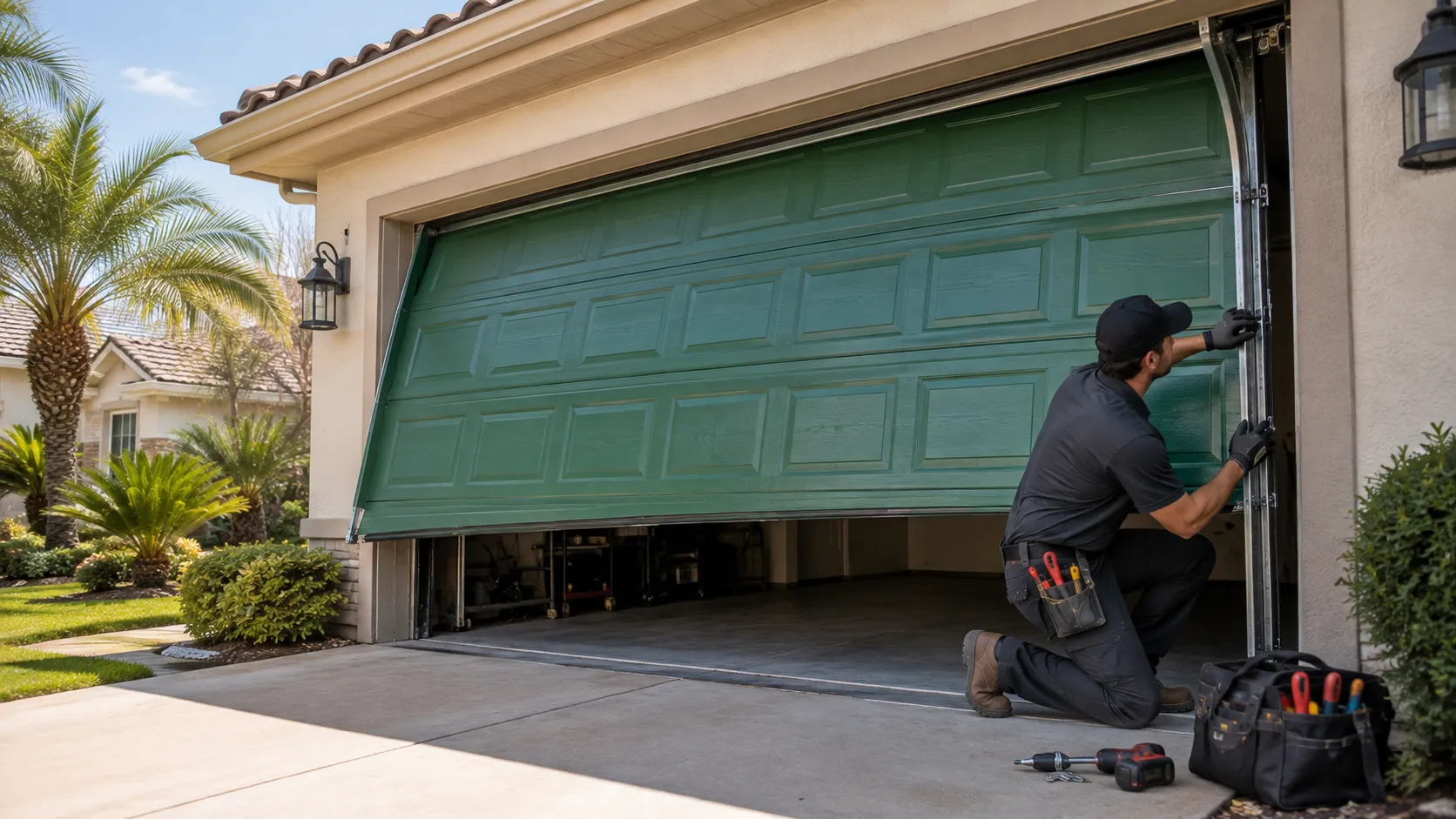
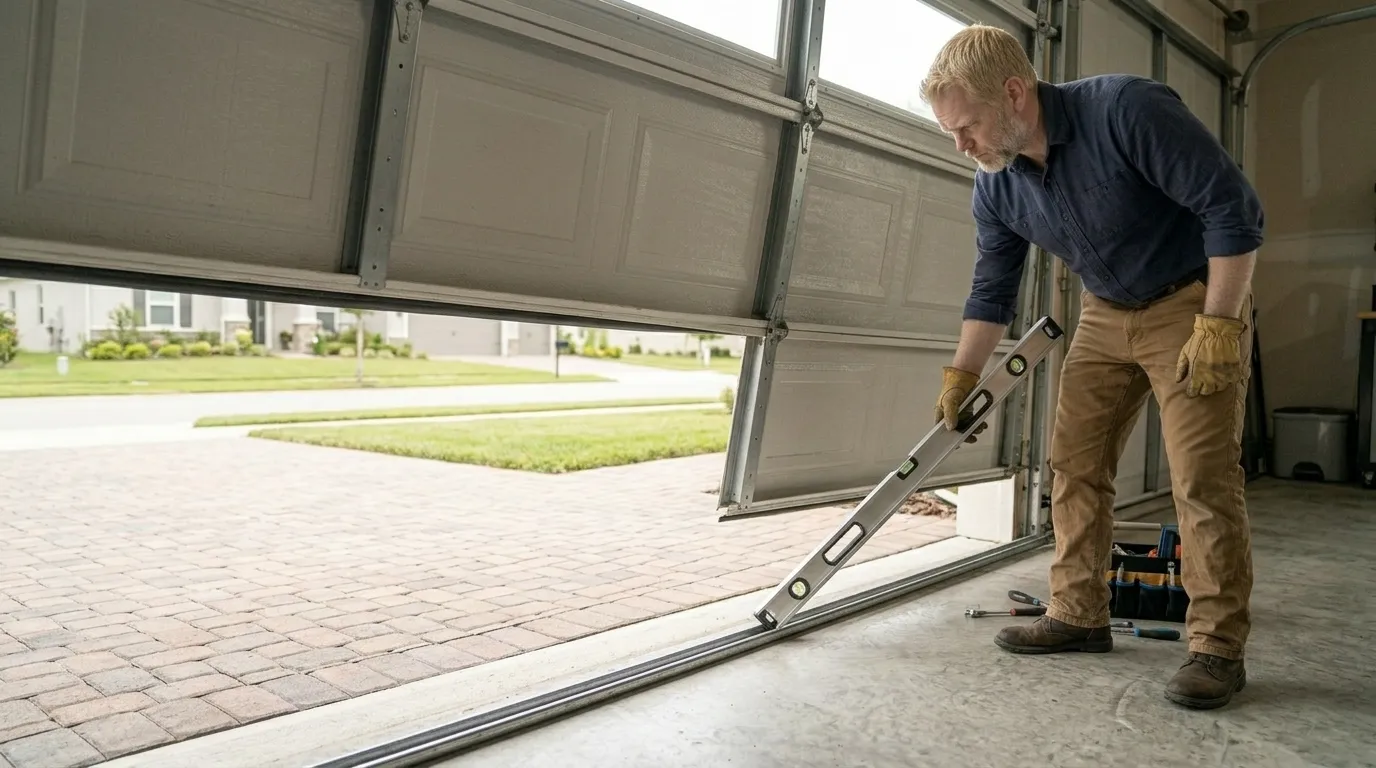
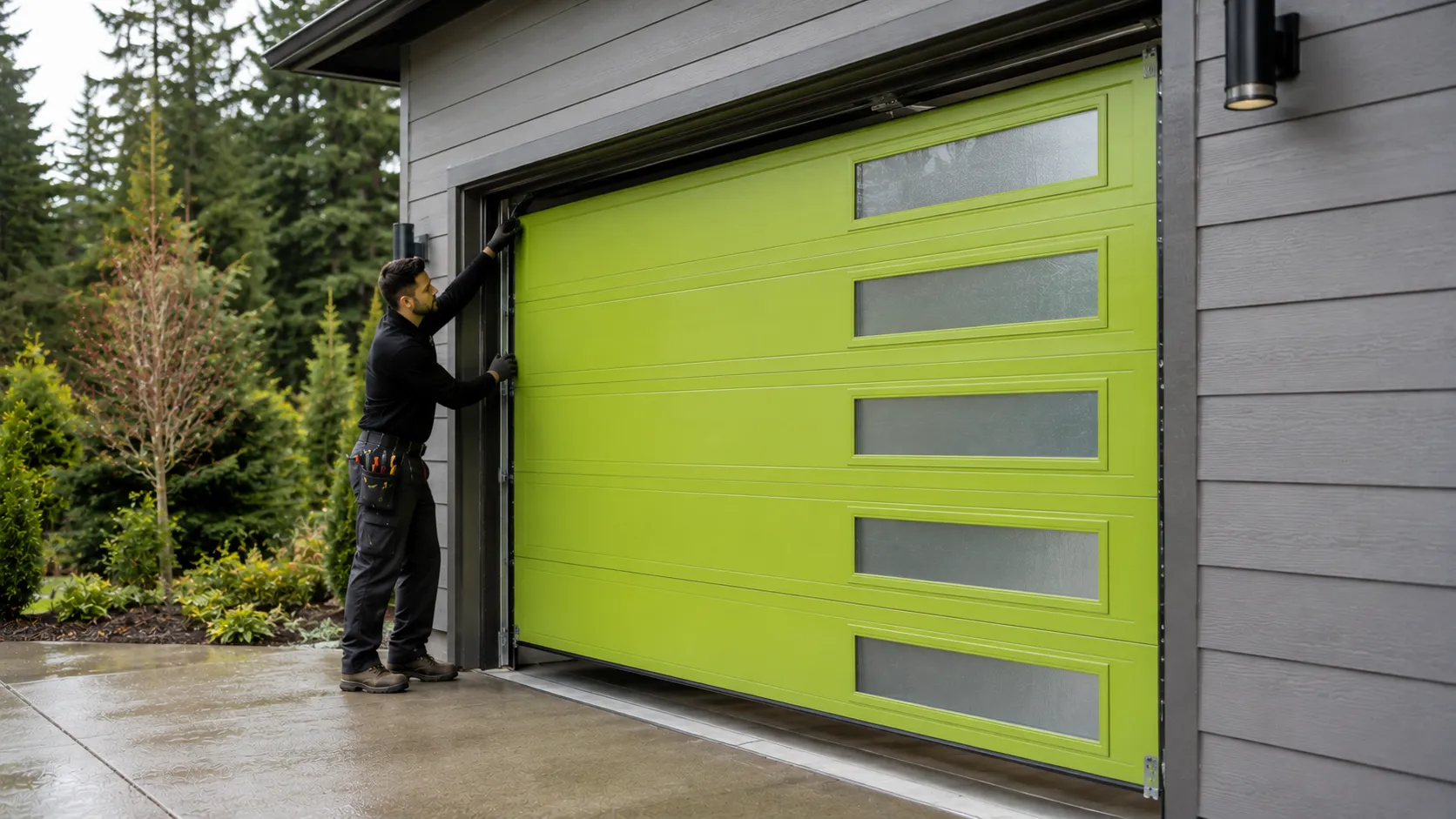
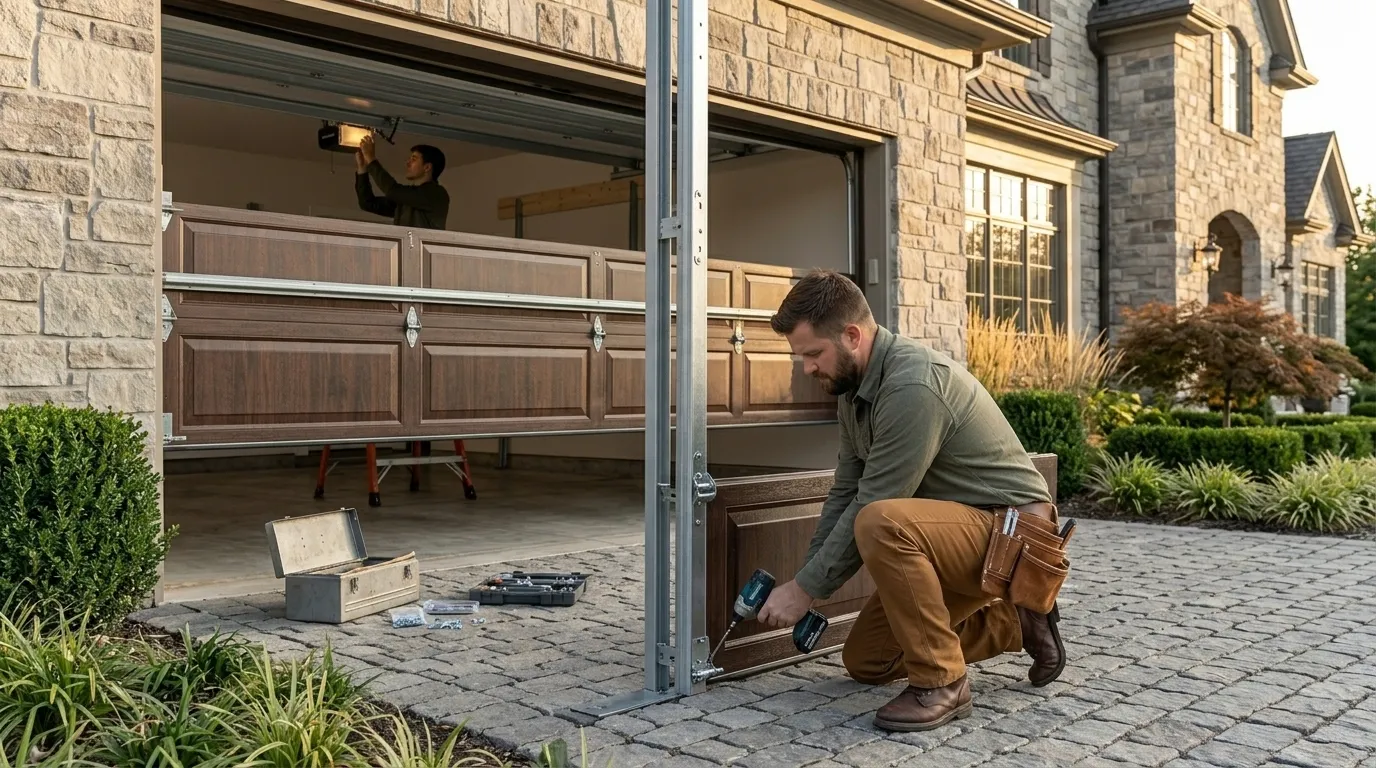
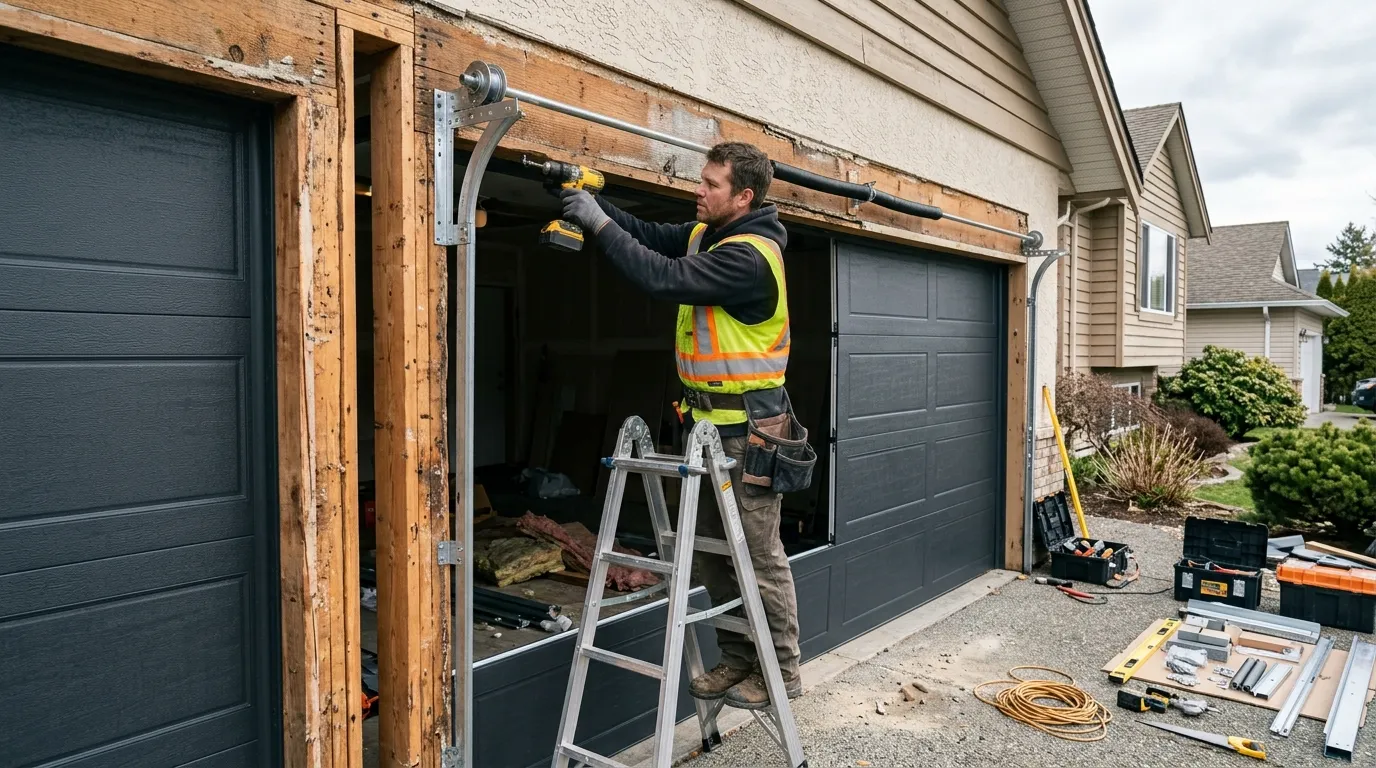
A door installed anywhere near 1959 almost never survives to today in its original form, but the openings and jamb framing usually do. That means when a door fails, the replacement has to fit a bay that wasn't built to modern width and height standards. We see this constantly on homes from this era: a single-car opening too narrow for stock sizes, or a two-car opening framed a few inches off from what current sectional doors assume.
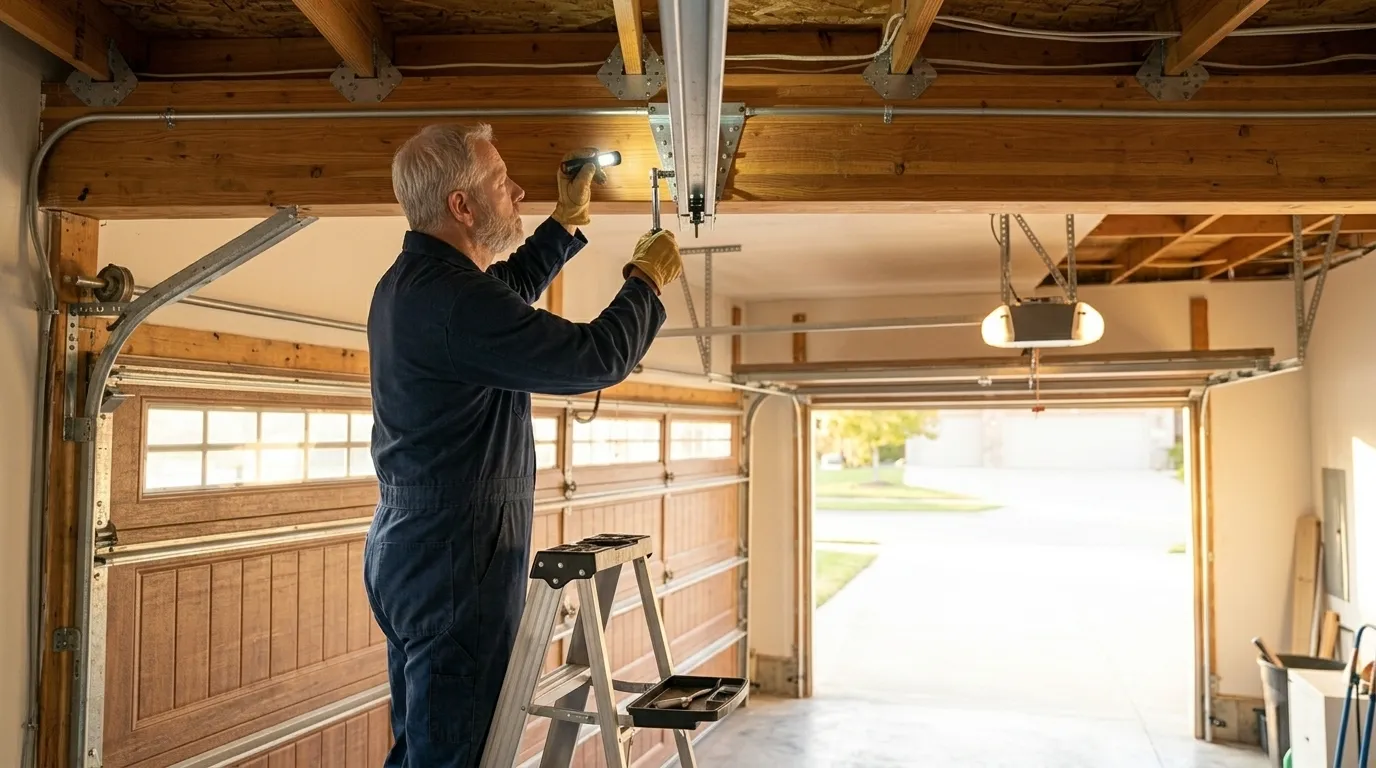
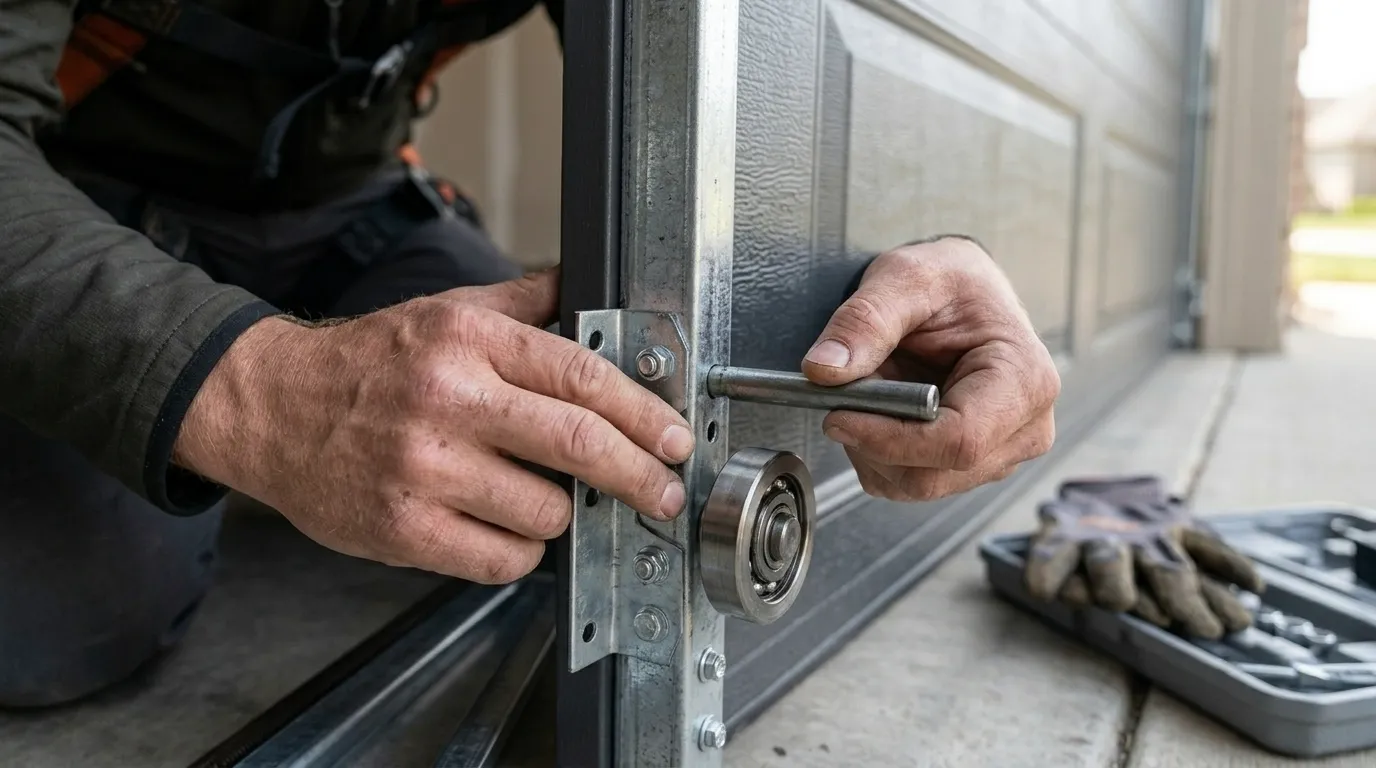
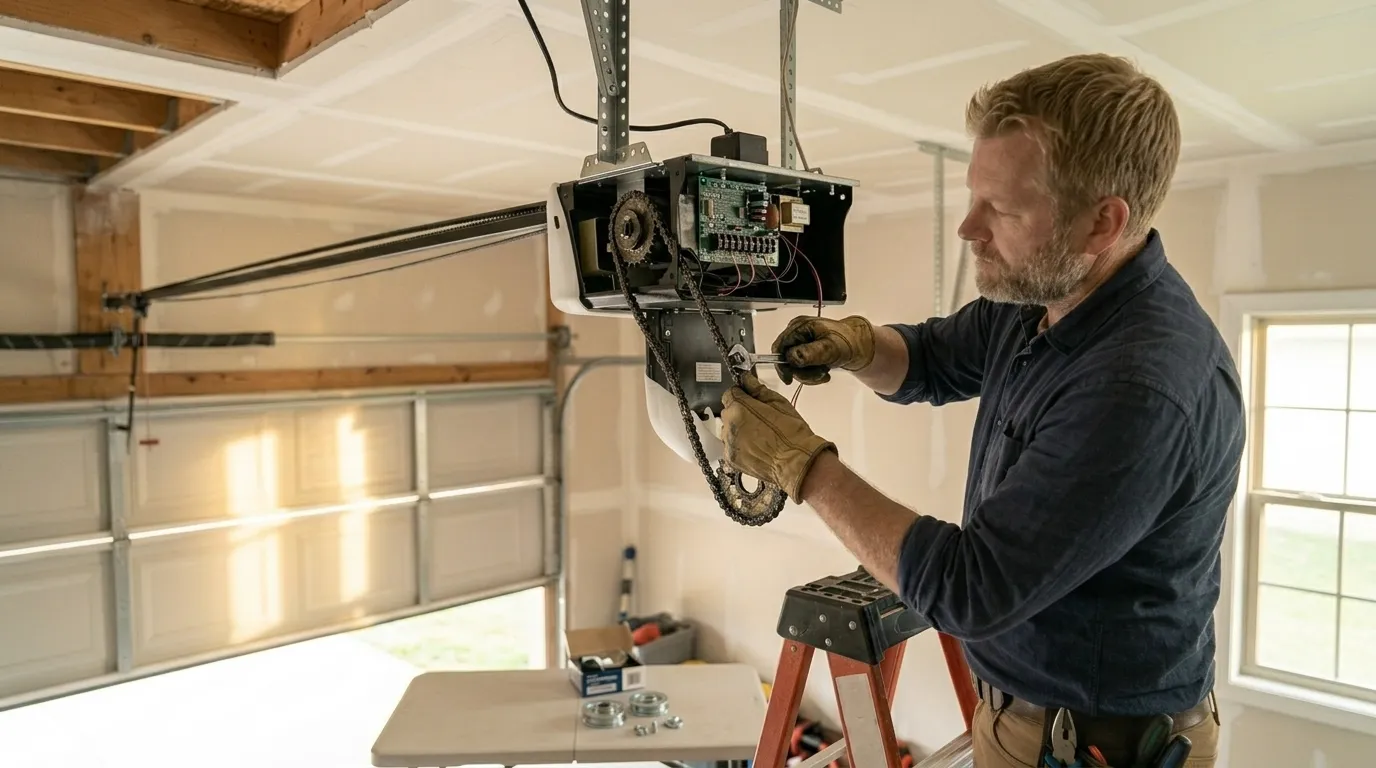
The torsion hardware is the other piece. Homes from this build period were often retrofitted with torsion springs sometime after original construction, which means the spring, the header, and the track don't always match each other in age or spec. When one part fails, it's rarely a simple swap - the mounting brackets or shaft length may not match what's sold today.
Cold winters compound this. Our service area sits in a severe cold climate band, and steel components that have already been flexing for six decades handle temperature swings worse than newer stock. Cold makes brittle springs snap and stiff rollers bind, and older hardware has less give left in it to begin with.
The Drive Over
We run out of Reynoldsburg, about 16 miles from Upper Arlington. We don't keep a location or a stock of parts in Upper Arlington itself - every job means loading the truck and driving over, which is worth knowing before you call expecting a same-hour arrival. We won't promise a response time we can't back up from that distance.
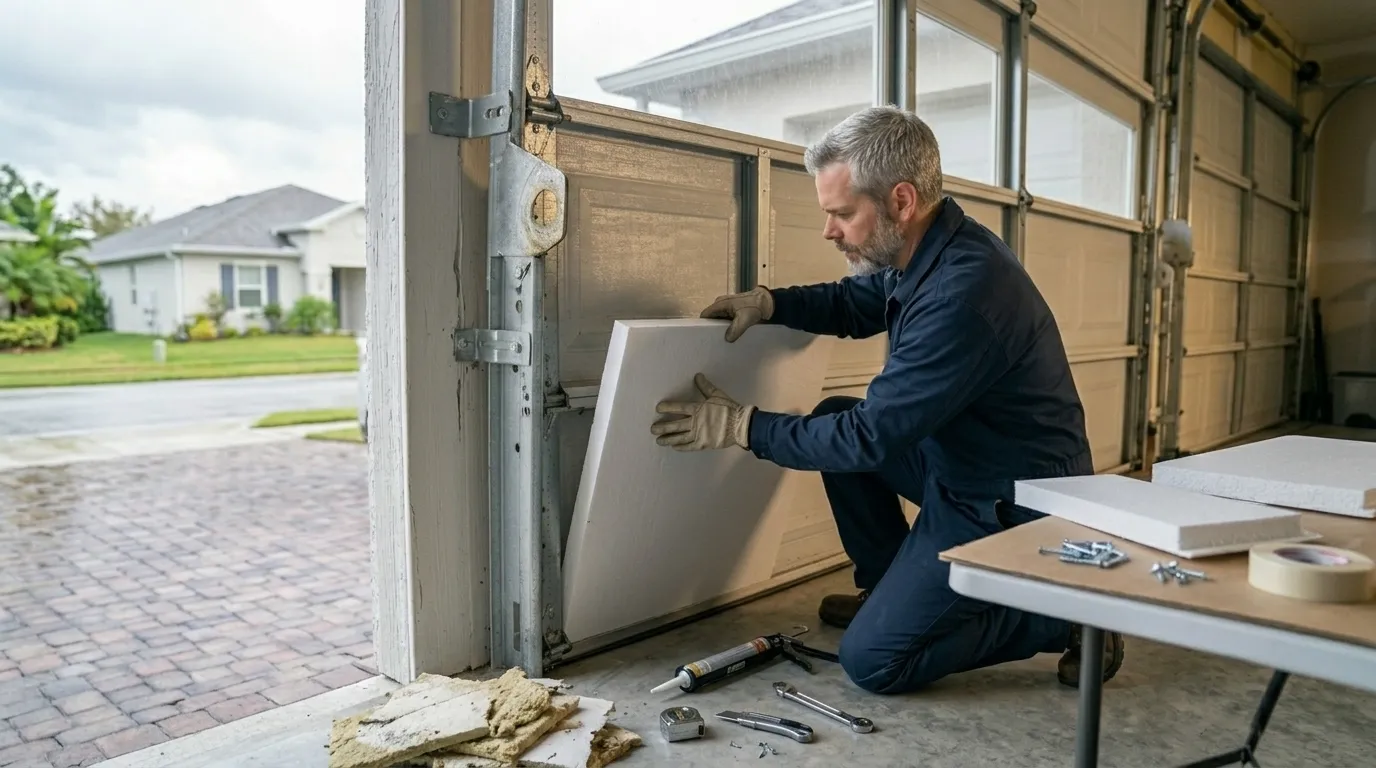
What the drive does let us bring is a truck stocked for exactly the kind of job this area tends to need: non-standard torsion springs, narrower track hardware, and insulated panels sized for older openings. It's a known pattern by now, not a guess.