24/7 Emergency Service Open 7 days · 7am–8pm Serving Reynoldsburg, OH & nearby
(614) 392-8161
Reynoldsburg, OH

Garage Door Help for Reynoldsburg When the Cold Snaps a Spring

Reynoldsburg homes built mostly in the 1960s-70s carry original torsion springs; severe cold snaps them. Here's when to call and what changes each season.

Garage Door Help for Reynoldsburg When the Cold Snaps a Spring

When to Get Help

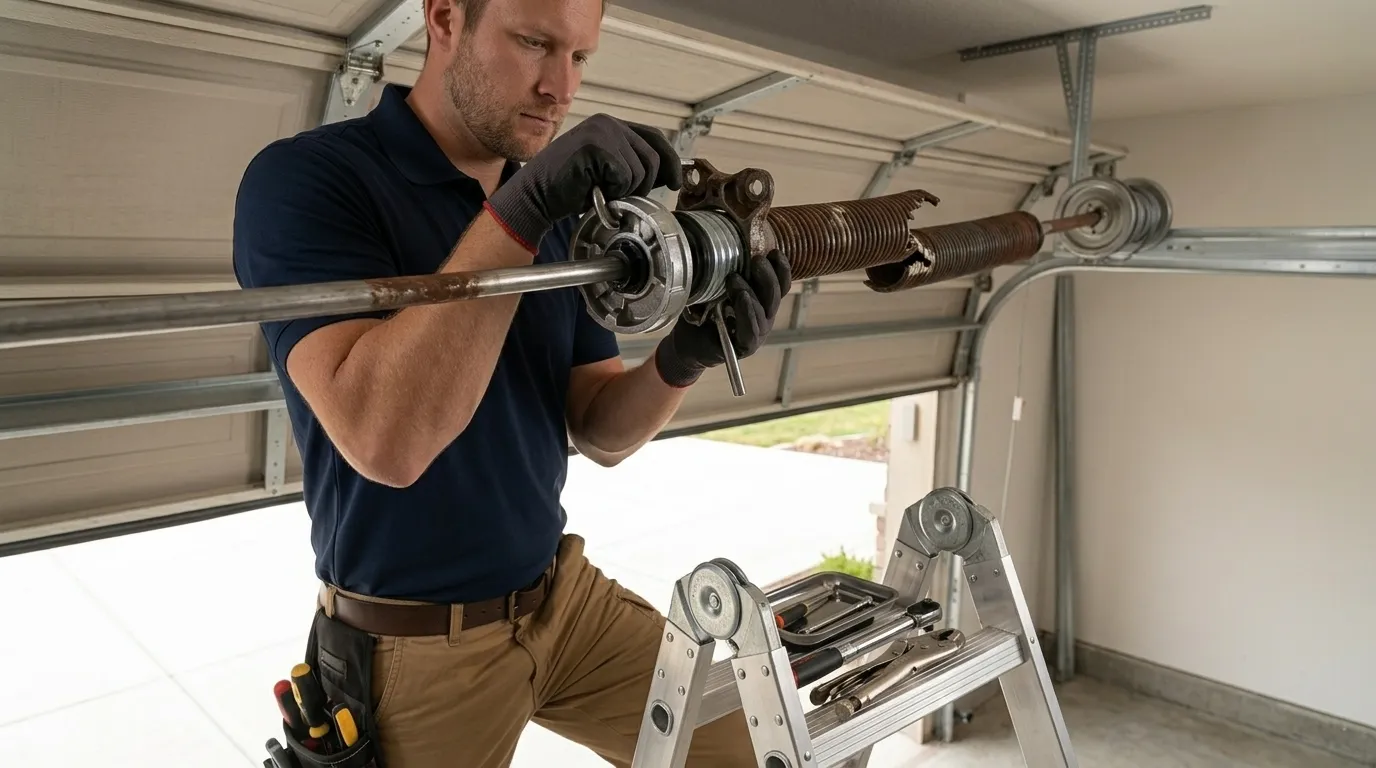
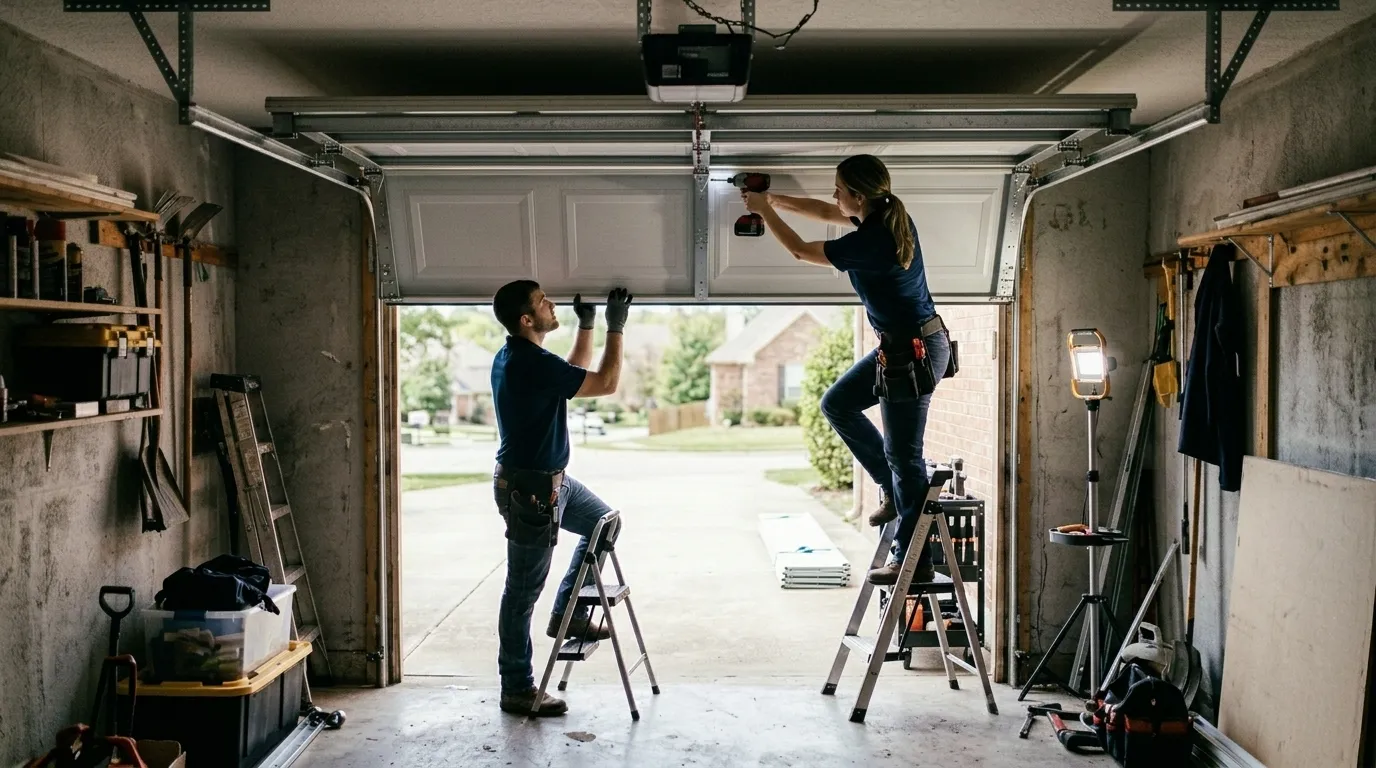
If the door won't budge on a cold morning, or you hear a loud bang from the garage overnight, that's usually a torsion spring giving out. You'll see one cable slack and the other still tight, or the door hanging crooked in the opening. Don't try to force it open with the opener - that just strains the motor and can bend the track. Call before you drive over it, not after.

A lot of houses in Reynoldsburg still have the springs that came with the door when the place was built, and with a median build year of 1977, that means plenty of hardware is well past the age where it should've been swapped. Cold makes old steel brittle, and brittle steel doesn't give you warning - it just goes. If the door has felt heavier than usual for a week or two, or the opener has started grinding on the way up, that's your window to get it looked at before it fails on you at 6 a.m. with the car trapped inside.

One thing worth knowing: we don't carry every spring size for older doors on the truck. Some of the 1960s and 70s hardware isn't the standard stock size anymore, and that can mean a second trip.

The Situation

Reynoldsburg's housing stock runs from 1938 to 2006, with the median sitting at 1977, and most of what's standing across the thirty named areas that make up the service area dates to the 1960s and 70s. That matters for garage doors because springs, rollers, and tracks from that era were built to specs that have since changed - a same-size replacement spring today often isn't wound the same way as the original.

Across the service area there are roughly 95,004 households and about 50,960 owner-occupied houses, which is a lot of garages holding onto original hardware nobody's thought about since the day they moved in. Median household income here is $94,040, which tells you people can afford to fix a door right rather than patch it - but income doesn't change what the steel is doing in a cold garage. A spring from 1975 doesn't care what the house down the street sold for.

What this adds up to: a town where the average garage door setup is old enough to be due, and where a cold snap is the thing most likely to finish the job age already started.

What the Weather Here Does to It

Reynoldsburg sits in a severe cold climate band, and that's the single biggest thing working against an older spring. Steel loses flexibility as it gets cold - it doesn't bend the way it does in July, it just holds tension until it can't anymore, and then it lets go all at once. That's why so many spring failures here happen on the coldest mornings of the stretch, not gradually over a warm afternoon.

Cold also thickens the grease on rollers and hinges, which makes the opener work harder to pull a door that already feels heavier because the springs are tired. If your opener has started straining more in January than it did in September, that's not the opener aging - that's cold steel and thick lubricant both pulling against it at once.

Galvanized cable holds up fine in cold, but the fittings and end connections on older doors can develop rust where condensation sits and then freezes overnight. On a door that's original to a 1970s build, all three things - tired springs, stiff lube, and corroded fittings - are usually working against you at the same time, which is why cold-weather calls here tend to be more than one small fix.

What Changes With the Season

Late fall is when we'd rather see a door than after the first hard freeze. Once temperatures drop and stay down, a spring that's been marginal all year finally gives out, usually without warning. If your door has felt off - noisy, uneven, slow to close - the weeks before the cold really sets in are the time to deal with it rather than wait.

Midwinter here is when failures cluster. The steel is at its stiffest, lubricant is thick, and any rust that built up on cable ends or hinges from fall condensation has had time to set in. This is also when a door that's marginal on the opener's force settings will start reversing or refusing to close all the way, because cold changes how much resistance the opener senses.

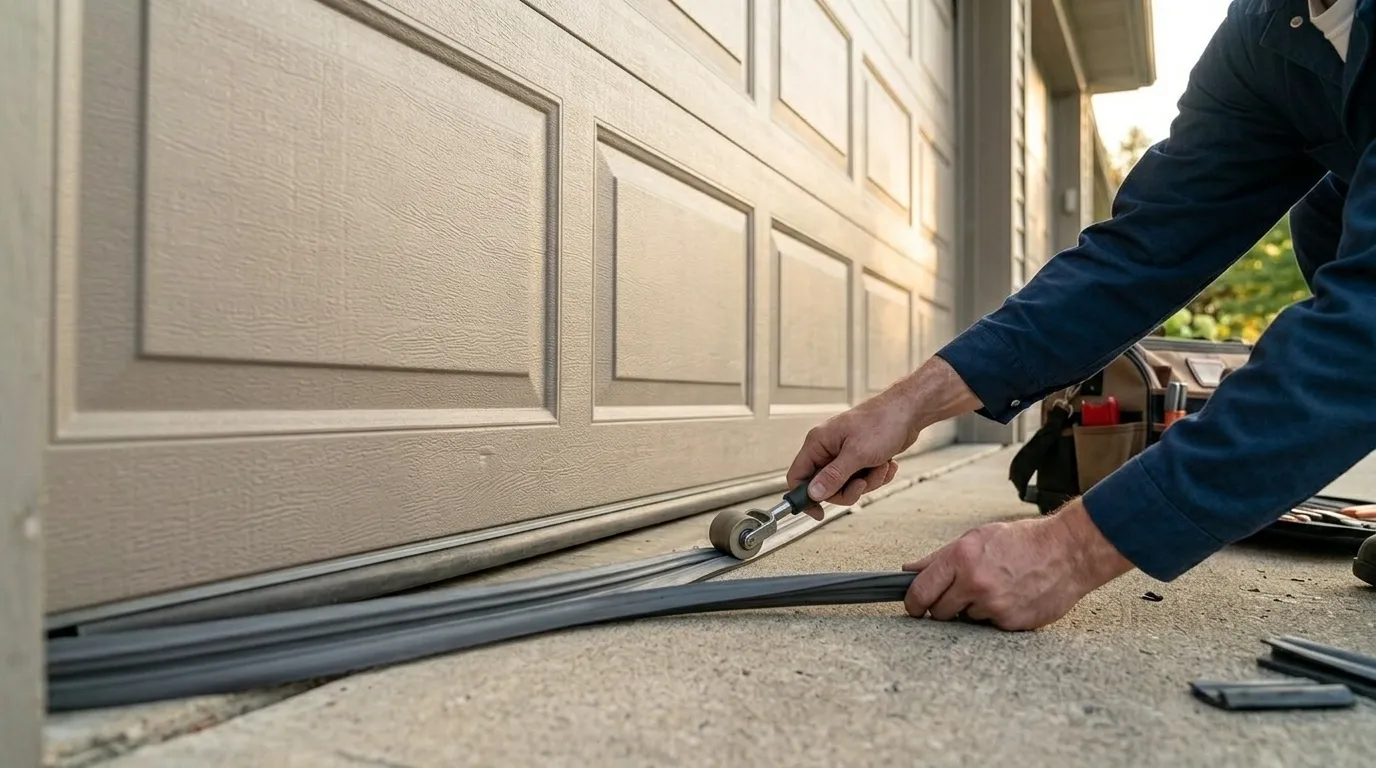
Come the spring thaw, moisture that's been frozen into any wood trim or old bottom seals can swell things just enough to bind the door in the track. It's a smaller problem than a broken spring, but on a house with original hardware from the 1960s or 70s, it tends to show up right after the freeze-thaw cycle we've just been through.
How it works

From “it’s stuck” to “it’s fixed”

Tell us what’s wrong - Reynoldsburg garage door service

Tell us what’s wrong

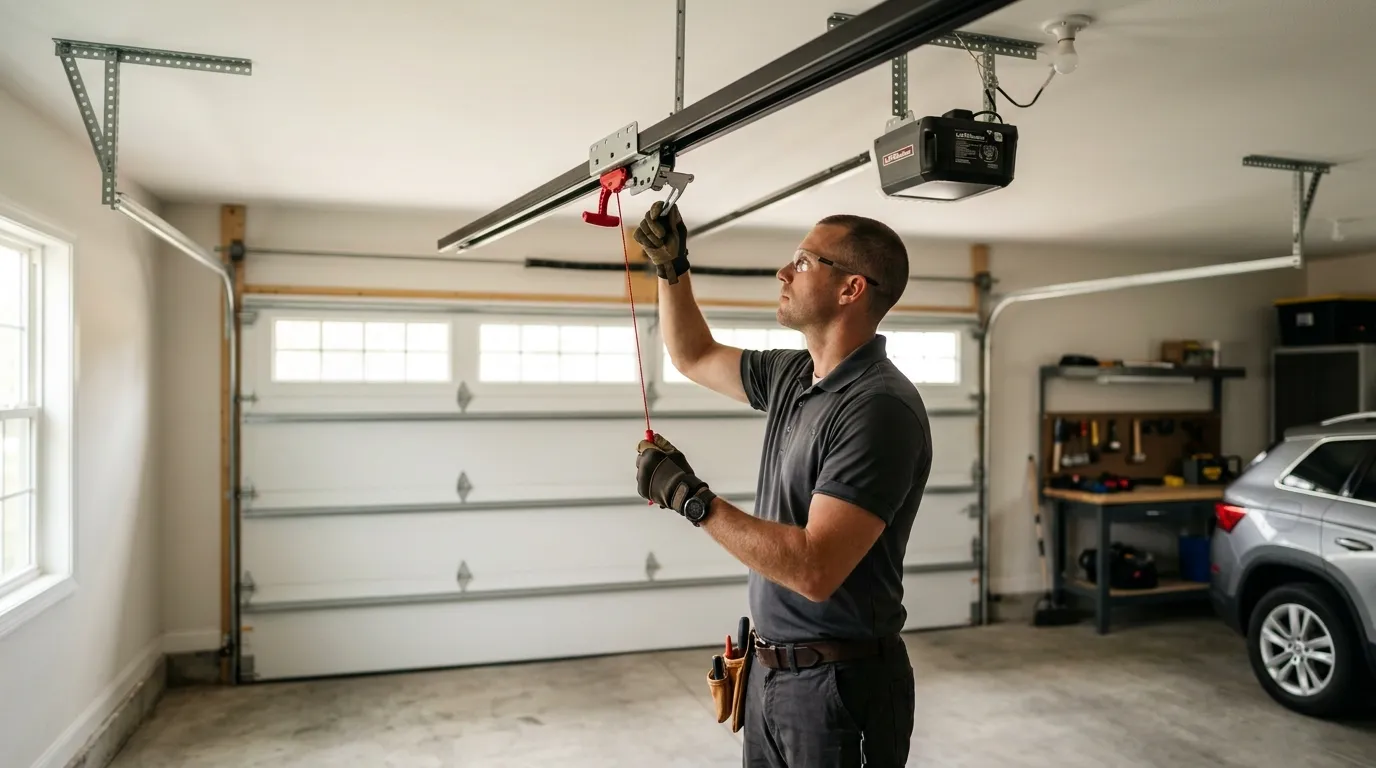
Describe the symptom - won’t open, loud bang, opener runs but the door won’t move.

On-site diagnosis - Reynoldsburg garage door service

On-site diagnosis

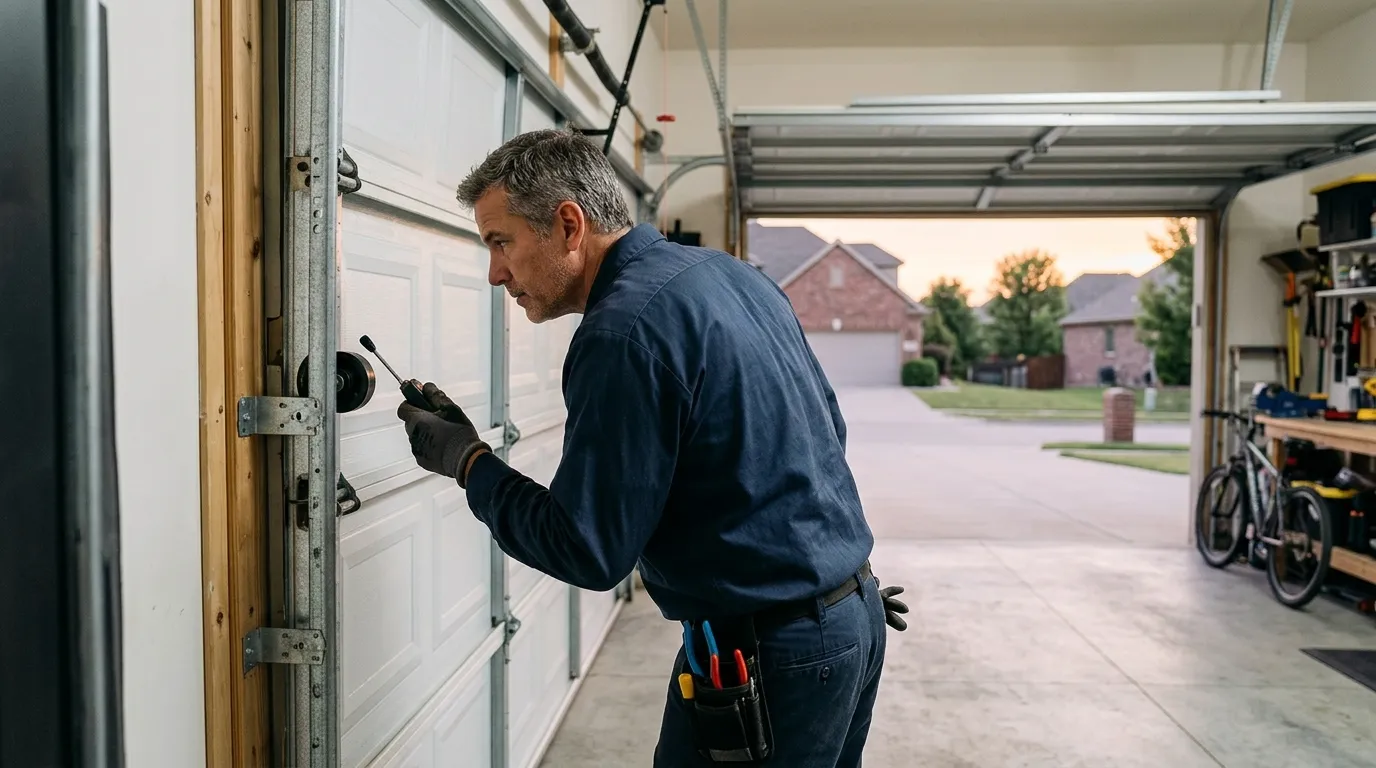
A technician tests the door under power and by hand and finds what actually failed.

Clear, up-front plan - Reynoldsburg garage door service

Clear, up-front plan

You get the fix that’s needed and what drives the cost - before any work starts.

Repaired & tested - Reynoldsburg garage door service

Repaired & tested

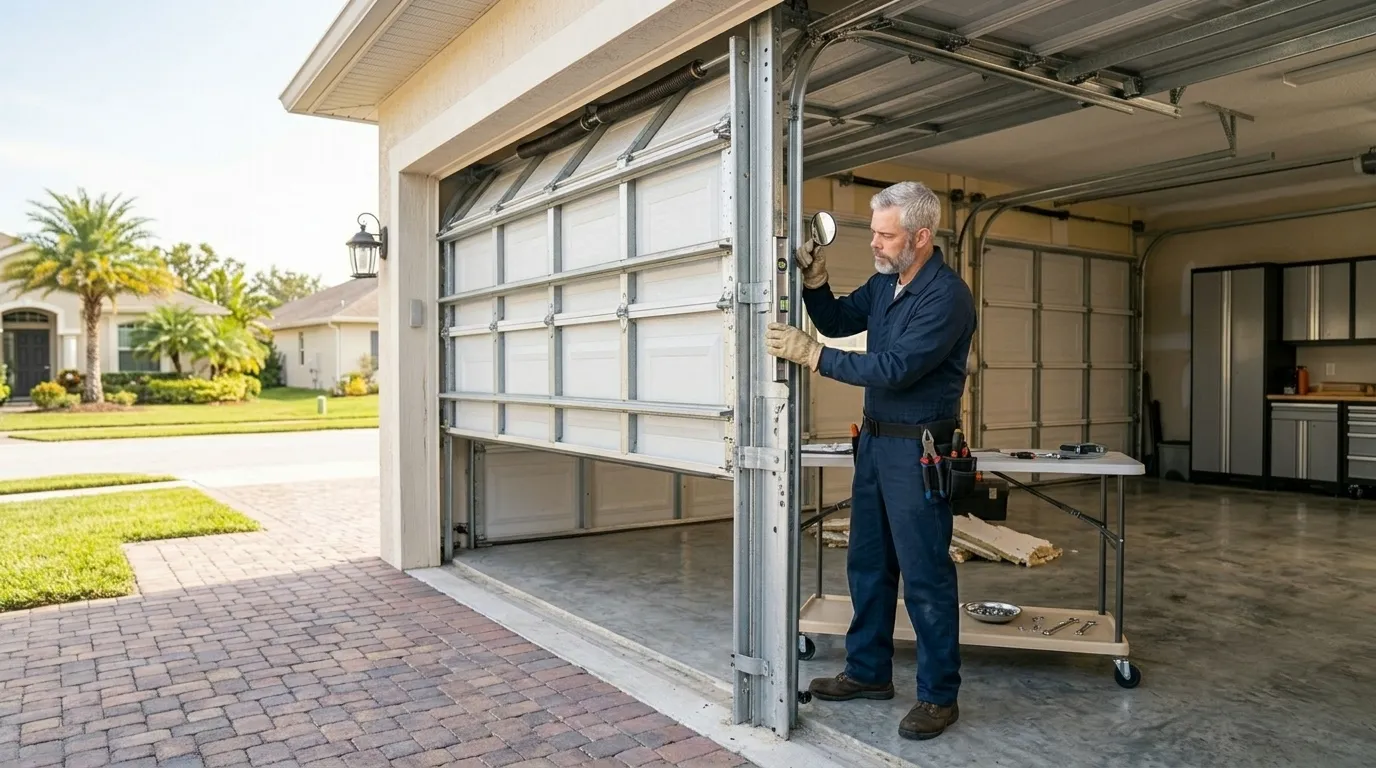
The repair is done, the door is set true and tested, and the work area left clean.

Serving Reynoldsburg, OH - tell us what your door’s doing and we’ll take it from there.

How we work

What to expect

Diagnosis firstEvery visit starts by finding what actually failed - not a pre-written parts list.
The right part for the doorSprings and openers matched to the door’s weight and age, so the fix holds up.
Straight answersWhen a repair makes more sense than a replacement - or the reverse - you hear it plainly.
Clean, careful workTension released safely, hardware set true, the door tested under power before we leave.
Questions

Frequently asked

Straight answers about garage door repair in Reynoldsburg. Still unsure? Ask us directly.

Why do garage door springs break more in winter here?

Cold makes steel brittle. A torsion spring that's been carrying tension for decades loses flex as the temperature drops, and instead of stretching it just snaps. Reynoldsburg's severe cold climate band means this happens on the coldest mornings more than any other time of year, especially on doors original to houses built in the 1960s and 70s.

My house was built in the 1970s - is the spring original?

It's possible. Reynoldsburg's housing stock has a median build year of 1977, and a lot of that stock still runs original torsion hardware. Springs from that era were often wound to slightly different specs than what's sold today, so a straight swap isn't always as simple as grabbing the same size off the shelf.

Can you always fix it the same visit?

Not always. Some older doors in this area use spring sizes that aren't the common stock size anymore, and we don't carry every one of those on the truck. If your hardware is original to a 1960s or 70s build, there's a chance we'll need to come back with the right part.

Does a heavier door in winter mean something's wrong?

Usually yes. Cold thickens grease on rollers and hinges and stiffens the springs, so the opener works harder even on a door that's otherwise fine. If it's been heavier for more than a week or two, especially straining more than it did in fall, it's worth having it checked before it fails outright.

Ready to get your garage door sorted?

Tell us what it’s doing and where you are in Reynoldsburg - we’ll take it from there.

Request a QuoteCall