When to Get Help
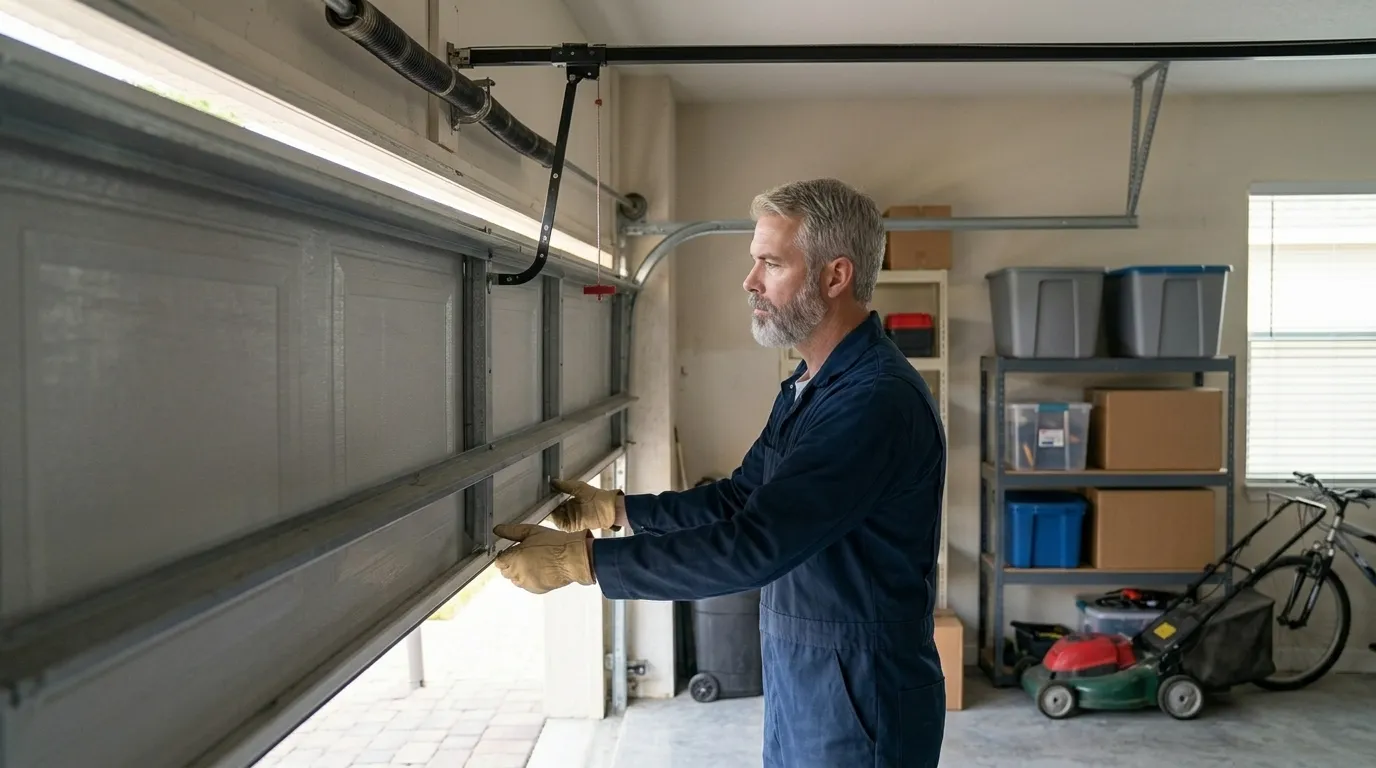
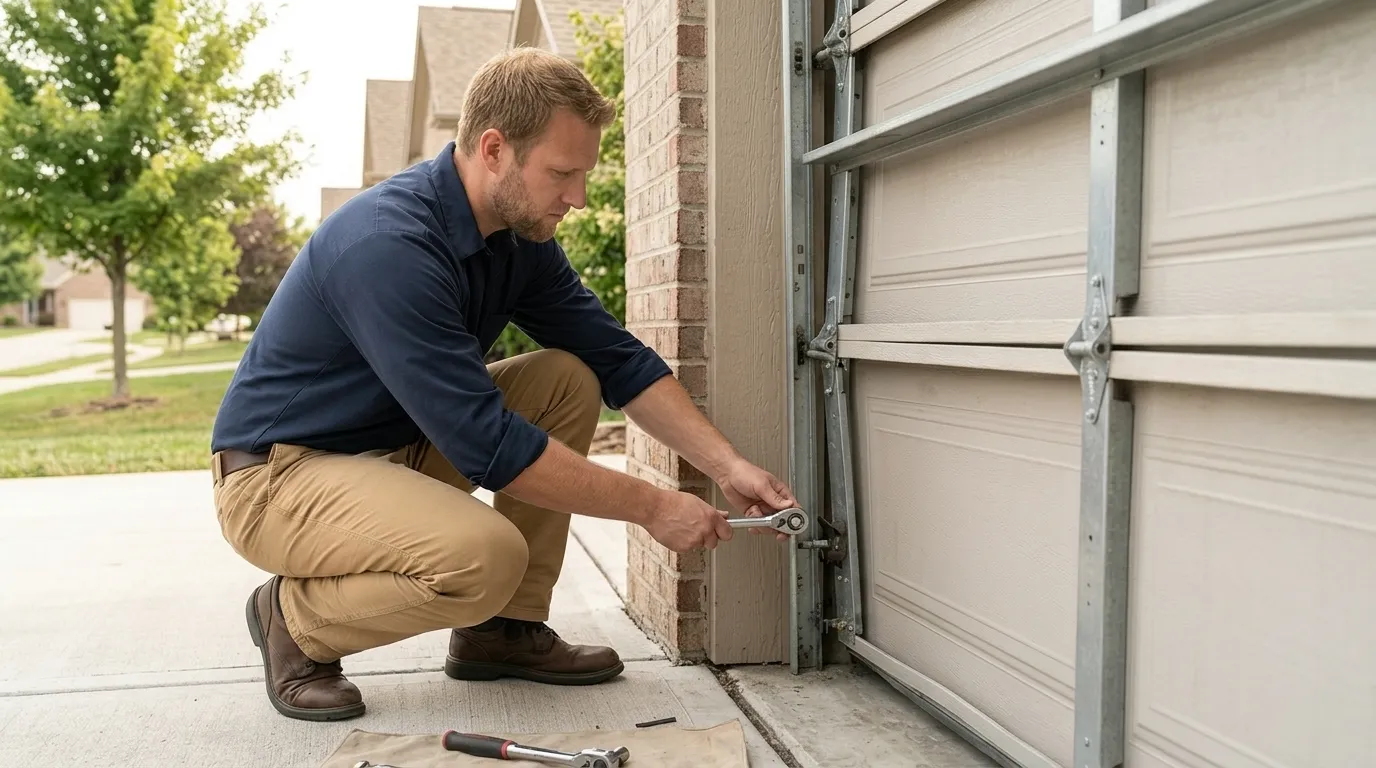
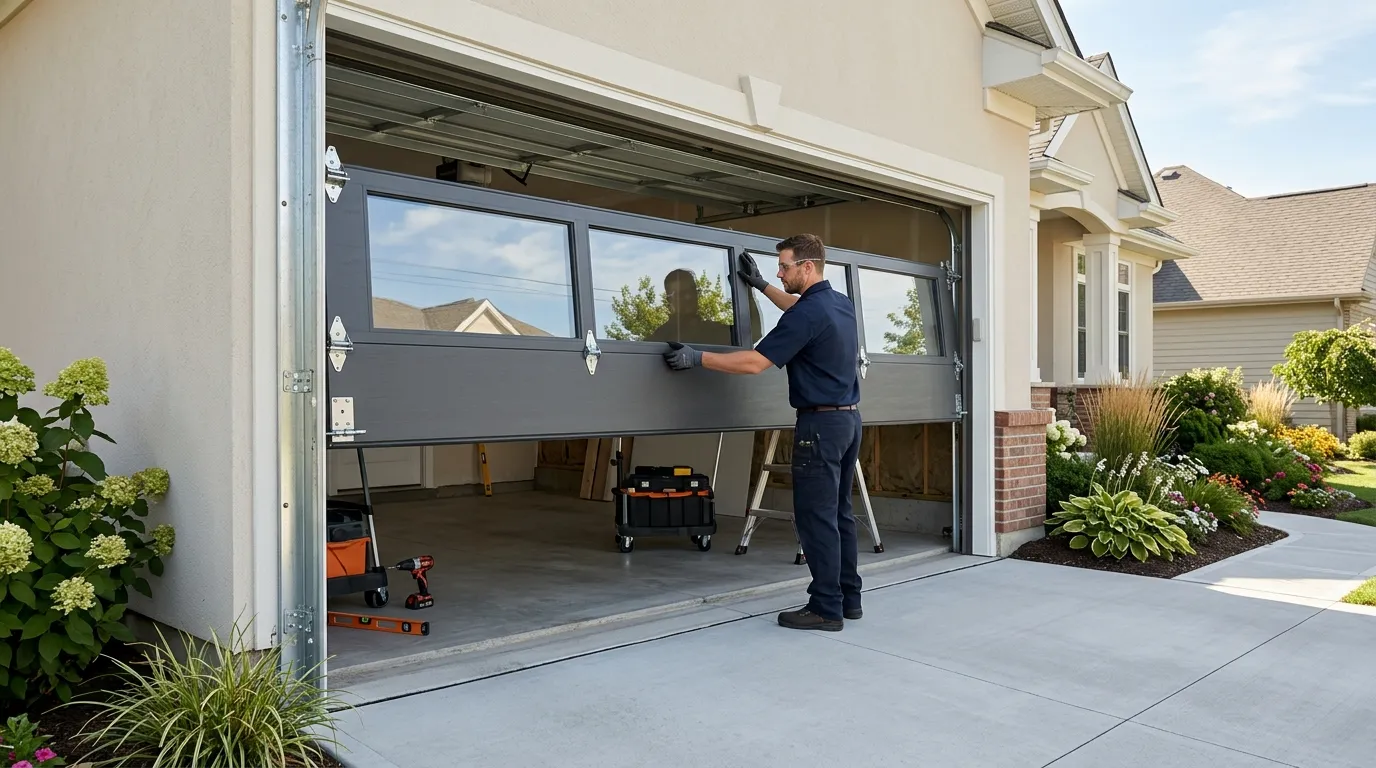
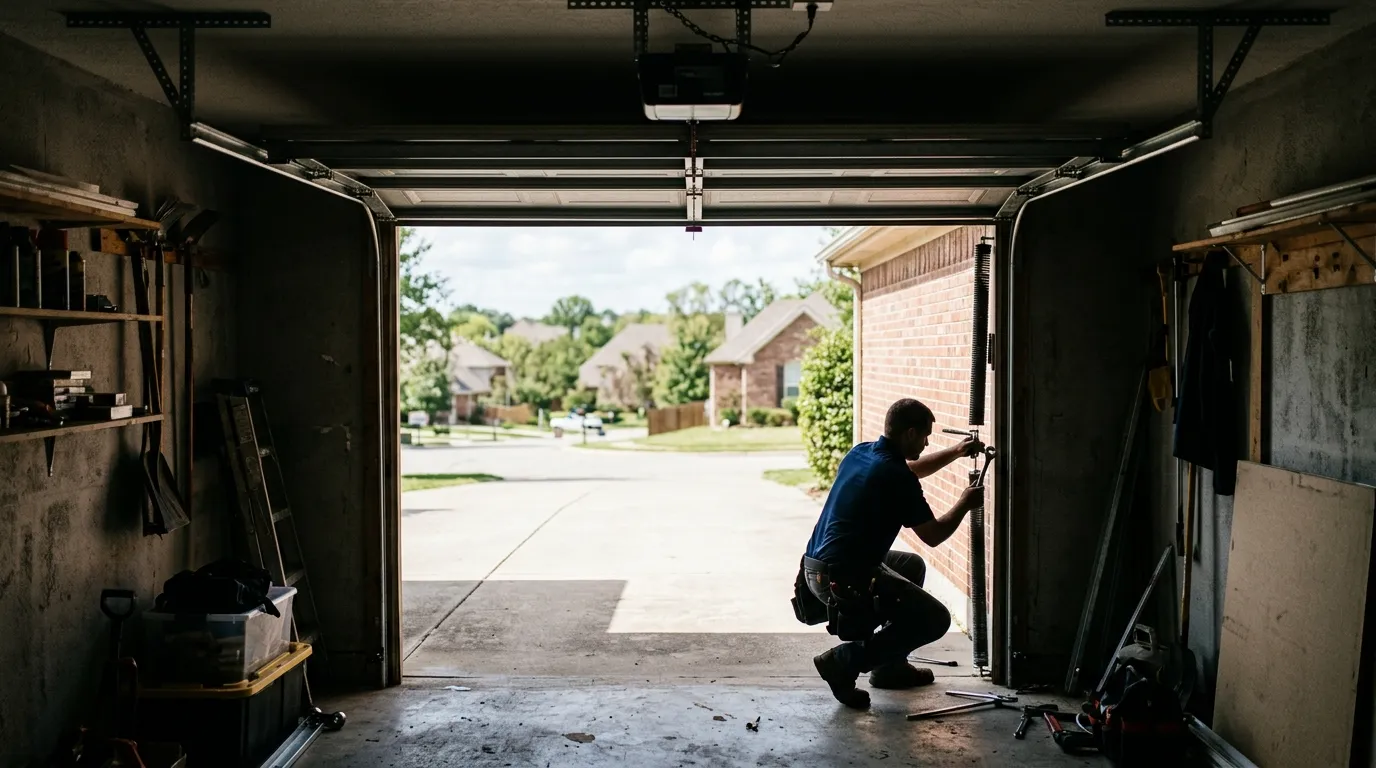
If a door is scraping the frame on one side, or the opener strains and reverses partway up, stop running it. A door that's even a quarter-inch off its track will chew through the roller and bend the track further every time it cycles, and on the older houses around here - plenty of them dating back to that 1938-2006 build window with a median year of 1977 - the track hardware wasn't made to take that kind of repeat abuse. Look for a gap between the bottom panel and the floor that's wider on one side than the other, or cables that look loose at the bottom bracket. Either one means the door is already riding crooked. Call before it comes fully off the rail, because a door that drops mid-cycle can crack a panel or worse. One limitation worth knowing up front: if the track itself is bent rather than just knocked loose, we generally replace that section instead of trying to hammer it straight - a straightened track rarely holds square for long, and it's not worth the callback.
The Situation
A lot of the housing near Reynoldsburg was built in the 1960s and 70s, part of a broader build window running from 1938 to 2006. That matters for track problems specifically because a house from that era was framed and leveled to the standards of its decade, not today's. Forty to sixty years of a slab settling, even slightly, changes the plane the track bolts into. The track was mounted plumb when the house was new; the wall behind it may not be plumb now. Add in original hardware that's never been swapped - steel brackets that have loosened a sixteenth of a turn at a time for decades - and you get a door that walks a little further off true every winter. In the areas closer in, like Elmbrook Village and Laurel Canyon a couple miles out, or East Broad just north, that same generation of housing shows the same pattern: original track, original brackets, and a door that's finally reached the point where it needs more than a tightened bolt.
What Changes With the Season
Late winter into early spring is when we see the most off-track calls, right as the ground finishes its last freeze-thaw swing before things settle for the year. A track that's been quietly walking out of alignment since November finally loses a roller when the door's asked to move through one more cold morning. Summer is different - heat expands the metal track slightly and can mask a marginal alignment problem for months, which is part of why people are surprised in December when a door that seemed fine in July suddenly won't stay on the rail. If your house falls into that 1960s-70s stock that makes up most of the area, it's worth having the track checked in fall, before the freeze-thaw cycle starts working on a slab that's already had decades to settle. We can't stop a concrete slab from moving with the season - that's just what a COLD severe climate does to a foundation over time - but a track that's shimmed and squared before winter holds up a lot better than one left to fight it alone.