This Area's Housing
Baltimore's houses have a median build year of 1966, which puts most of the neighborhood ahead of the broader Reynoldsburg service area's 1977 median. That's over a decade of difference, and it matters more than it sounds like. A house built in the mid-60s was framed before insulated steel doors were standard, before torsion springs became the default on most tract housing, and before openers had any kind of rolling code or safety reversal built in. With about 1,333 households in this area, it's a small, established pocket rather than a sprawling new subdivision, and a lot of the original garage doors and hardware from that build era are either still in place or were replaced once already with whatever matched at the time. Median household income here runs $58,322, well under the wider area's $94,040, and that shapes the kind of calls we get - people want the door fixed right, not necessarily replaced with the most door money can buy. We work with that. The service area overall sits in a cold, severe winter climate band, and a house built in 1966 wasn't built with today's weatherstripping or thermal breaks in mind, so cold-weather issues show up here in specific, predictable ways.
How That Shows Up in the Door
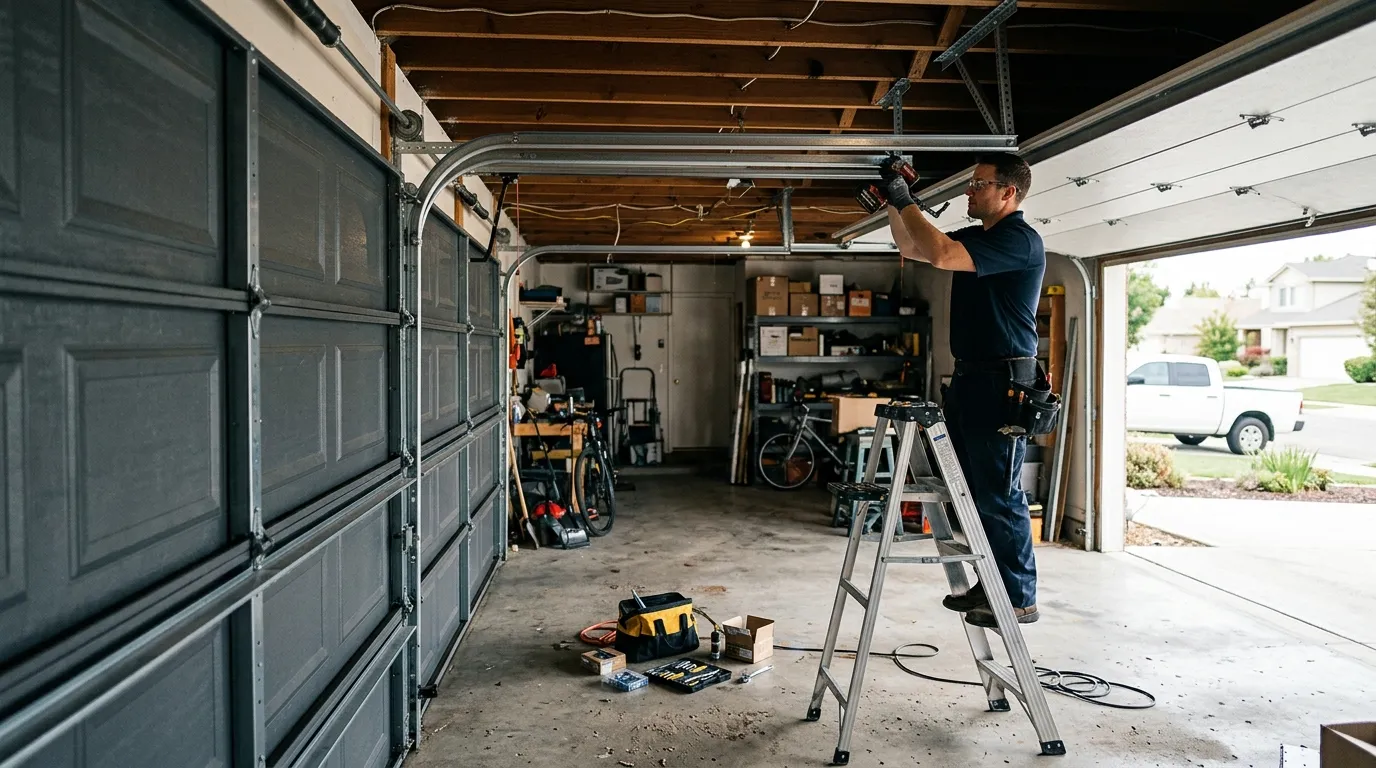
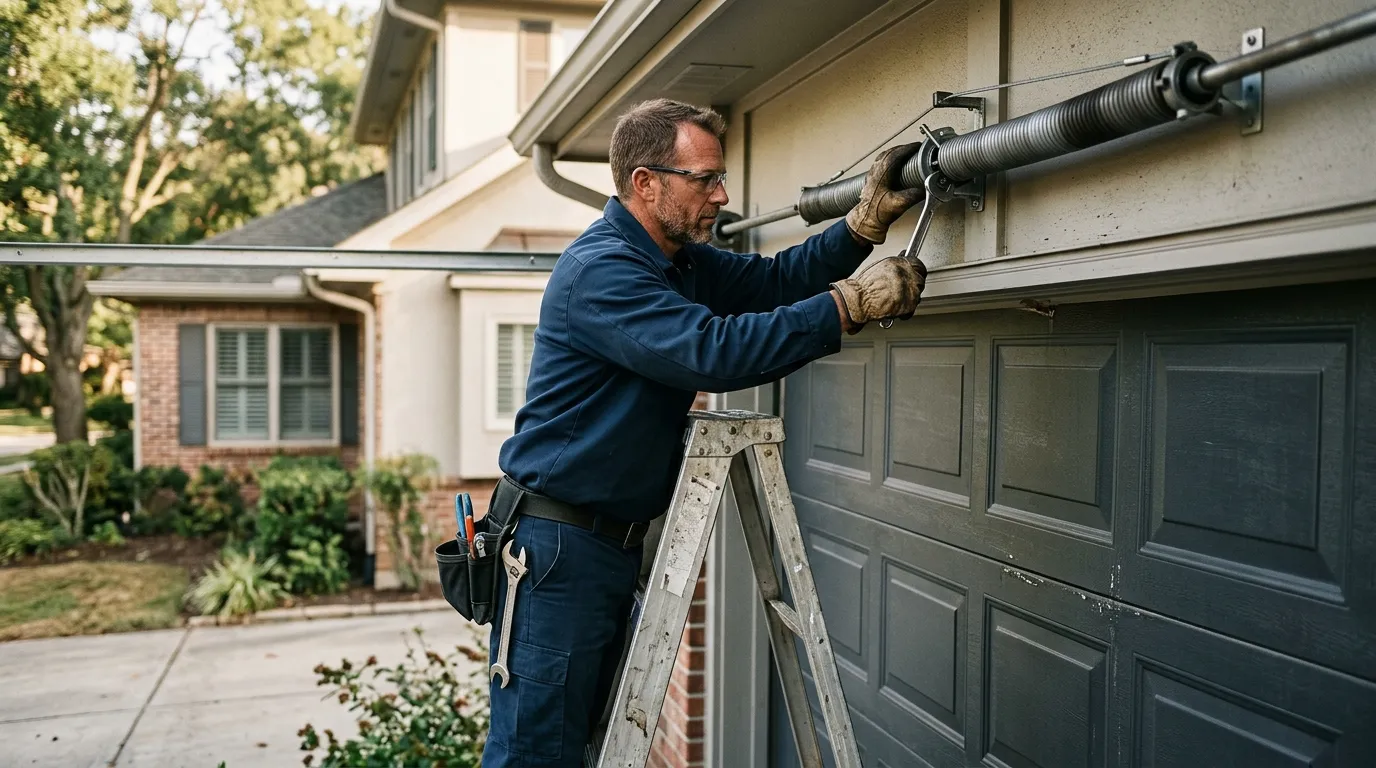
A door and opener installed to match a 1966-built house tends to run one of two ways: either it's the original steel section door on extension springs mounted along the horizontal track, or it's a torsion conversion someone did decades later without updating the rest of the hardware. Both setups are common enough in this area that we don't treat them as oddities. Extension springs on older track hangers lose tension unevenly in cold weather - one side stretches more than the other, and the door starts pulling crooked on the way up. On the torsion conversions, the drum size or cable gauge sometimes doesn't match the door weight because it was swapped in with parts on hand rather than a spec sheet. In a severe cold climate, that mismatch gets worse in winter: steel contracts, lubricant thickens, and a spring that was already borderline starts skipping or binding. None of this is about the door being old for its own sake - it's about the specific combination of era-correct hardware and winter stress that a 1966 build in this climate puts on it every year.
The Drive Over
Baltimore sits about 13 miles from our shop in Reynoldsburg. We don't keep a second location or a drop box out this way - every job here starts with a truck leaving Reynoldsburg and driving out. That's worth knowing upfront: we're not a company with a depot around the corner, we're the crew that comes to you. The 13-mile run is part of how we plan the day, and it's why we're straightforward about it instead of implying there's a local branch when there isn't. If you're comparing us to someone based closer, that's fair - the tradeoff is a company that knows the housing stock and hardware common to this area and drives out prepared for it, rather than one guessing at what a 1966-era door setup looks like.