When to Get Help
If the inside of your garage door sweats or frosts over on a cold morning, that's not condensation being dramatic - it's a steel skin with nothing behind it meeting warm indoor air. Same story if the opener strains harder in January than it does in July, or if you can see daylight around the bottom seal once the weather turns. Most of these signs point to a door that was built before insulation was ever part of the spec, which describes a large share of the doors on houses in this service area. A door that groans, sags at the bottom corners, or won't stay level in its track is worth a call before it fails outright - a stuck door in a hard freeze is a worse problem than the same door acting up in April. We can't tell you over the phone whether it's the door, the spring, or the opener; that's a five-minute look, not a guess.
The Situation
Housing across this area runs from 1938 to 2006, with the median landing at 1977, and the bulk of it clusters in the 1960s and 70s build wave that shows up across the roughly 30 named neighborhoods here. That matters for garage doors specifically because insulated, foam-core doors didn't become the standard product until well after most of these houses were framed. A garage built in that stretch almost always got a single-skin steel door - no foam, no thermal break, no vinyl backing - because that's what the market sold at the time. A lot of those original doors, or their direct steel replacements, are still hanging in these driveways. They're not defective. They were built to a lower bar than what's sold today, and that gap gets more obvious every winter.
What Changes With the Season
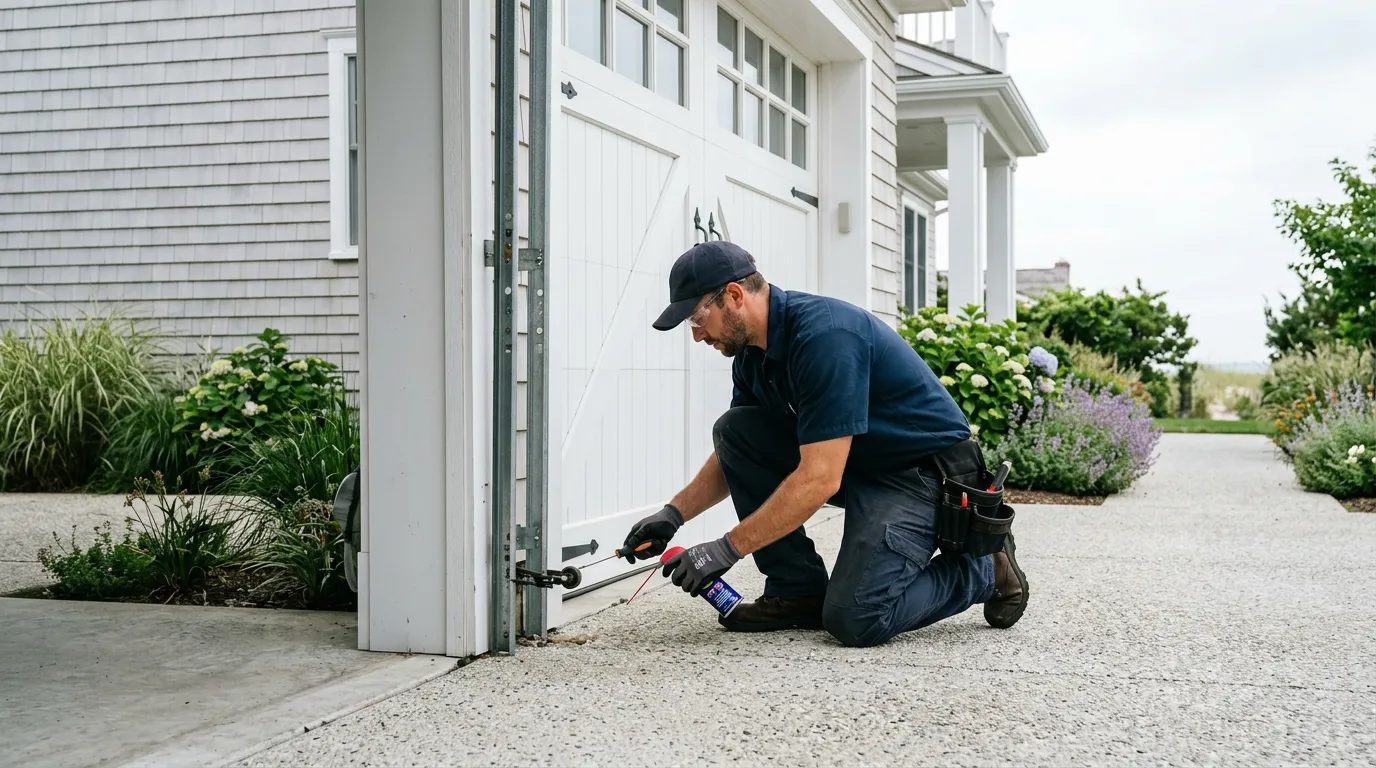
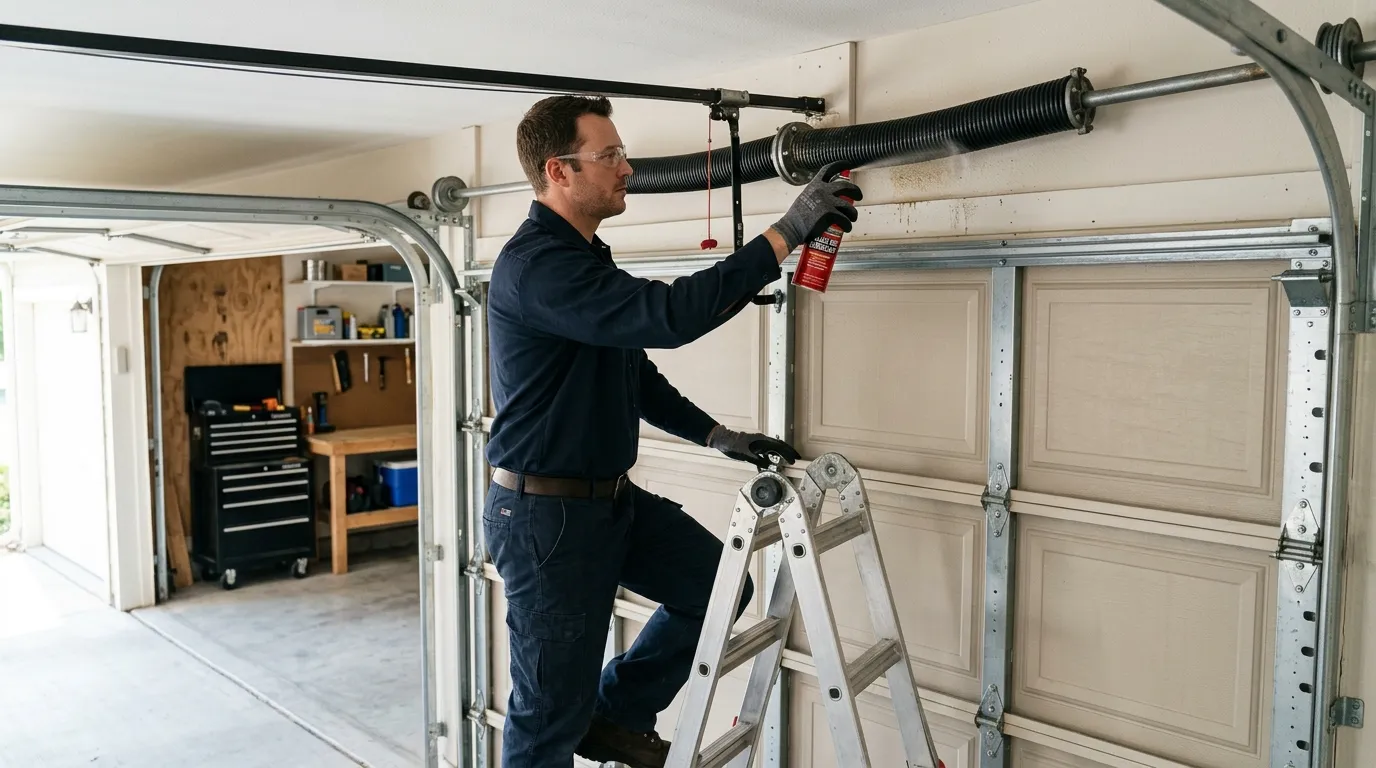
Cold is the main stress, but it isn't the only one. As temperatures drop, the grease in an old opener chain or the lubricant on the track stiffens, so the door lifts slower and the motor works harder to hit the same speed it managed in summer. Springs lose a little tension in the cold too, which is why a door that opened evenly in September can feel heavier on one side by December. Come spring, the same steel that contracted all winter expands again, and doors that seemed fine in January sometimes reveal a bent track or a loose roller once things warm back up and shift. We don't recommend chasing every seasonal squeak with a new part - sometimes it's just cold steel doing what cold steel does, and the fix is a tune-up, not a teardown.