24/7 Emergency Service Open 7 days · 7am–8pm Serving Reynoldsburg, OH & nearby
(614) 392-8161
Reynoldsburg, OH

What Our Service Calls Cover in Reynoldsburg

A plain look at what happens when Reynoldsburg Garage Door Pros shows up: the check, the diagnosis, and why 1970s-era hardware in this area changes the job.

What Our Service Calls Cover in Reynoldsburg

When to Get Help

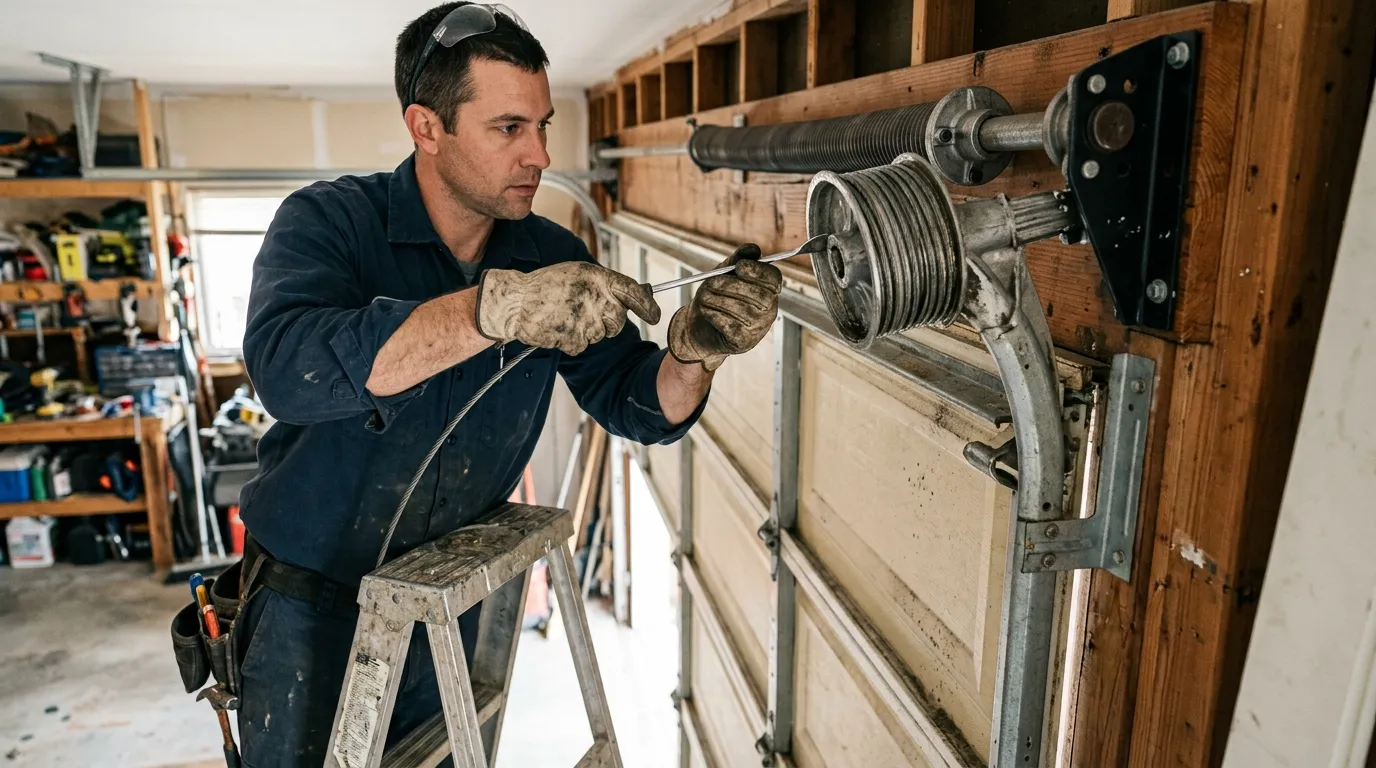
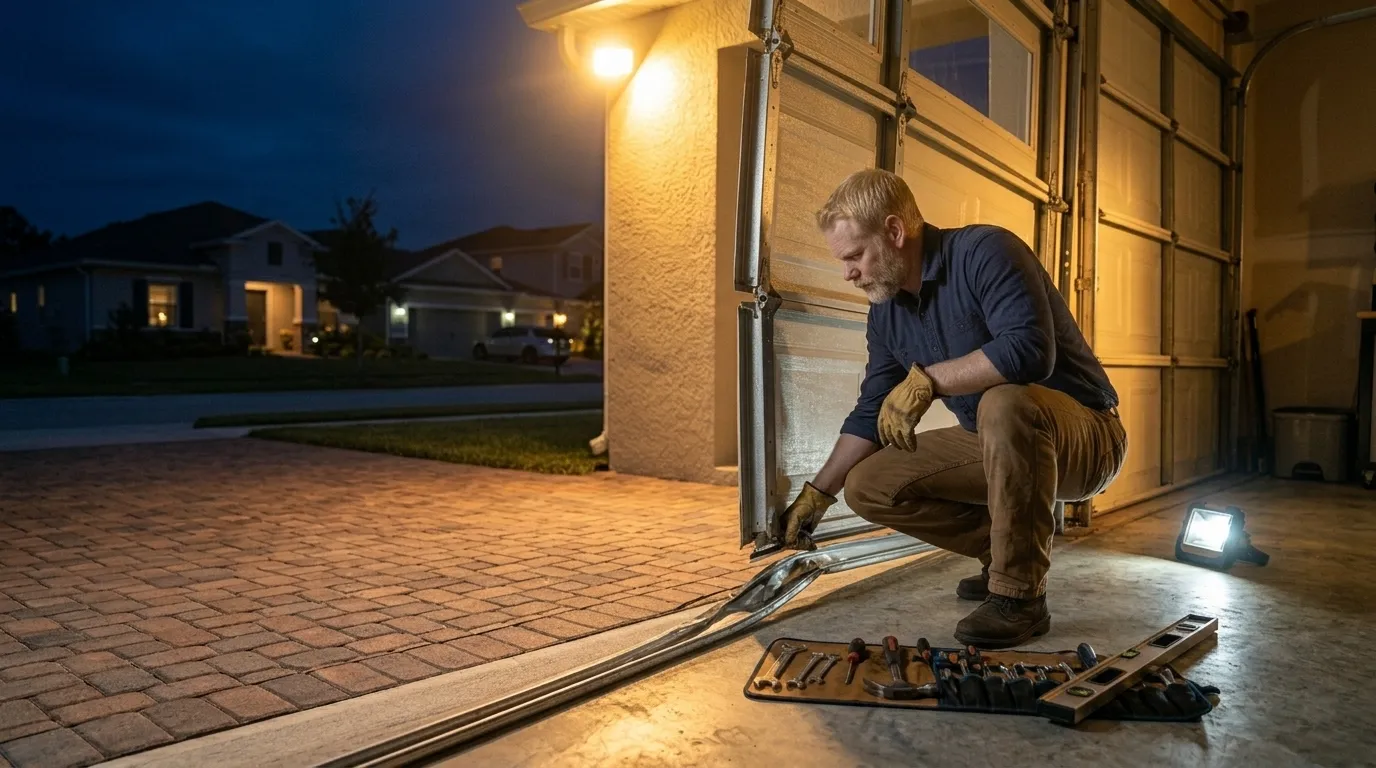
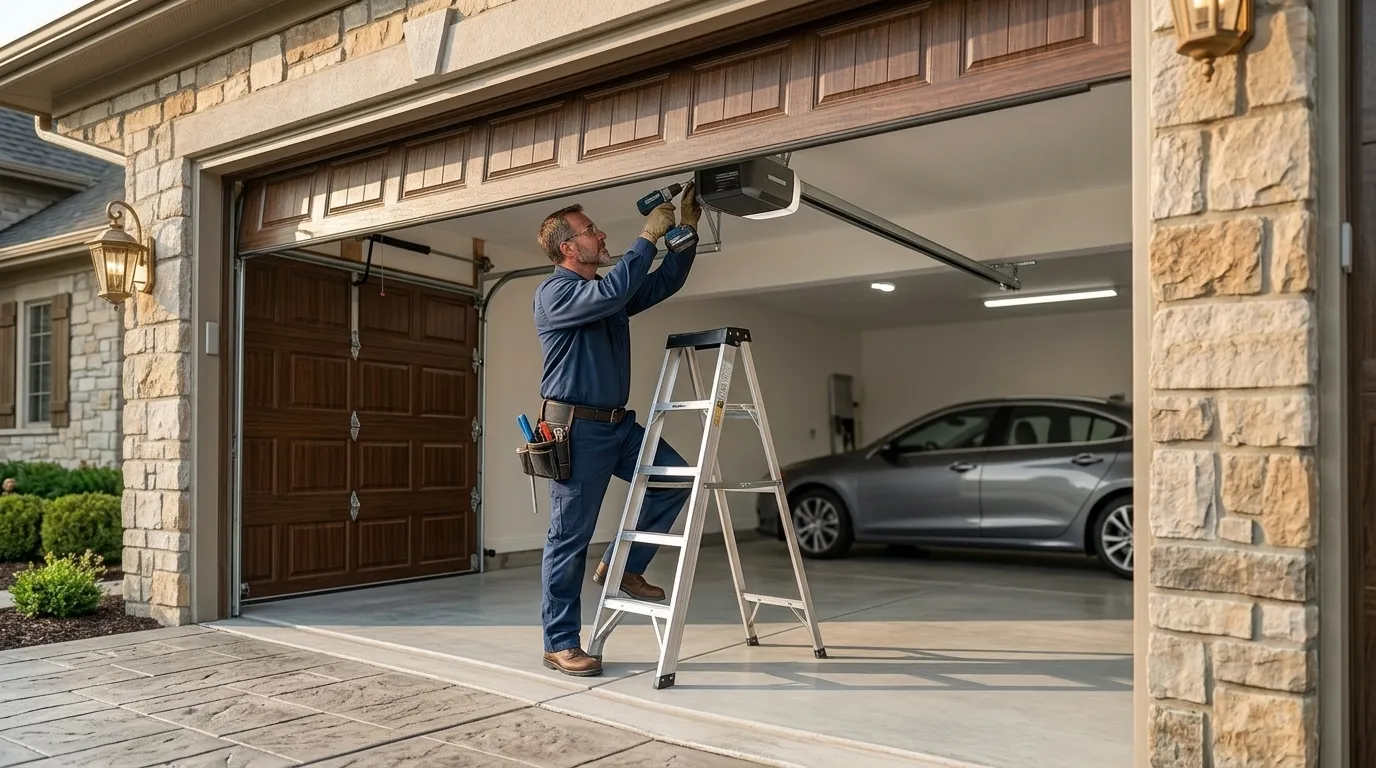
A service call isn't just someone showing up with a wrench. In this area, where houses went up mostly between 1938 and 2006 with the median landing around 1977, the first thing we do is figure out what decade your hardware is actually from, because that decides everything after. A door that won't open might be a broken spring, a snapped cable, or an opener gear that gave out - and on a house from the seventies, half the time it's original torsion hardware nobody has touched since it was installed. You should call when the door won't move at all, when it slams down instead of lowering, when a spring has visibly separated, or when the opener runs but the door doesn't respond. You don't need to call for a squeak you can fix with a can of white lithium grease. That's the one honest limit here: if the fix is a fifteen-minute lube job, we'll tell you that on the phone instead of billing a truck roll for it. Waiting on a broken spring, though, is how a cable snaps next, and that turns a one-part repair into a two-part one.

The Situation

Reynoldsburg and the ring of areas around it - Whitehall five miles out, Blacklick Estates six, Gahanna seven, out to Bexley and Canal Winchester at eight - don't share one housing era. The build years here run 1938 to 2006, but the bulk of the stock, across roughly 30 named subdivisions and pockets, sits in that 1960s-70s band. That matters on a service call because a door from 1968 and a door from 1998 fail differently. The older ones tend to have single-torsion-spring setups on wood jambs that have shifted a little over fifty years. The newer builds usually have galvanized track and steel jambs, so the failure points are more likely the opener or the rollers than the structure itself. With around 95,004 households and about 50,960 of those owner-occupied across the service area, we see a lot of both, sometimes on the same street. Part of a service call is just reading which era we're standing in front of before touching anything, because torquing down a spring on old hardware the way you'd do it on new hardware is how you strip a bracket that was never rated for it.

What the Weather Here Does to It

This area sits in a cold-severe climate band, and that shows up in the calls we run. Steel contracts in the cold, which tightens tolerances that were already loose on older track - a door that ran fine in August can bind or grind by January on the exact same hardware. Torsion springs lose a measurable amount of lifting power as temperatures drop, which is why a spring that was marginal in warm weather sometimes fails outright in a cold snap instead of just squeaking a warning first. Concrete slabs and driveway aprons in a cold-severe zone also heave slightly through freeze-thaw cycles, and a slab that's moved even a quarter inch can throw a track out of plumb without anyone noticing until the door starts rubbing on one side. A service call in the cold months usually includes checking track alignment against the slab, not just the door itself, because on a lot of these older Reynoldsburg-area houses the two have drifted apart a little at a time for years.

What Changes With the Season

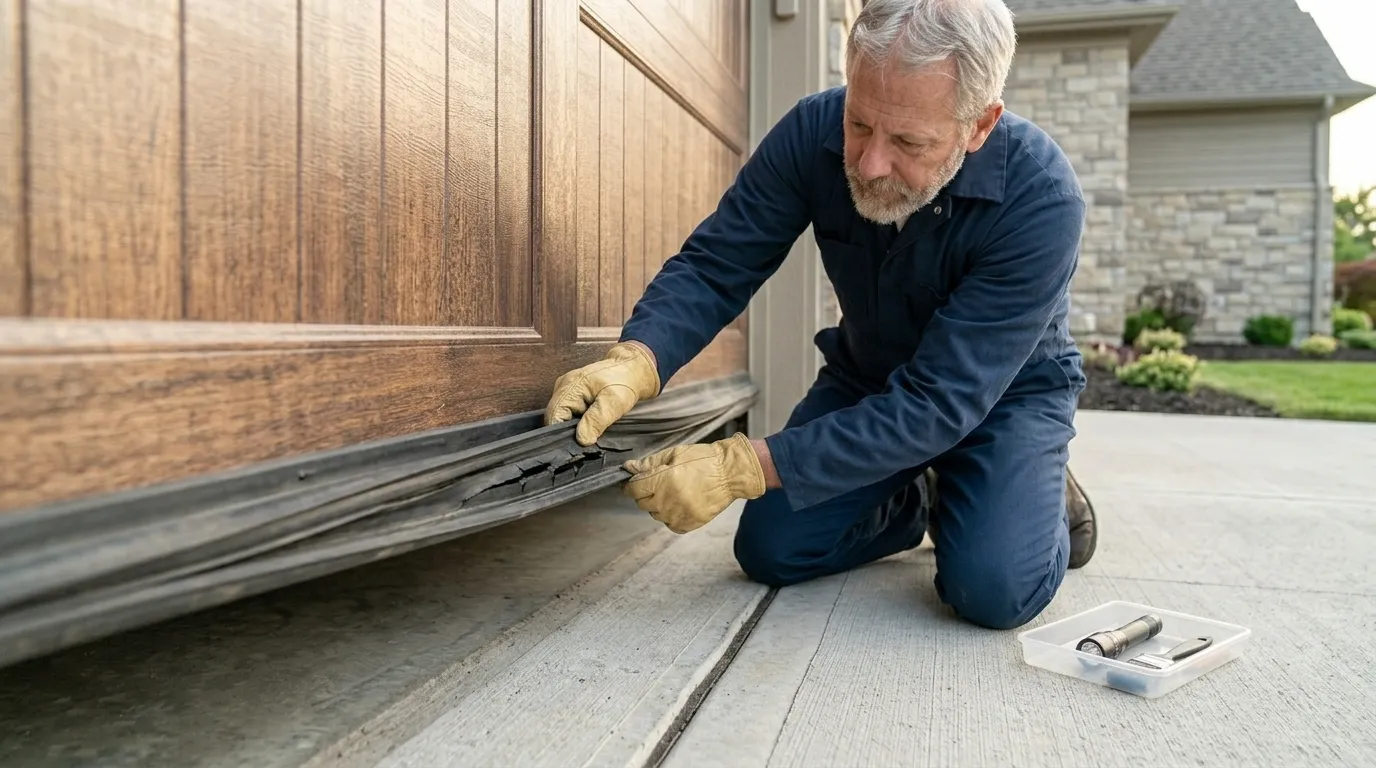
Cold weather doesn't just slow a door down, it changes what a service call needs to include. Lubricant that's fine in summer thickens in the cold and adds drag exactly when a spring already has less lift to give, so a seasonal call often means swapping to a lubricant rated for the cold-severe range this area sits in rather than just reapplying what's on the shelf. Weatherstripping at the bottom panel also hardens and cracks faster here than it would in a milder climate, and a stiff or torn seal lets in the kind of cold that runs up a heating bill fast in a house built in the seventies with original insulation. We also check opener force settings each cold season, since a door that closes with too much force on a cold, stiff track can reverse unpredictably or, worse, not reverse at all. None of this is exotic work. It's the same handful of checks every time, just weighted differently depending on whether it's July or January, and on whether the house behind the door is closer to 1960 or 2006.
How it works

From “it’s stuck” to “it’s fixed”

Tell us what’s wrong - Reynoldsburg garage door service

Tell us what’s wrong

Describe the symptom - won’t open, loud bang, opener runs but the door won’t move.

On-site diagnosis - Reynoldsburg garage door service

On-site diagnosis

A technician tests the door under power and by hand and finds what actually failed.

Clear, up-front plan - Reynoldsburg garage door service

Clear, up-front plan

You get the fix that’s needed and what drives the cost - before any work starts.

Repaired & tested - Reynoldsburg garage door service

Repaired & tested

The repair is done, the door is set true and tested, and the work area left clean.

Serving Reynoldsburg, OH - tell us what your door’s doing and we’ll take it from there.

How we work

What to expect

Diagnosis firstEvery visit starts by finding what actually failed - not a pre-written parts list.
The right part for the doorSprings and openers matched to the door’s weight and age, so the fix holds up.
Straight answersWhen a repair makes more sense than a replacement - or the reverse - you hear it plainly.
Clean, careful workTension released safely, hardware set true, the door tested under power before we leave.
Questions

Frequently asked

Straight answers about garage door repair in Reynoldsburg. Still unsure? Ask us directly.

How do I know if it's the spring or the opener?

If the door won't budge even when you pull the manual release and lift by hand, it's almost always a spring. If it lifts fine by hand but the opener won't move it, the problem is in the opener or its gearing. On the 1960s-70s stock common in this area, springs are the more frequent call.

Why does my door act up worse in winter?

This area sits in a cold-severe climate band, and cold steel loses tension and tightens tolerances. A spring that was already worn loses more lifting power in the cold, and a track that's slightly out of alignment binds harder once temperatures drop.

Do you replace old original hardware or just repair it?

Depends on condition. A lot of houses here still run original torsion hardware from as far back as the 1960s-70s build era. If the shaft and brackets are sound we'll repair around them; if the whole system is original and worn, replacement is usually the better call than patching it piece by piece.

Is a squeaky door worth a service call?

Usually not on its own. A squeak is often just a lubrication issue you can handle yourself. We'd rather tell you that over the phone than send a truck for a fifteen-minute fix - save the call for when the door binds, slams, or won't respond at all.

Ready to get your garage door sorted?

Tell us what it’s doing and where you are in Reynoldsburg - we’ll take it from there.

Request a QuoteCall