This Area's Housing
Granville South's homes cluster around a median build year of 1976, which puts most garages here right in the middle of the county's mid-century building push. That's a touch earlier than the 1977 median across our whole coverage area, and it means the doors and door hardware on this street or that one are more likely to be original or first-generation replacements rather than anything installed in the last decade.
With 481 households, this is a smaller pocket compared to the 95,004 households and 50,960 owner-occupied houses spread across our full service area. It also runs well ahead on income - $129,716 median here against $94,040 across the wider area - which tends to mean owners replace a failing door outright more often than they patch it twice and hope.
The area sits in the same cold, severe-winter climate band as the rest of our coverage. That matters for garage doors specifically: steel contracts in the cold, lubricant thickens, and hardware that was fine in October seizes up on the first hard freeze.
How That Shows Up in the Door
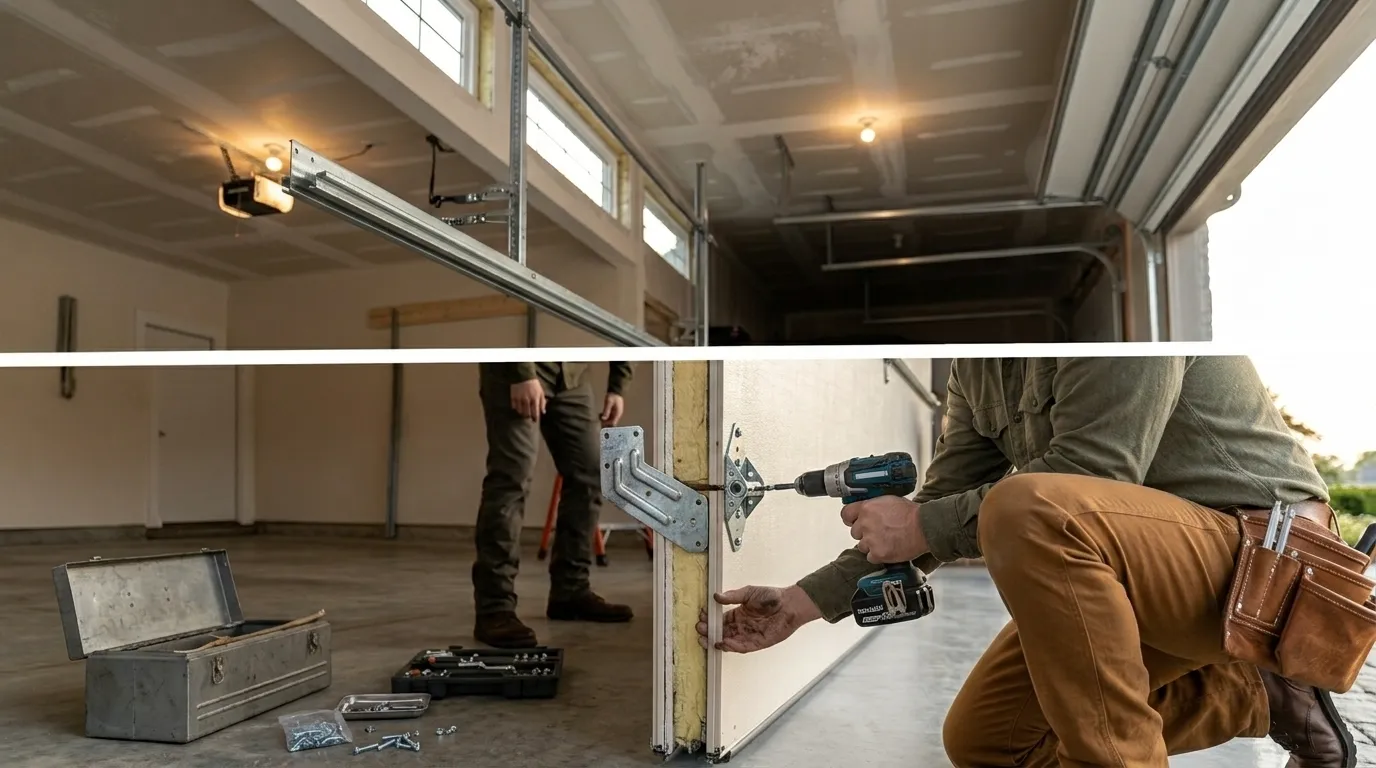
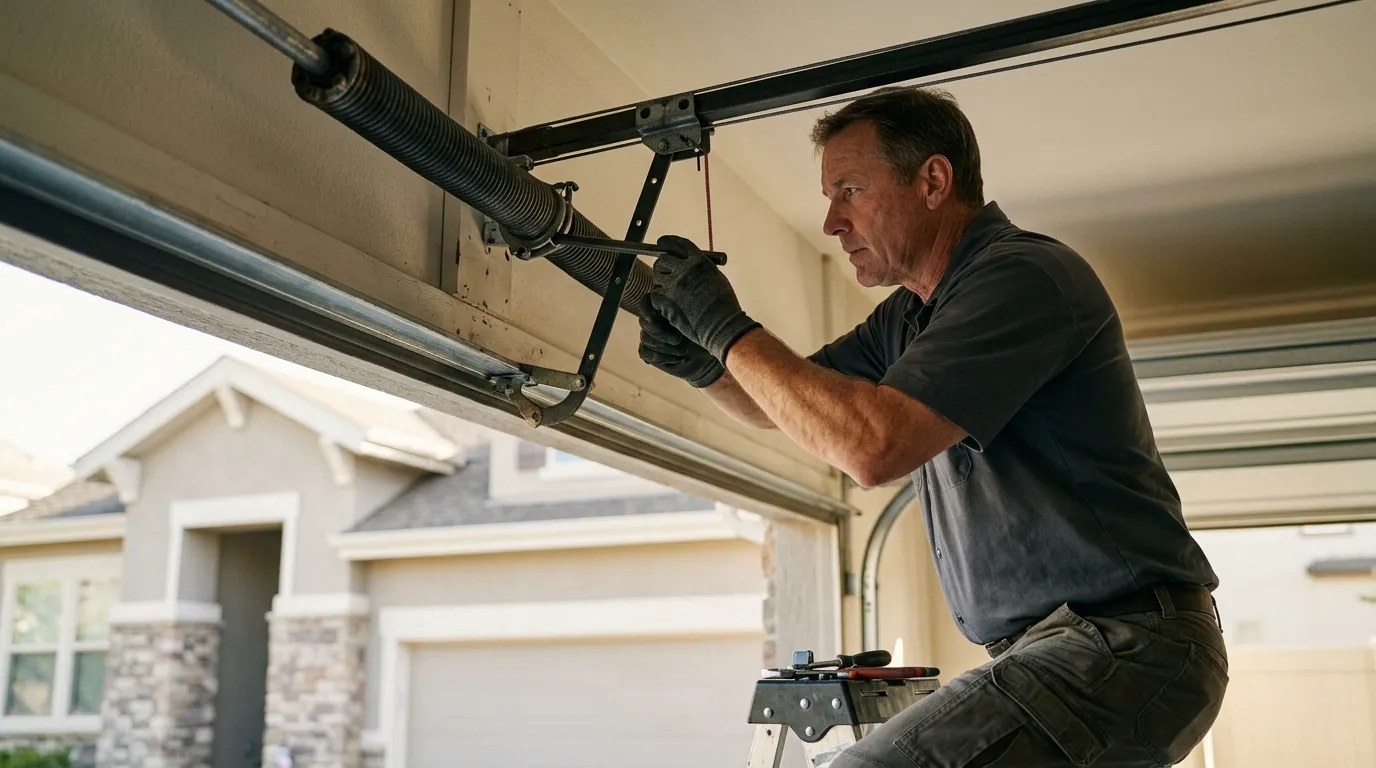
A garage built in 1976 usually came with a steel sectional door, and depending on when the garage itself was added or upgraded, you'll find either extension springs mounted along the horizontal tracks or an early torsion setup bolted above the opening. Neither one is wrong, but neither is what gets installed today, and the springs, drums, and end bearings from that era aren't sized the same as current stock.
Insulation is the other tell. Doors from this build era are almost always single-layer steel with no foam core, which is fine structurally but means the door itself does very little to slow heat loss - a real factor once winter settles in on a cold-climate house like the ones here.
Openers are usually the newest part of the system, since most owners replace a dead opener before they replace a working door. That mismatch - a 1970s door on a 2000s opener - is common enough here that it's often the actual source of a grinding or slow-closing complaint, not the door itself.
The Drive Over
Granville South is about 14 miles from our shop in Reynoldsburg, which puts it among the farther stops on our regular route rather than a quick trip around the corner. We don't keep a second location or a drop point out this way - every job here starts with a truck coming from Reynoldsburg.
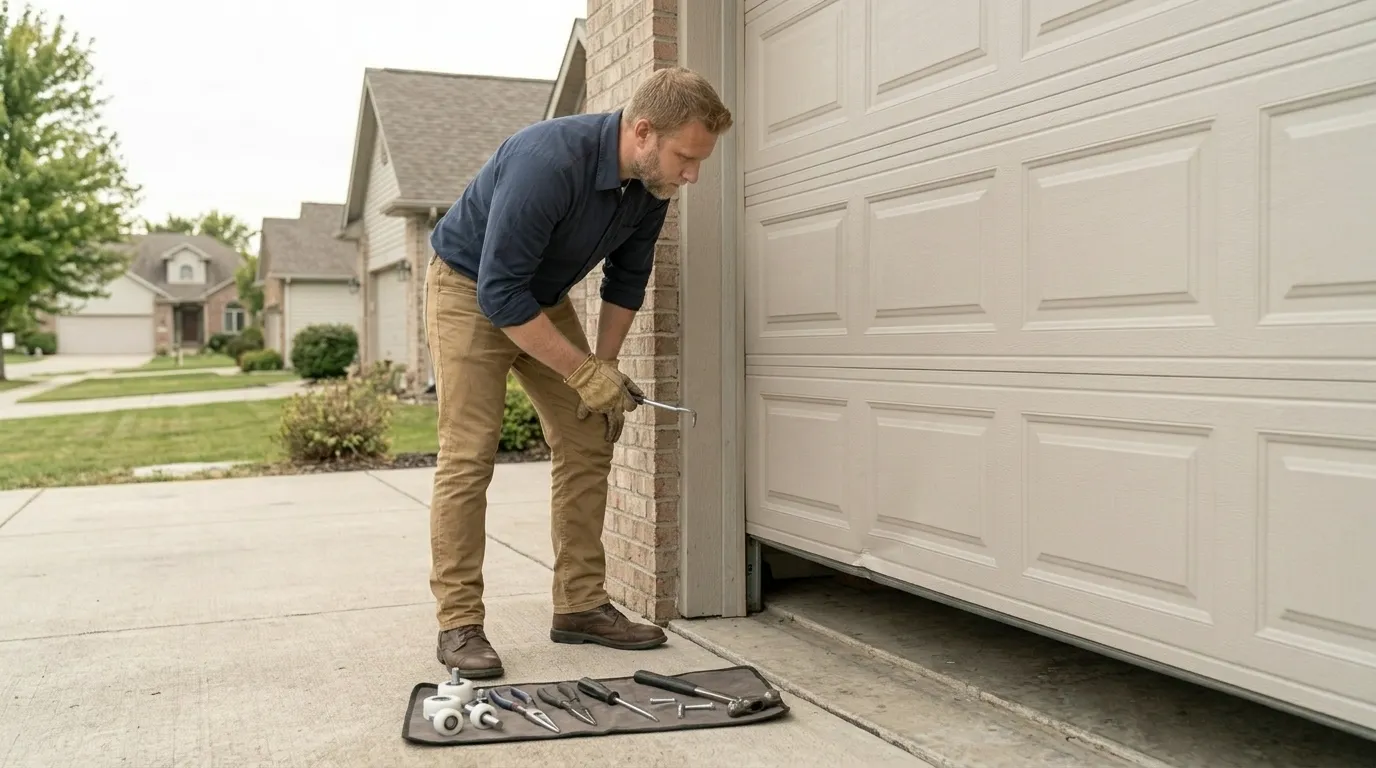
That distance is worth knowing up front. It doesn't change the work once we're on site, but it's part of why we ask a few questions about the door and the fault before we load the truck - a spring job and a full door replacement call for different parts, and getting that right before the 14-mile drive saves everyone a second trip.
If you're not sure whether what you're dealing with is a quick fix or a bigger job, reach out through our site and describe what the door's doing.