Can You Do This Yourself
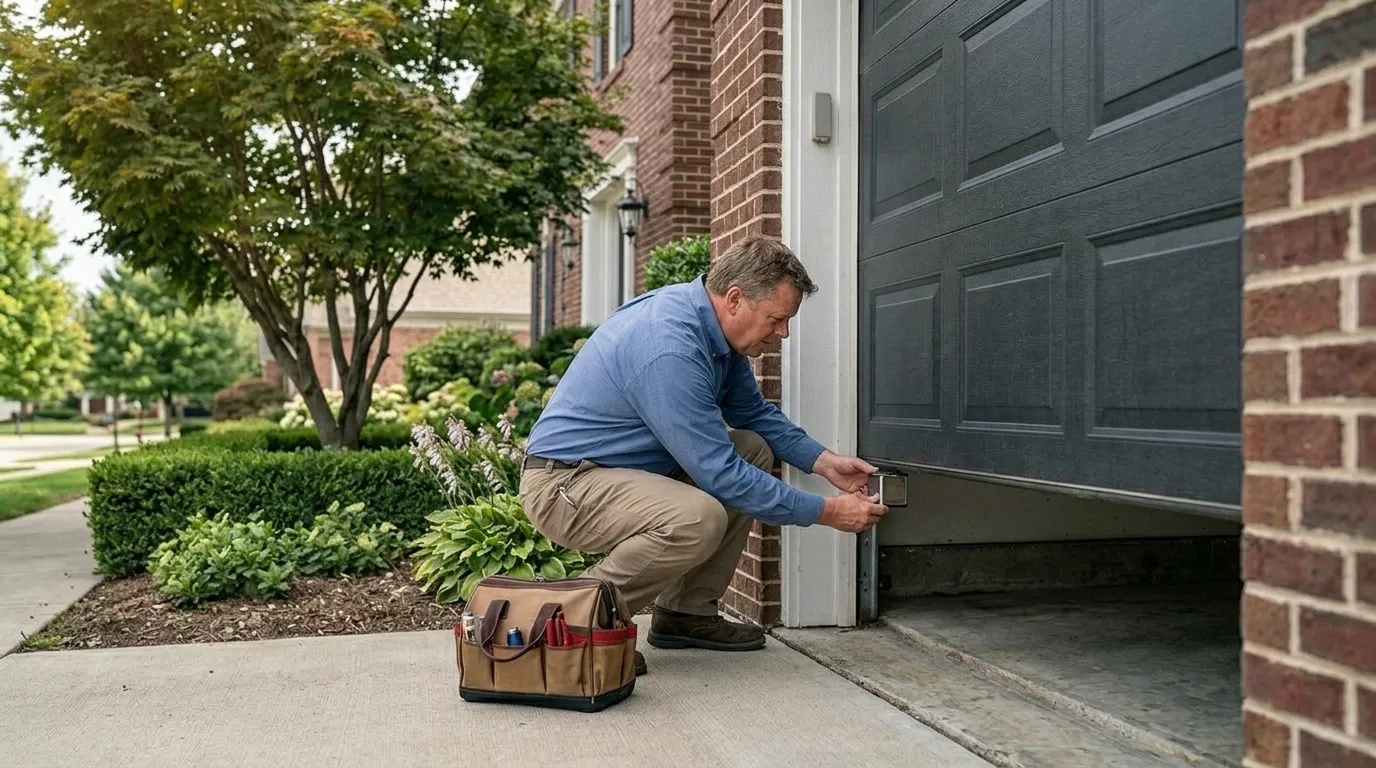
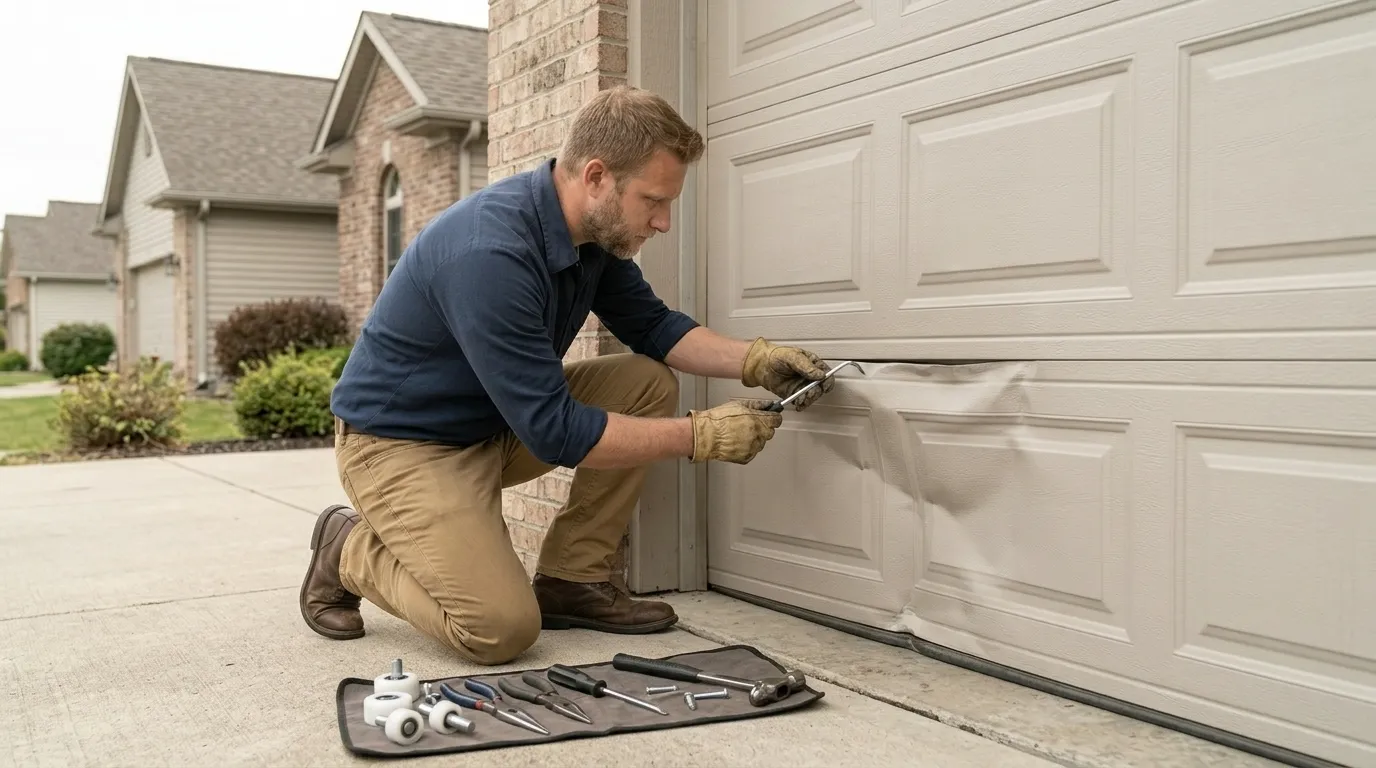
A fair number of Whitehall's garages date to right around 1961, well ahead of the median build year across the wider Reynoldsburg service area, which lands closer to 1977. That fifteen-year gap matters because it's the difference between a door built for a later, heavier steel panel system and one built for the lighter one-piece or early sectional doors common in that era. If your door won't open, check the obvious first: is the opener plugged in, is the manual lock engaged, did a spring snap (look for a gap in the coiled torsion spring above the door). Anyone can tighten a loose bracket bolt or clear a track of debris. What you should not touch is a wound torsion spring - on older hardware sized for a 1960s door, the wrong replacement spring under tension can put someone in the hospital. If the door is stuck shut, off its track, or the spring is broken, that's a call, not a project.
Parts We Carry
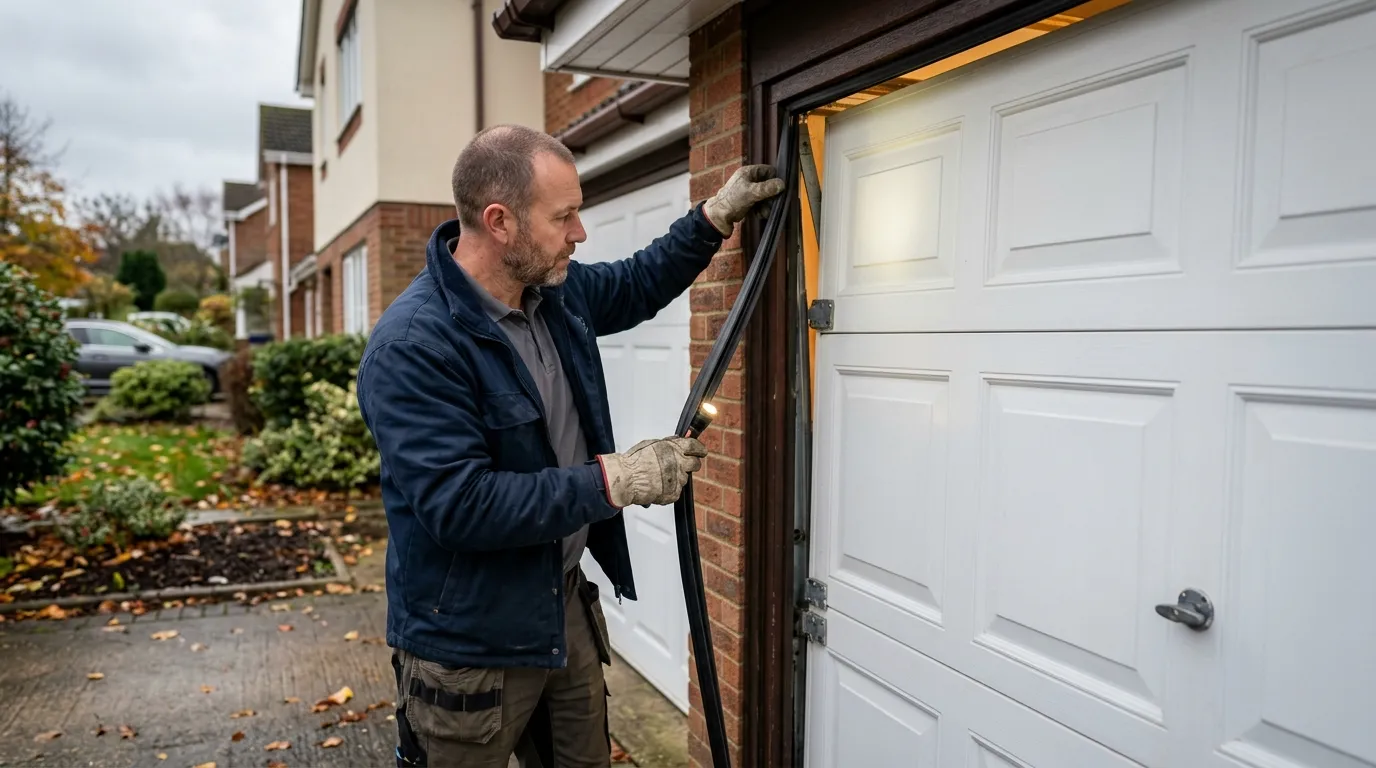
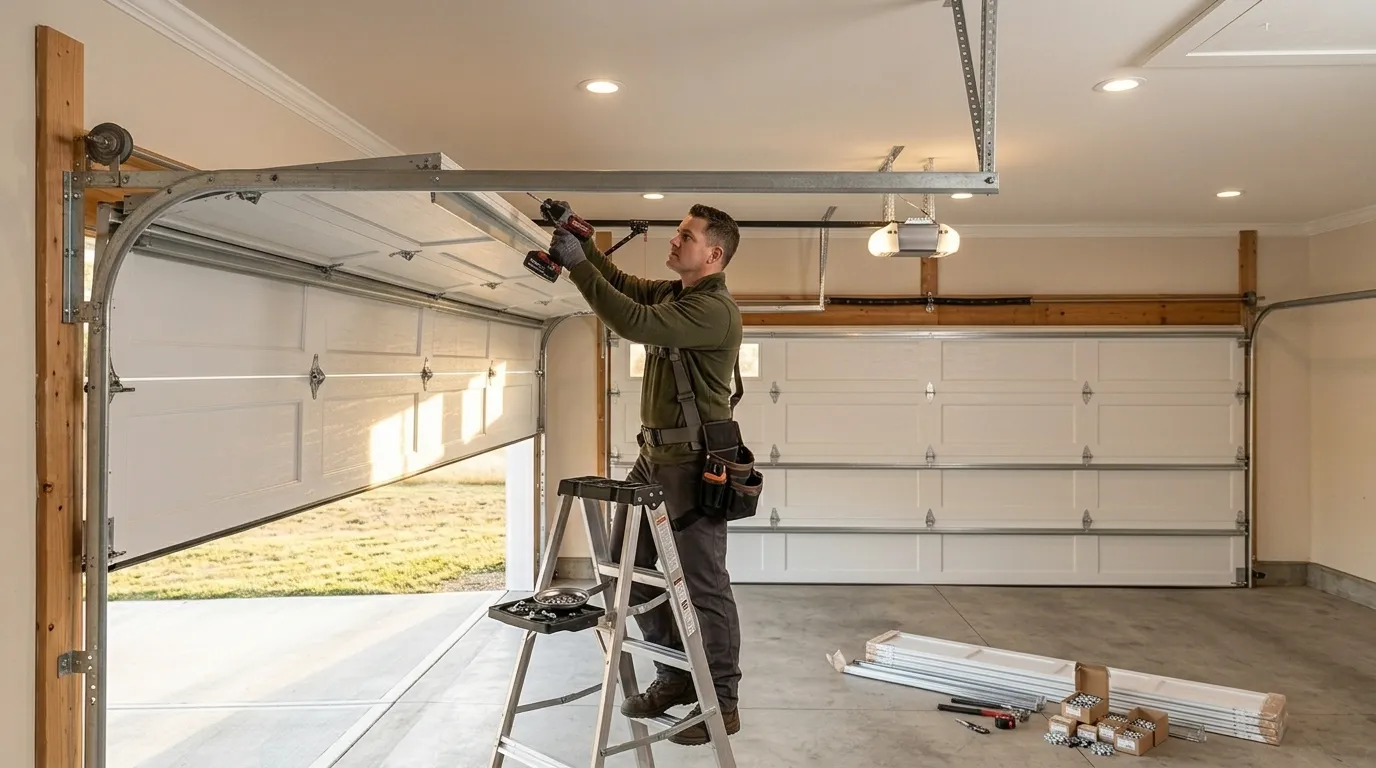
Whitehall's older housing means we're often working with narrower track widths, older-style extension springs mounted along the horizontal rail rather than torsion springs overhead, and hinges sized differently than what you'd find on a door built in the 1980s or later. We stock torsion and extension springs across a range of sizes because a 1961-built garage rarely takes the same spring as a house built two decades later. We carry rollers (nylon and steel), cables, hinges, and standard opener parts on the truck for most jobs. What we don't carry on every run is a replacement panel matched to a discontinued 1960s door design - if a single panel on an original door is dented or rusted through, we may need to order it or talk about full replacement instead of chasing a part that's no longer made.
How Long You Are Without the Door
We run out of Reynoldsburg, about 5 miles from Whitehall, so the drive itself isn't the bottleneck - what determines how long your door sits broken is usually the part. If the fix is a standard spring, cable, roller, or opener part we carry, we can usually get the door moving again same visit. If it's a part specific to an older 1960s-era door - a discontinued panel profile or a track width nobody stocks anymore - that becomes a special order, and the wait is on the supplier, not on us. We'll tell you straight which category your repair falls into before we start, so you're not guessing whether you'll have a working door tonight or next week.
What the Fix Involves
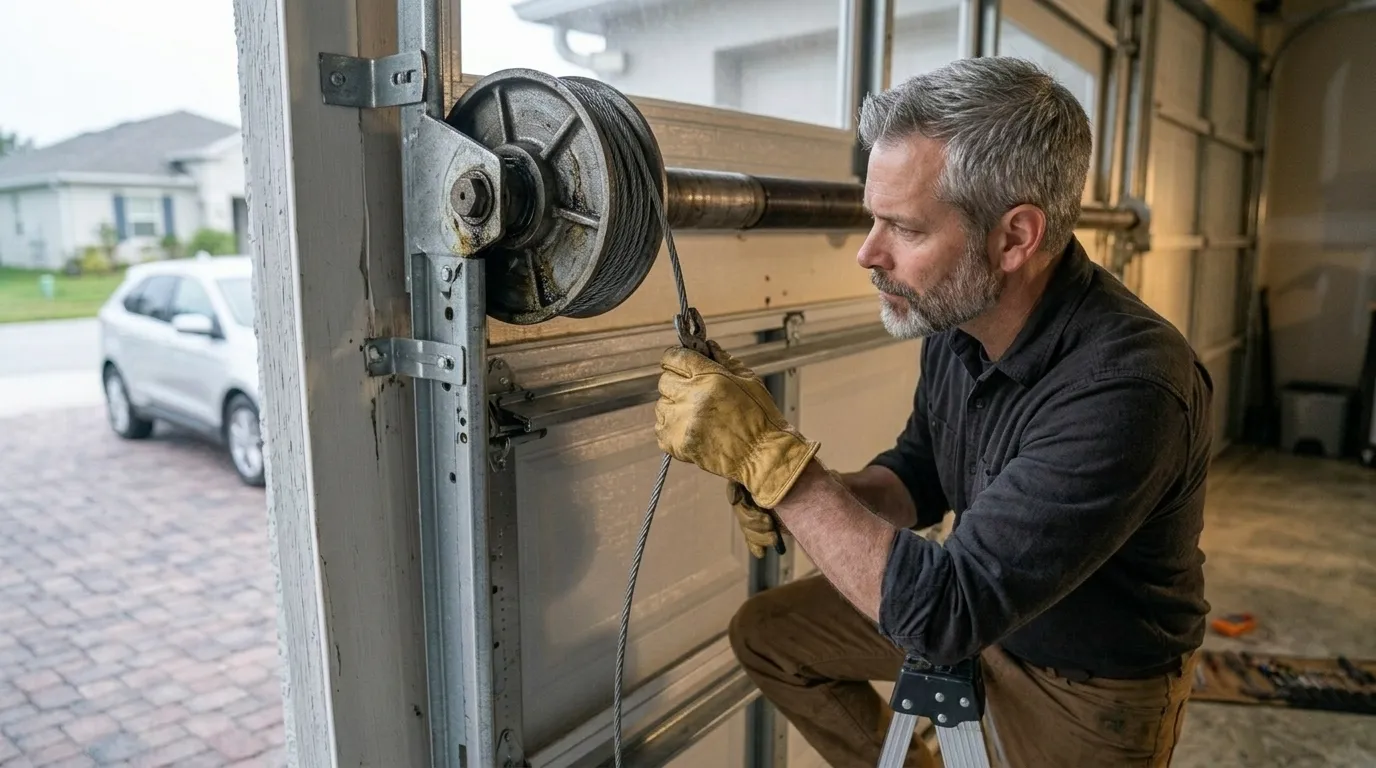
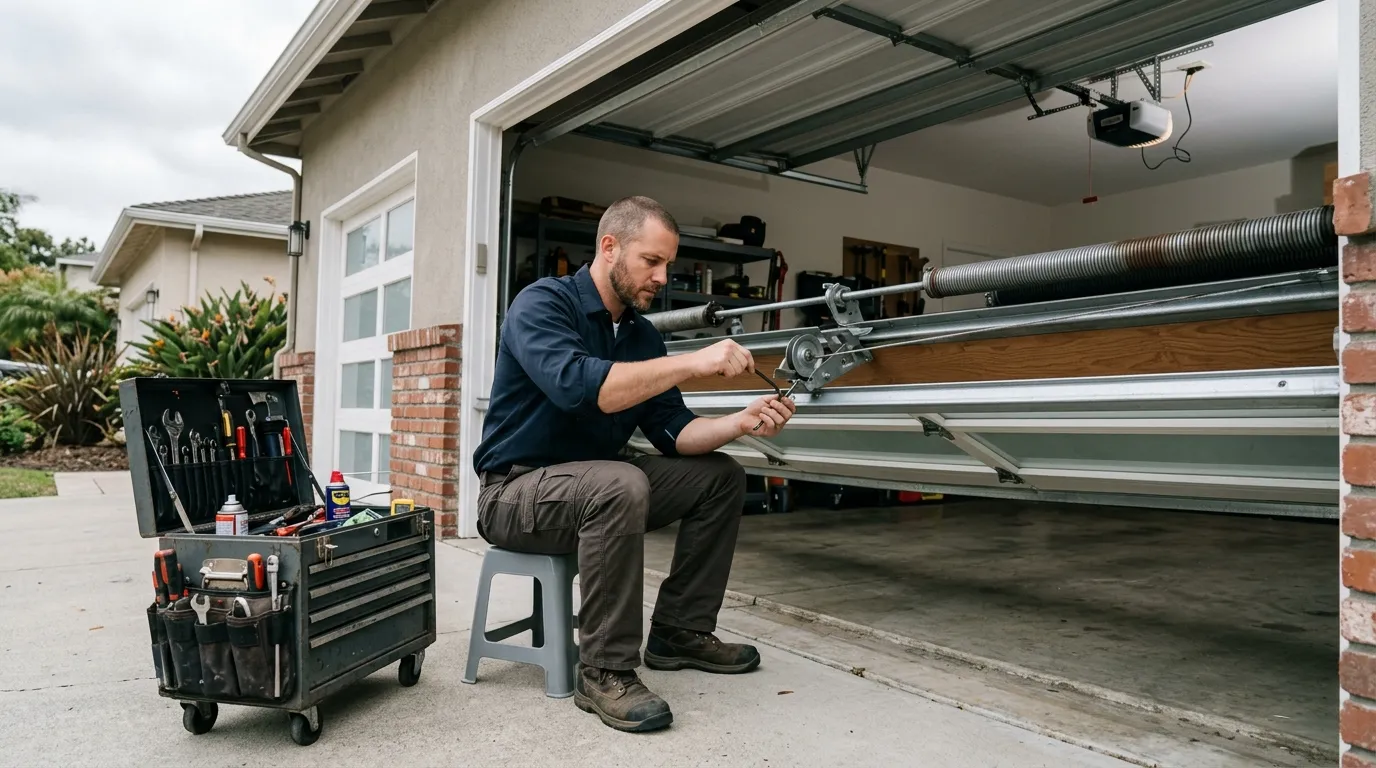
Most calls in Whitehall start with a look at the spring system, since that's the part most likely to have aged out on an older door. If it's a torsion spring, we unwind it safely, measure the door's weight and track geometry, and put in a spring matched to that specific door rather than a generic universal size. If it's an extension spring setup - more common on older doors here - we check the pulleys and safety cables at the same time, since those tend to wear together. From there we check rollers, hinges, and track alignment, because a door that's been sagging on worn rollers for years often needs more than just the one broken part replaced. We tell you upfront if a repair is patching an old door versus a smarter case for replacement - not every 1961 door is worth chasing parts for indefinitely.