Why It Happens Here
Most of the housing stock around Reynoldsburg went up between 1938 and 2006, with the median build year landing at 1977. That puts a huge share of doors and openers into the 1960s-70s bracket that spans the 30 named areas in this service area - old enough that the original torsion springs, often the builder-grade ones nobody rates for more than 10,000 cycles, are well past due. Springs don't fail gradually. They fail on a Tuesday morning when you're already late.
The other half of the story is the climate band, which the federal data classes as cold and severe for this region. Steel contracts in a hard freeze, and a spring already fatigued from forty-plus years of cycling loses whatever give it had left right when the temperature drops. That's why the emergency calls cluster the way they do - not random bad luck, but old hardware meeting cold snaps. Openers see the same squeeze: gear sets and circuit boards from that era weren't built for the duty cycle a modern household puts on a door, especially once a second car or a home gym cabinet gets parked in front of it every day.
We're not saying every house here has a bad door. We're saying if yours was built in that mid-century window and nothing's been replaced since, the odds are stacked differently than they'd be in a subdivision built in 2015.
What You Are Seeing
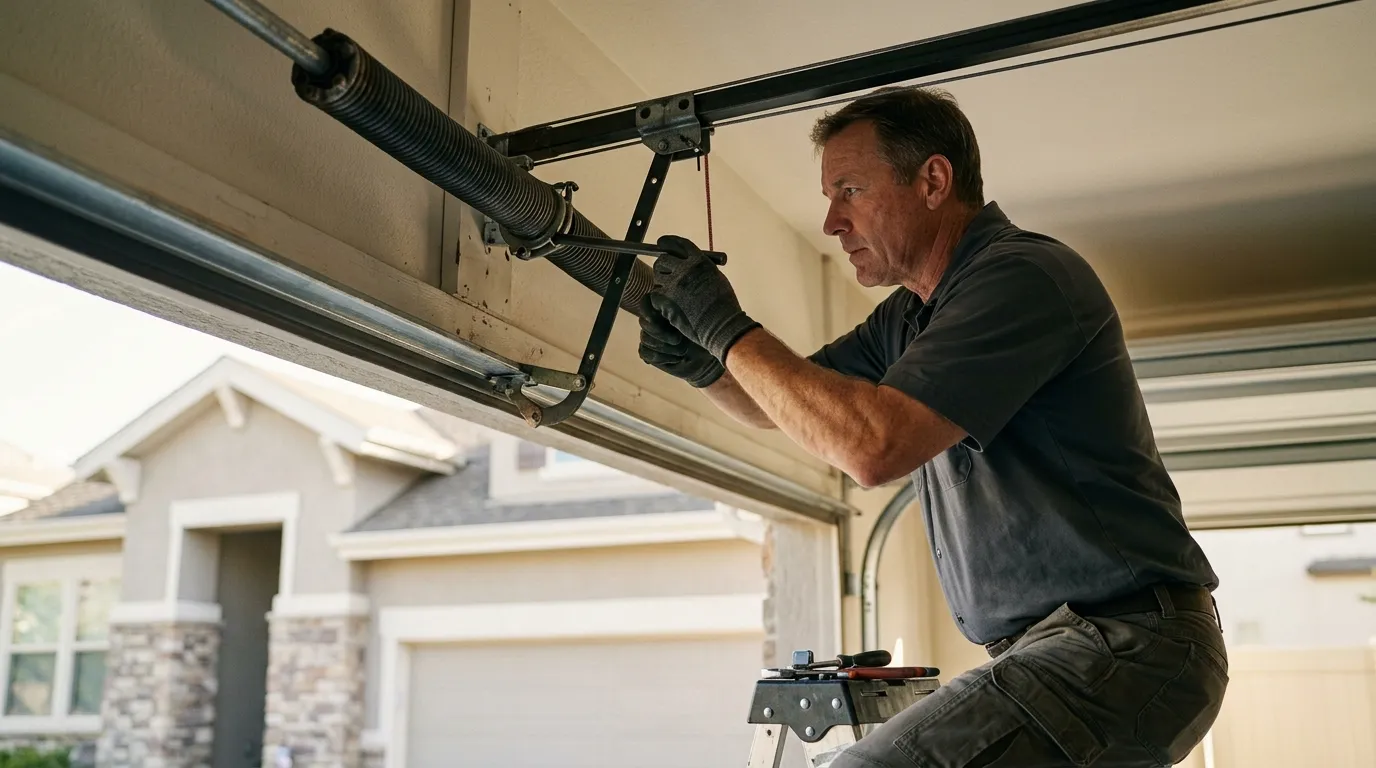
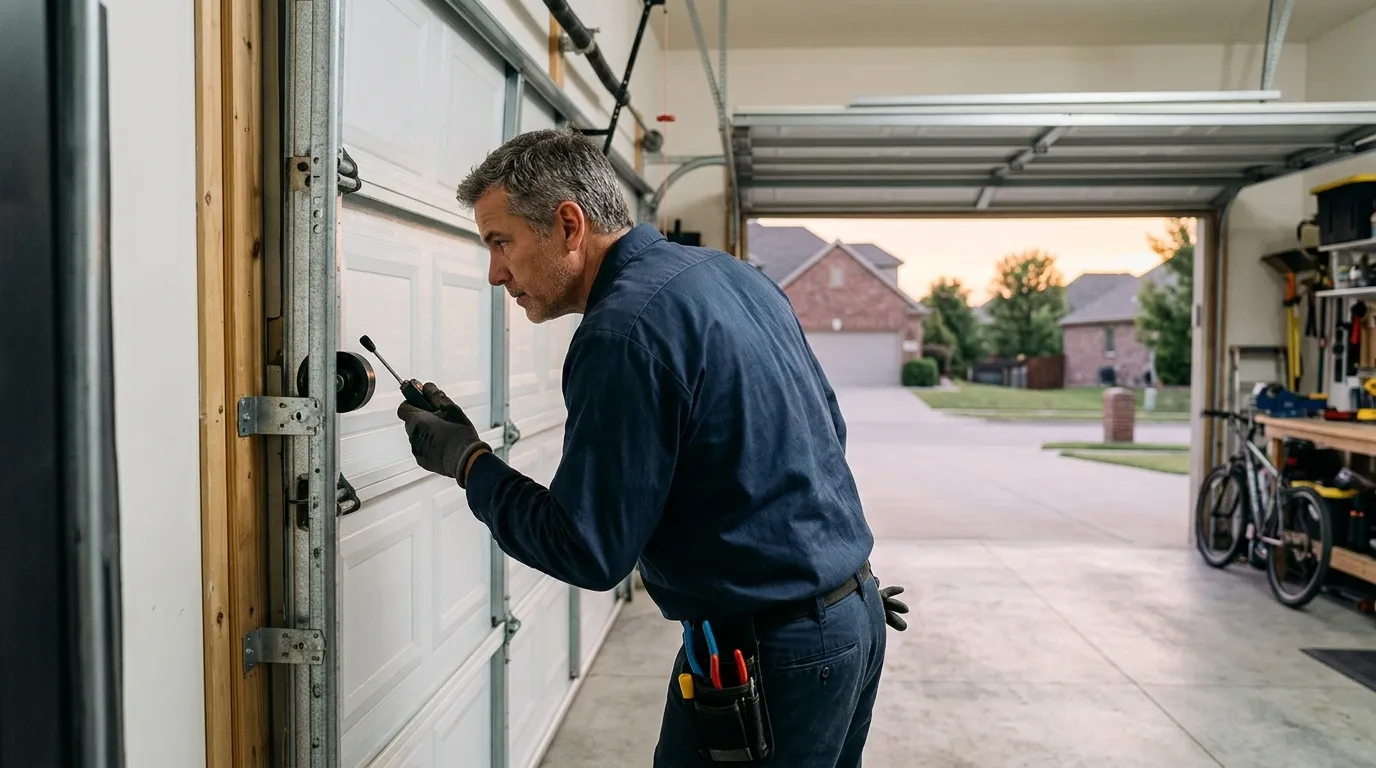
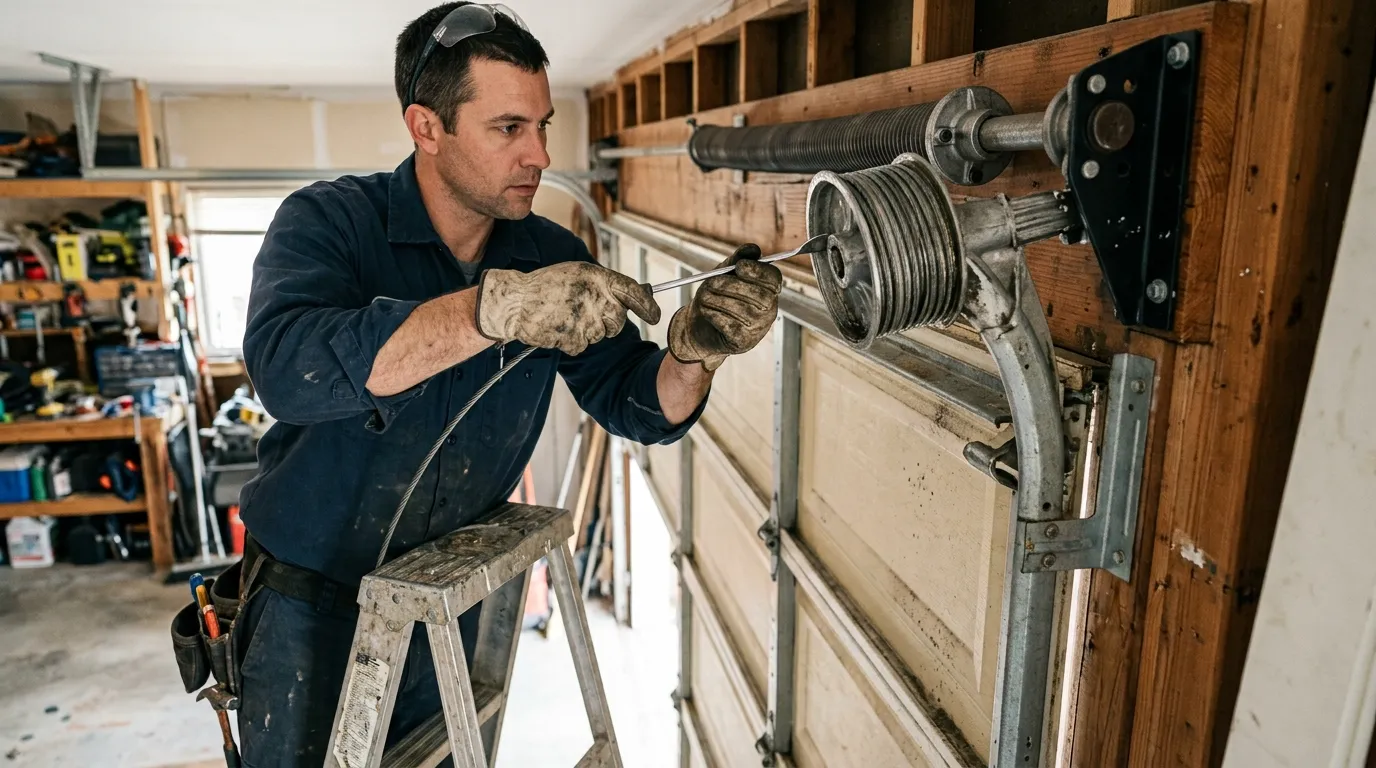
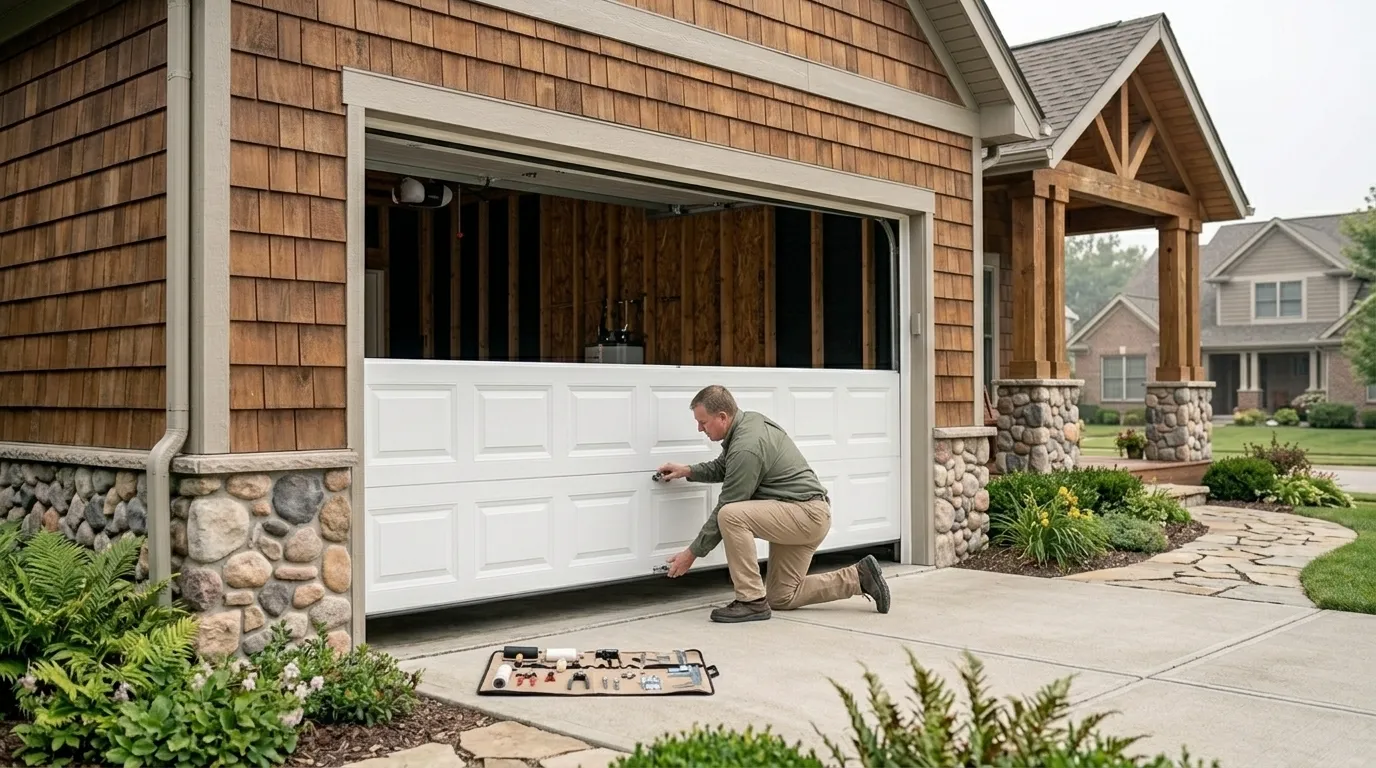
A torsion spring that's let go looks like a door that won't budge, or one that slams down the last foot of travel because the spring lost its tension mid-cycle. If you hear a bang from the garage and then the door won't lift with the opener or by hand, that's usually it - don't force it, the cable and drum can still be under load.
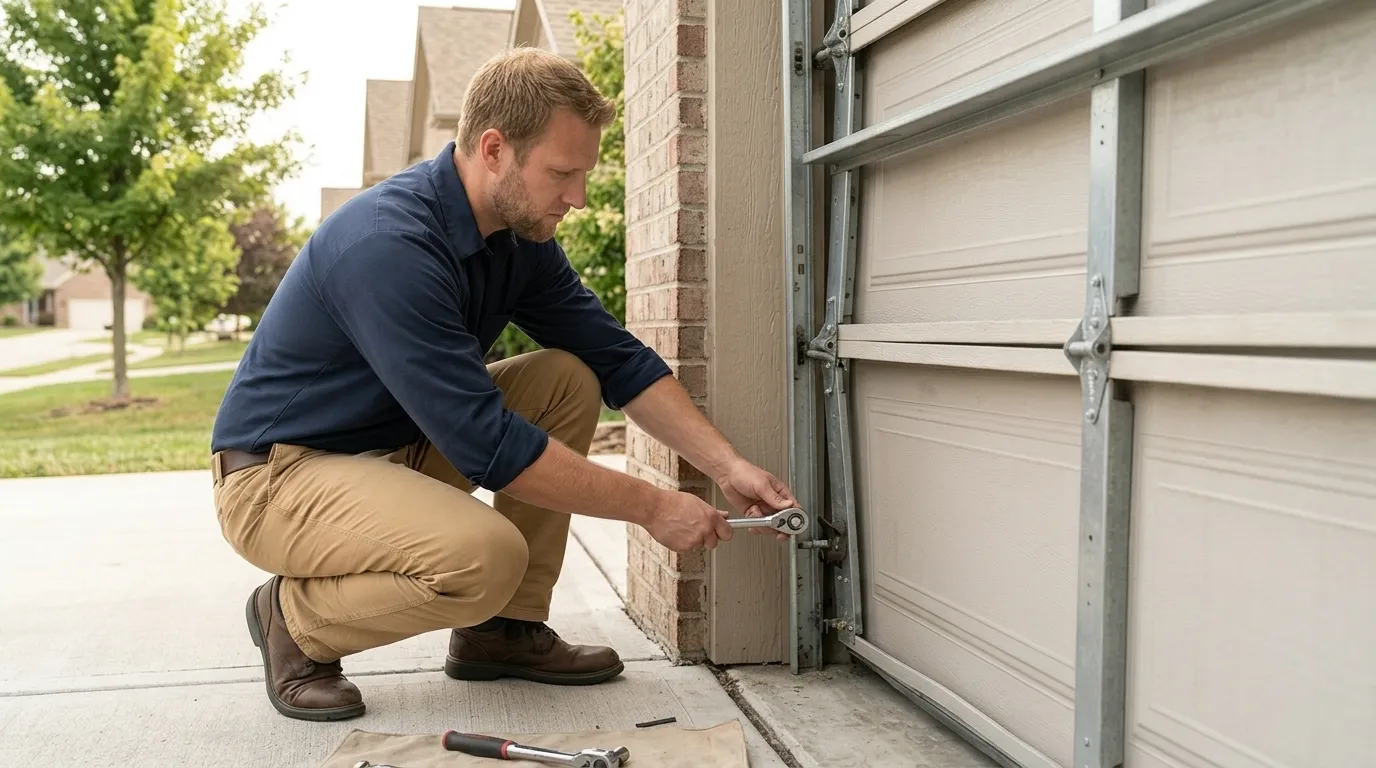
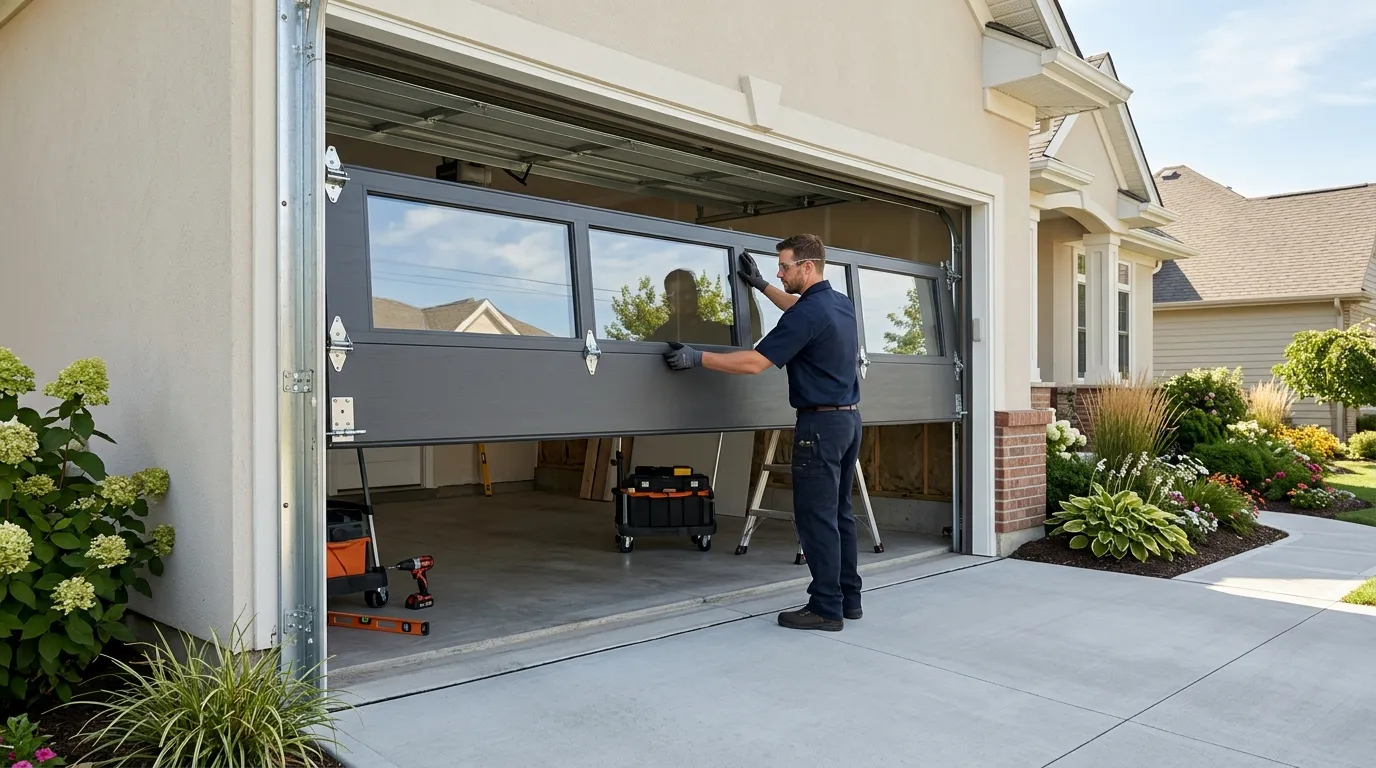
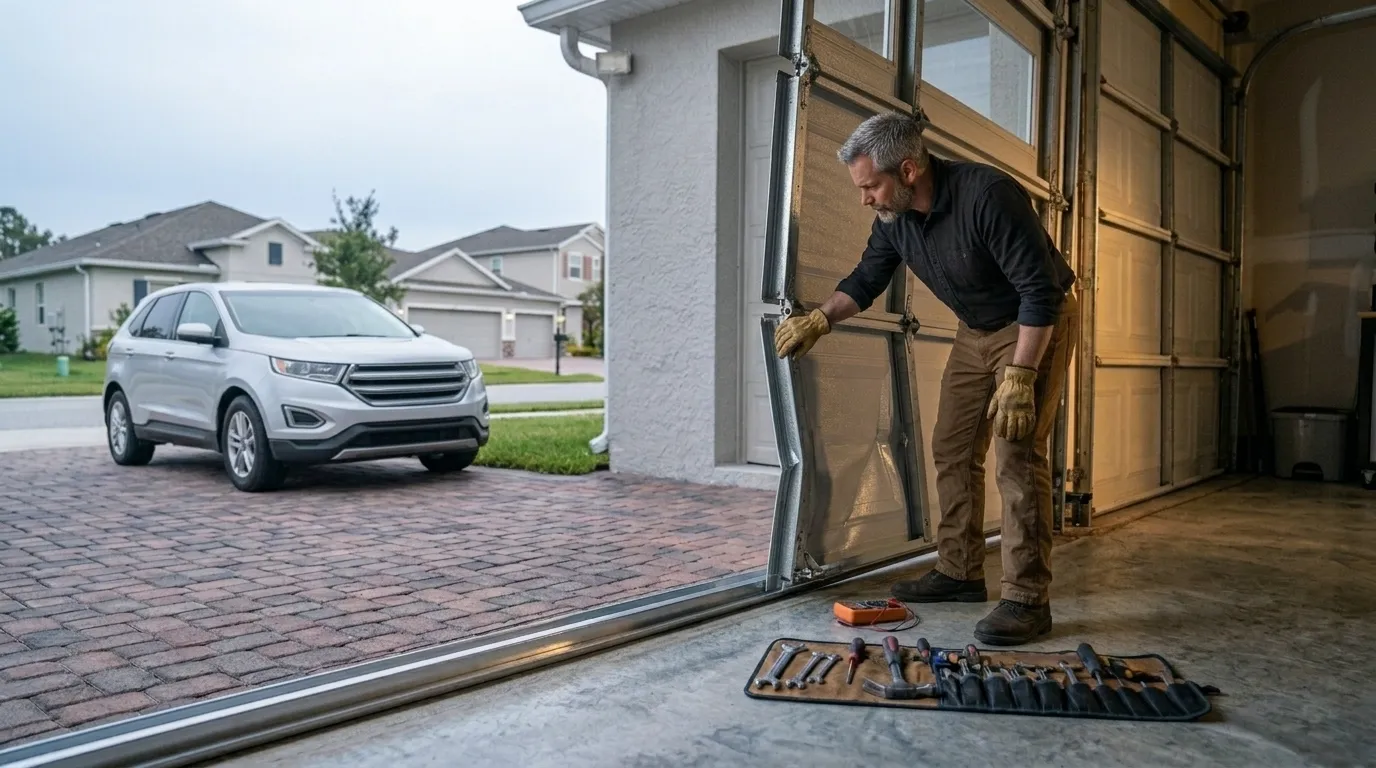
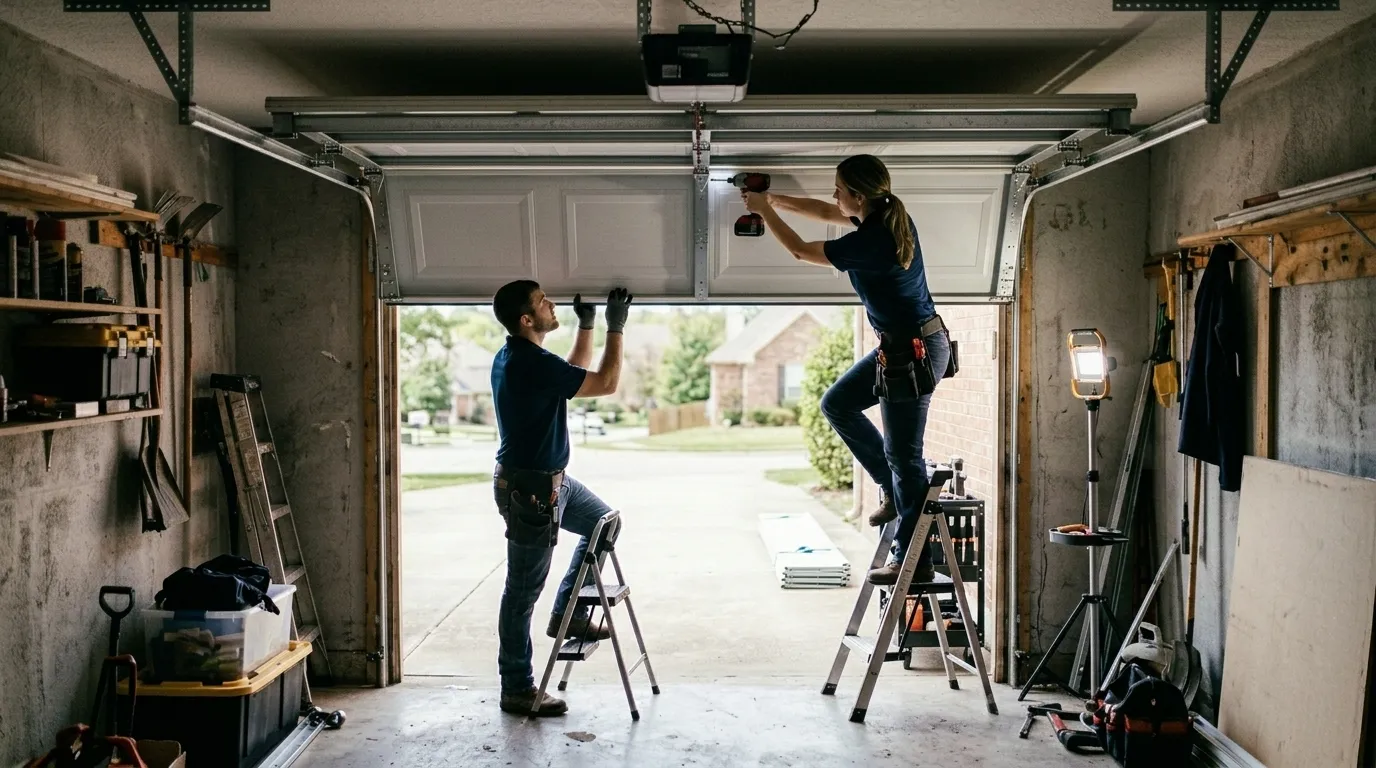
A cable that's jumped the drum shows up as a door hanging crooked, one side higher than the other, or a track that's bent where the roller popped out. Cold makes brittle cable strands worse, and a strand that's been fraying for months can finally part on a hard freeze morning.
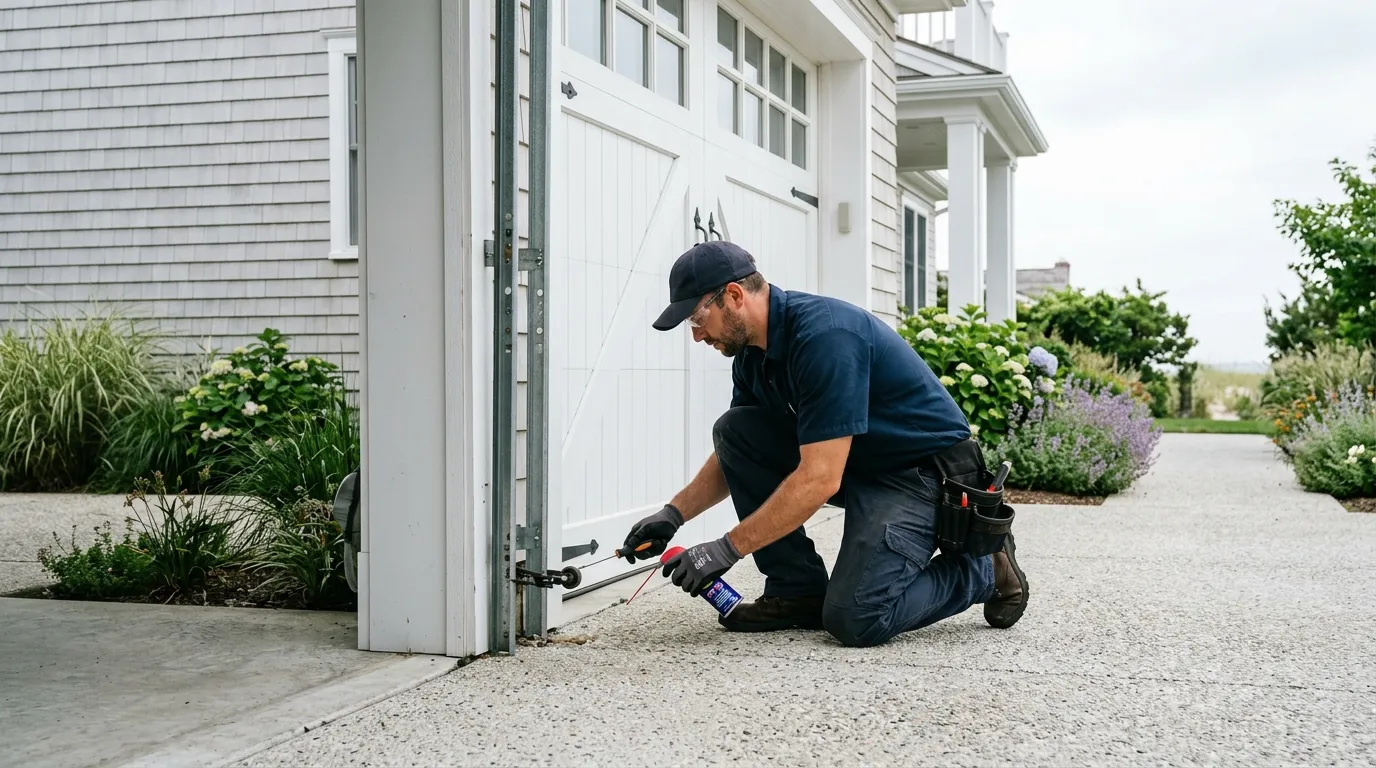
On the opener side, cold-stalled circuit boards and gear sets from older units often show as a motor that hums but doesn't move the door, or a remote that works some mornings and not others. That's different from a dead battery, and it's a different repair than a spring job.
Whichever of these you're looking at, the common thread is age plus temperature. None of it means you need a new door - most of these are single-part repairs - but a spring or cable failure on a door that's still moving under partial power is not a wait-and-see situation.
How to Book
Call and describe what you're seeing - door won't move, hanging crooked, opener humming but nothing lifting - and we'll get a sense of whether it's a spring, a cable, or an opener issue before a truck rolls. That helps us bring the right parts the first time instead of a second trip.
You can also start on our home page for the rest of what we cover if the issue turns out to be something other than an emergency repair - a new install, routine maintenance, or a panel replacement. This page is just about getting a broken door moving again.