
Can You Do This Yourself
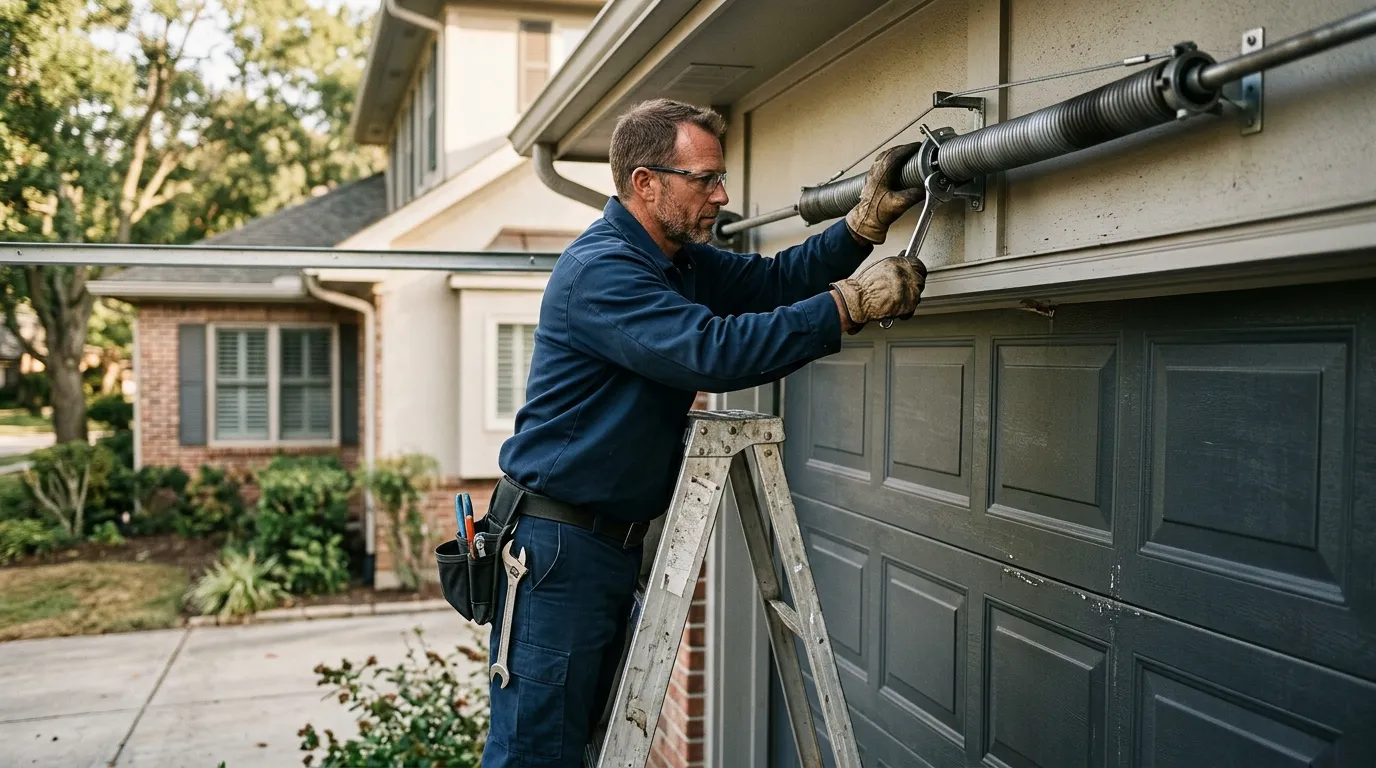
A house built around 1961, which is what most of Whitehall is working with, usually shipped with an extension-spring lift system, not the torsion bar that became standard on newer construction. If your door won't budge and you can see a long spring stretched along the horizontal track rather than a coiled shaft over the header, that's an extension setup, and it's a different animal to work on. The stretched spring stores less energy than a torsion spring but it can still whip a cable hard enough to cut you if it lets go while you're standing under it.
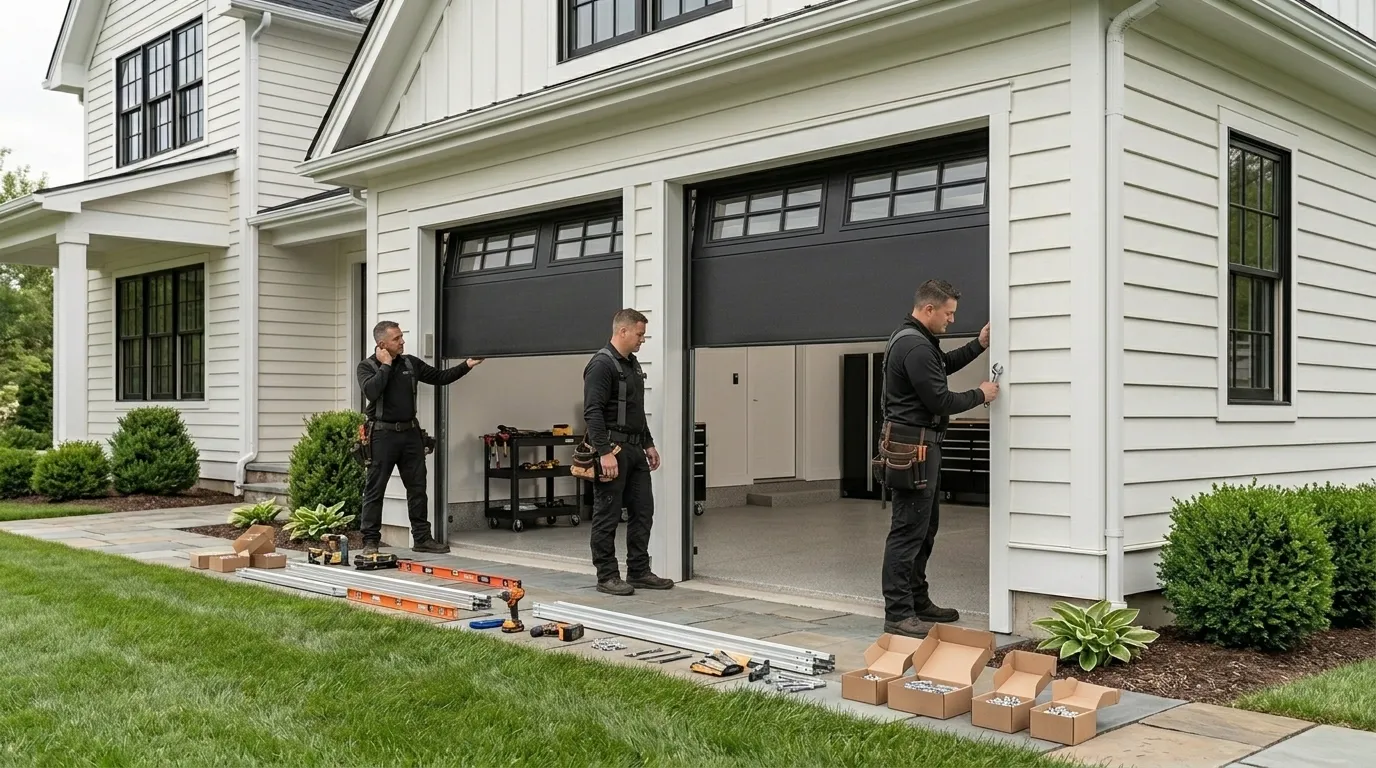
If the door is stuck halfway and you don't know why, don't force the opener past it and don't cut a zip tie someone left on a broken spring as a stopgap. Do this yourself: check that the disconnect cord hasn't been pulled, check the track for a bent section near the bottom roller, and check that nothing is blocking the photo-eye sensors near the floor. Past that - a snapped cable, a spring that's let go, or a door that's come off the track - call it in. We're not local to Whitehall; we run out of Reynoldsburg, so factor that five miles into how fast you need help versus how much you can safely wait.
Parts We Carry
Because so much of Whitehall's housing dates to the early 1960s, we keep stock aimed at that era: extension springs in the lengths that fit a single-car opening built to 1961 dimensions, plus the older-style stamped steel hinges and rollers that don't match what's sold for newer torsion doors. A lot of these houses have had one door replacement since they were built, sometimes two, so what's actually on the house today is a mix - original hardware on a door that's been swapped, or a newer torsion conversion bolted onto an old jamb. We carry both extension and torsion springs, standard-track and low-headroom track hardware, and cables sized for the shorter openings common on this era of construction.
What we don't stock on the truck: specialty insulated panel sections in custom colors, and anything built to an odd nonstandard width - some older garages here were framed a few inches off what's sold today, and that panel has to be special-ordered. If your door needs a section like that, we can tell you on the call whether it's a same-day fix or a lead-time job.
How Long You Are Without the Door
We're not based in Whitehall. We come from Reynoldsburg, about five miles away, so the drive itself isn't the bottleneck - what determines how long your garage sits open or stuck shut is usually the part, not the trip. A snapped extension spring or a bad cable, both common on the older stock here, we typically carry on the truck, so the door is often working again the same visit. A bent track section on a door that's been forced past a jam takes longer to sort, because we have to check the whole door for square before we call it done, not just replace the bent piece.
The one thing that stretches it out: if your house has one of the narrower, nonstandard openings that were common when this area was built and the panel section itself needs replacing, that part isn't something we carry pre-cut. That's a lead-time item, and we'll tell you straight on the phone if that's what we're looking at rather than promise a same-day fix we can't back up.
What the Fix Involves
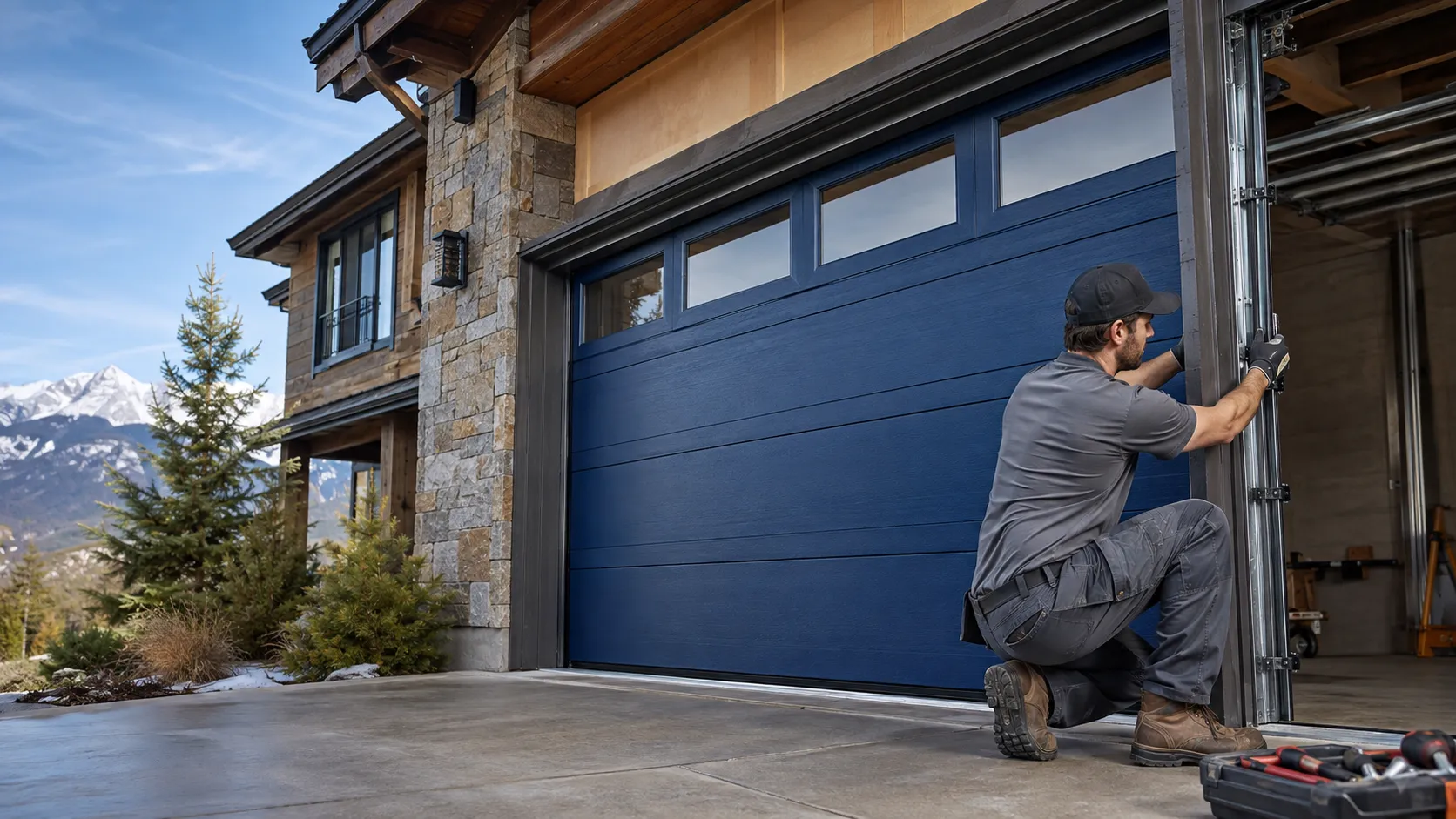
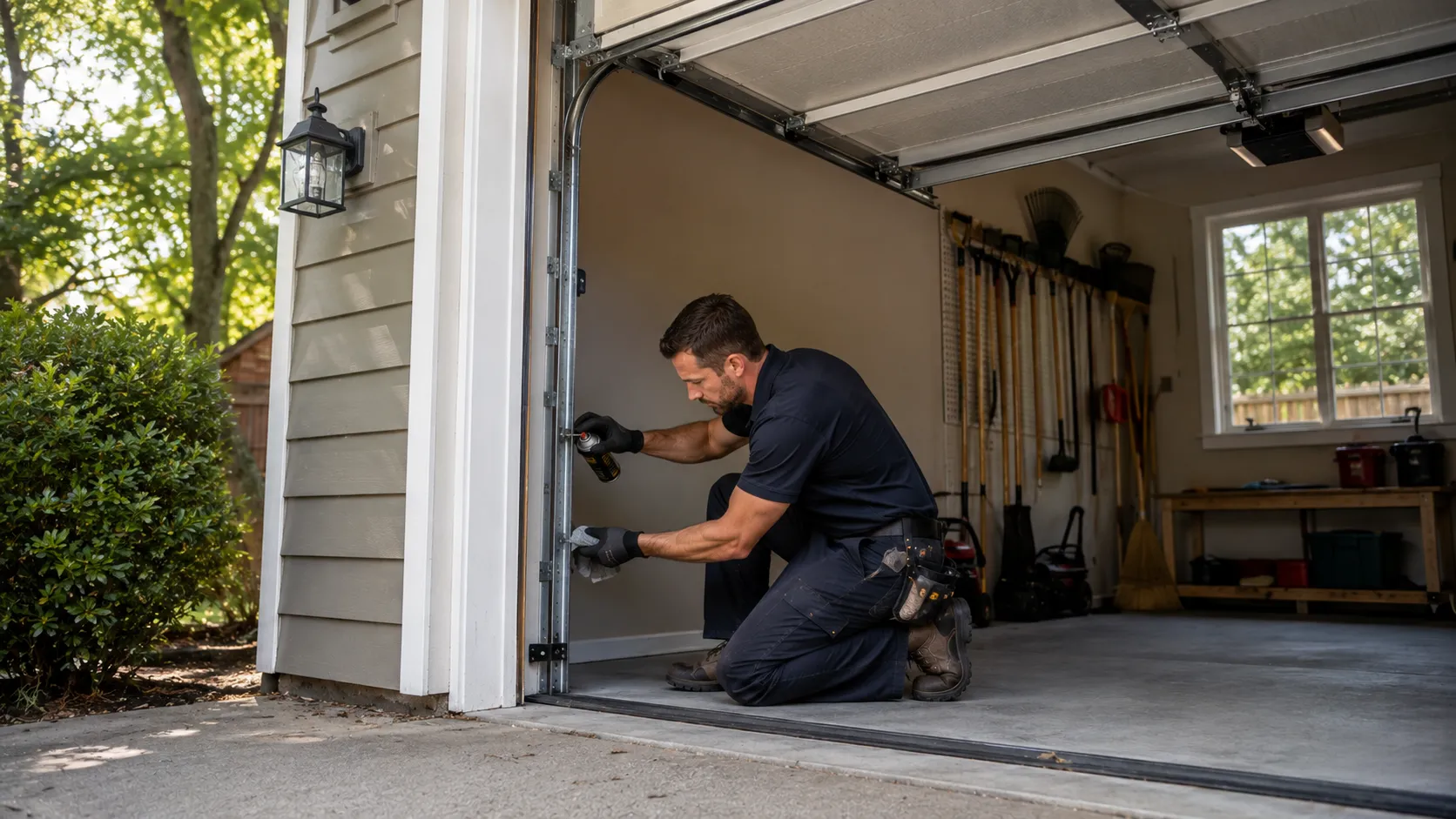
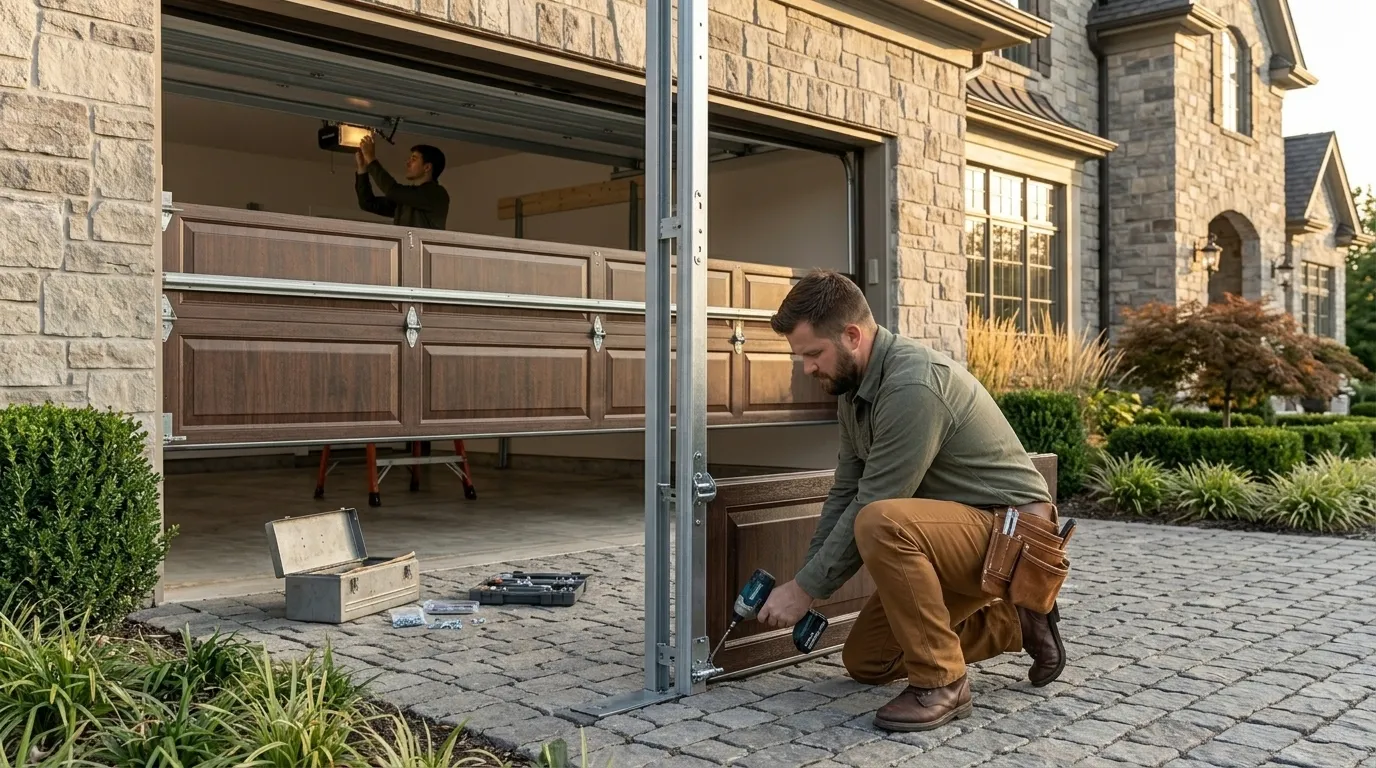
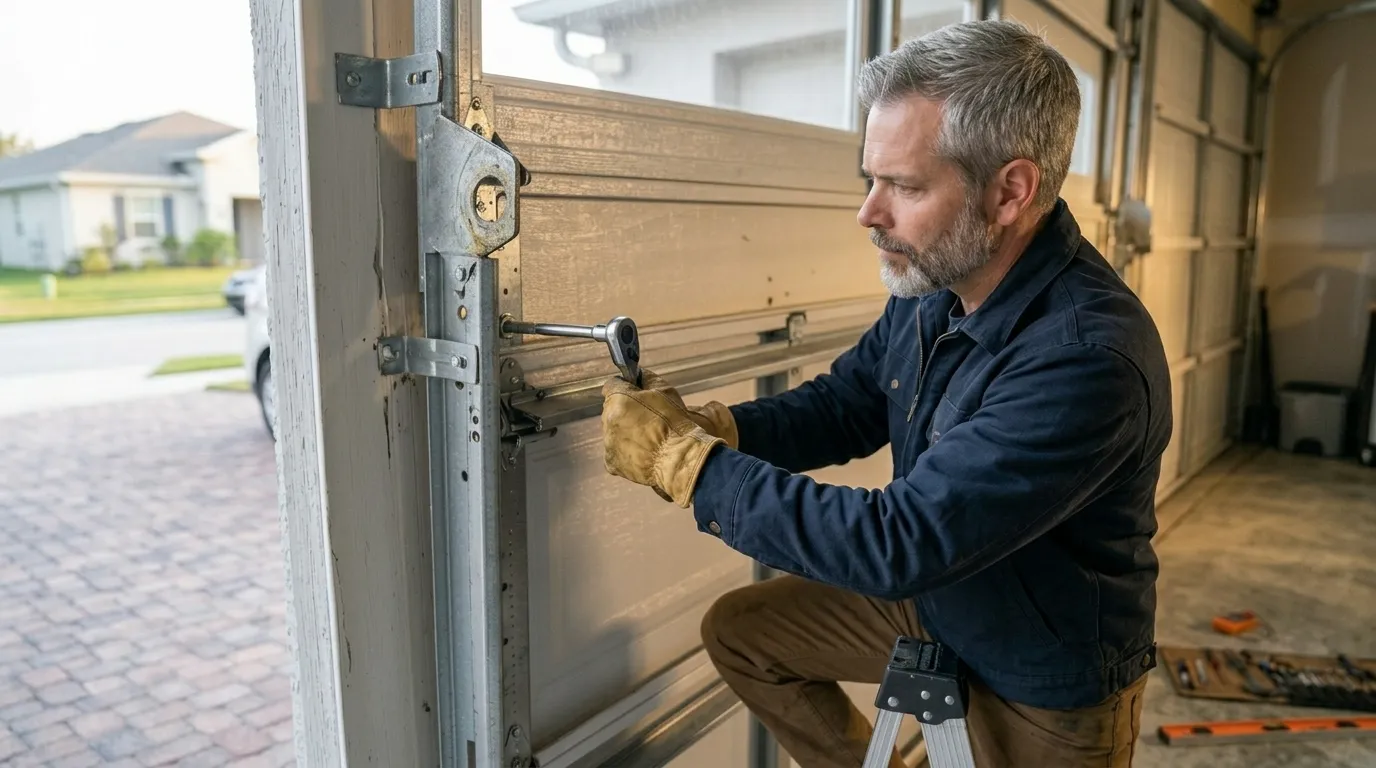
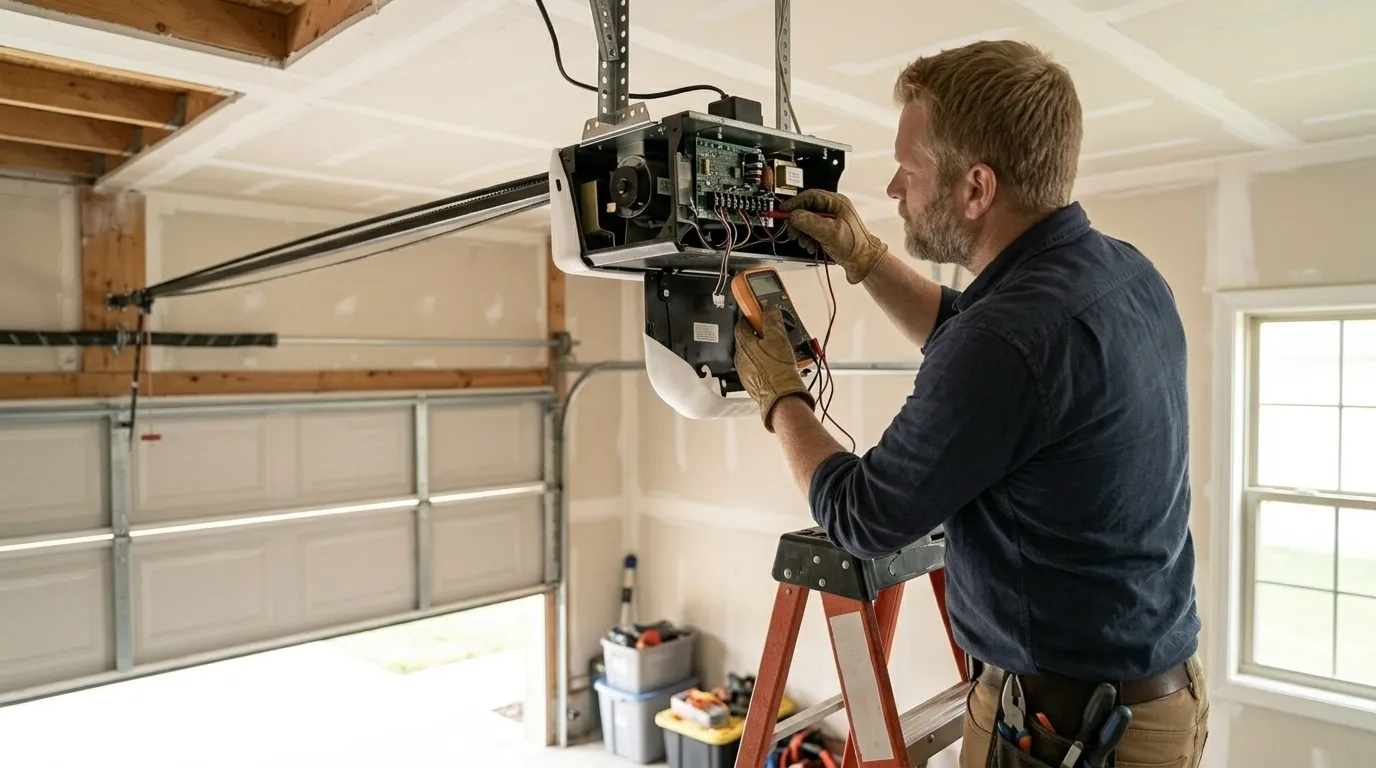
On a house from this era, the first thing we check isn't the spring, it's whether the door has been converted from extension to torsion at some point, because that changes which parts fit and how the whole system is balanced. If it's still running original-style extension hardware, we're inspecting both springs even if only one broke, since they age together and a mismatched pair puts uneven strain on the opener and the track. We check the cables for fraying at the drum end, the hinges for stretched screw holes on the panel where thinner-gauge steel has worked loose over decades, and the track alignment, since a door that's had one panel swapped over the years is more likely to be running slightly out of square.
Once the door is moving smoothly and balanced - meaning it holds still when disconnected from the opener at roughly waist height - we test the opener's force settings, because an opener straining against a bad spring for months often needs those settings backed off, not just the door fixed.