How to Book
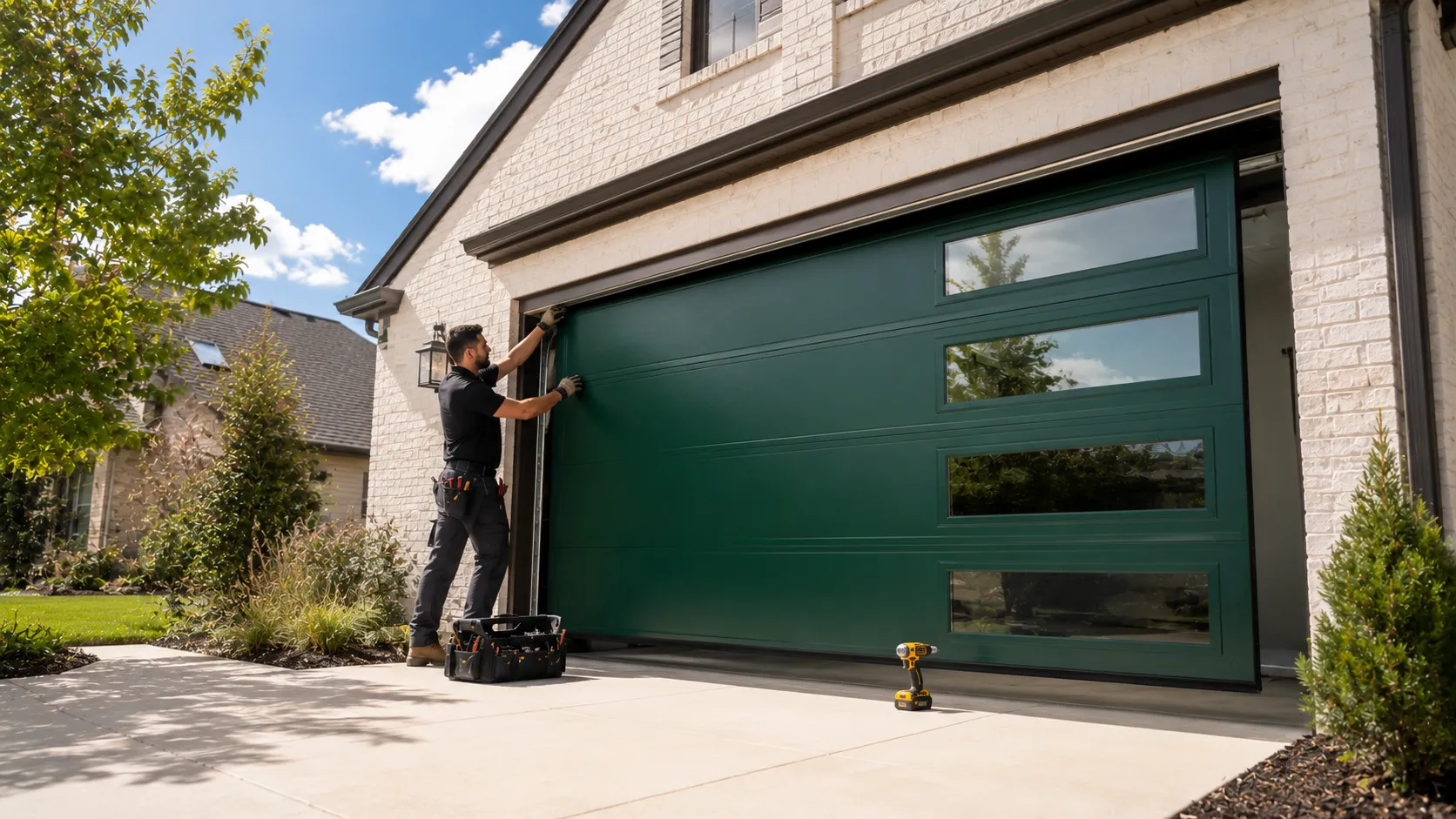
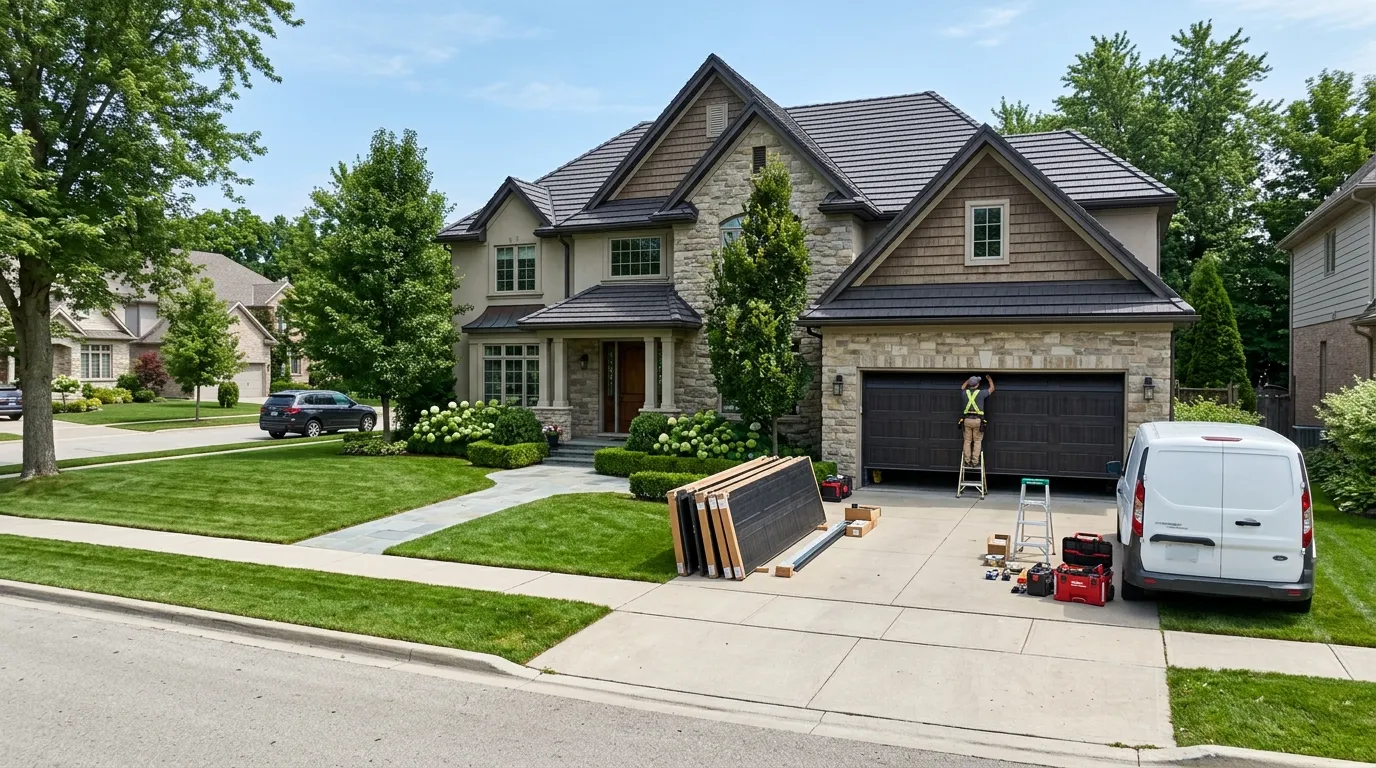
We run this job out of Reynoldsburg, about 9 miles from New Albany, so there's no local branch to call ahead of time - just one line that sends a truck out. Because the housing stock here skews so much newer than the rest of the area we cover, we ask a few extra questions up front: door brand if you know it, approximate install year, and whether the dent or crack is on a hinge panel or a flat section. New Albany went up mostly in the 2000s, median build year 2005, which narrows down the hardware fast and usually means we can quote a panel swap over the phone instead of guessing until we're standing in the driveway. If your door came with the house and you've never had it serviced, that's fine - tell us what you see and we'll bring options. We don't keep a same-day promise for this suburb since it's a drive from base, but we'll give you a real window before we head out.
Parts We Carry
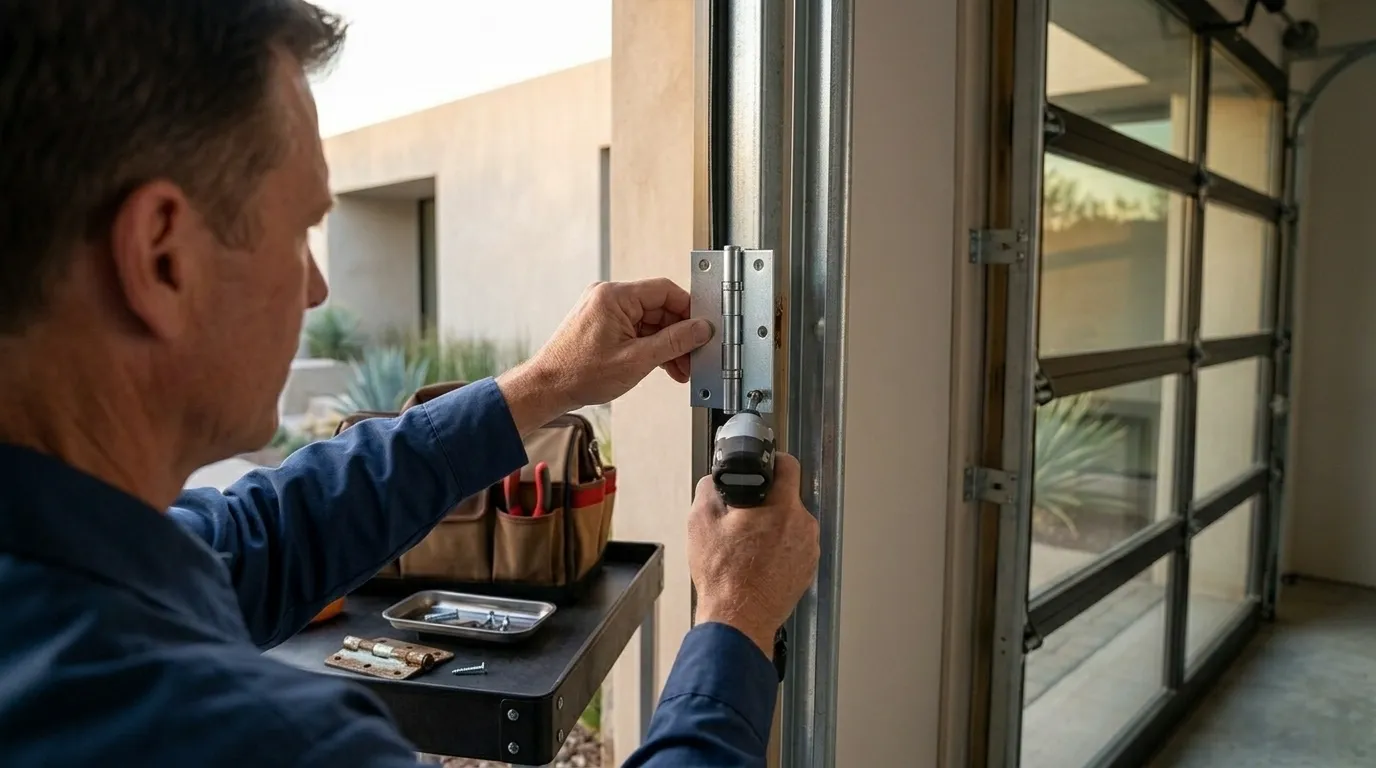
For a neighborhood built mostly after 2000, we're usually dealing with factory steel sandwich panels - insulated, still under a design that a manufacturer supports - rather than the single-layer or wood-composite panels you find on older stock closer to the city. That's good news for matching: newer doors tend to have model numbers stamped inside the section, and even where the exact style is discontinued, the panel height and section count are standardized enough that we can usually find a close match rather than replacing the whole door. We carry common steel panel sections, end stiles, hinges rated for insulated doors, and the fasteners that go with them. What we don't carry on the truck is anything custom - a carriage-house style with routed wood inserts or a specialty color match has to be special-ordered, and that adds lead time we won't pretend away.
Where This Job Goes Sideways
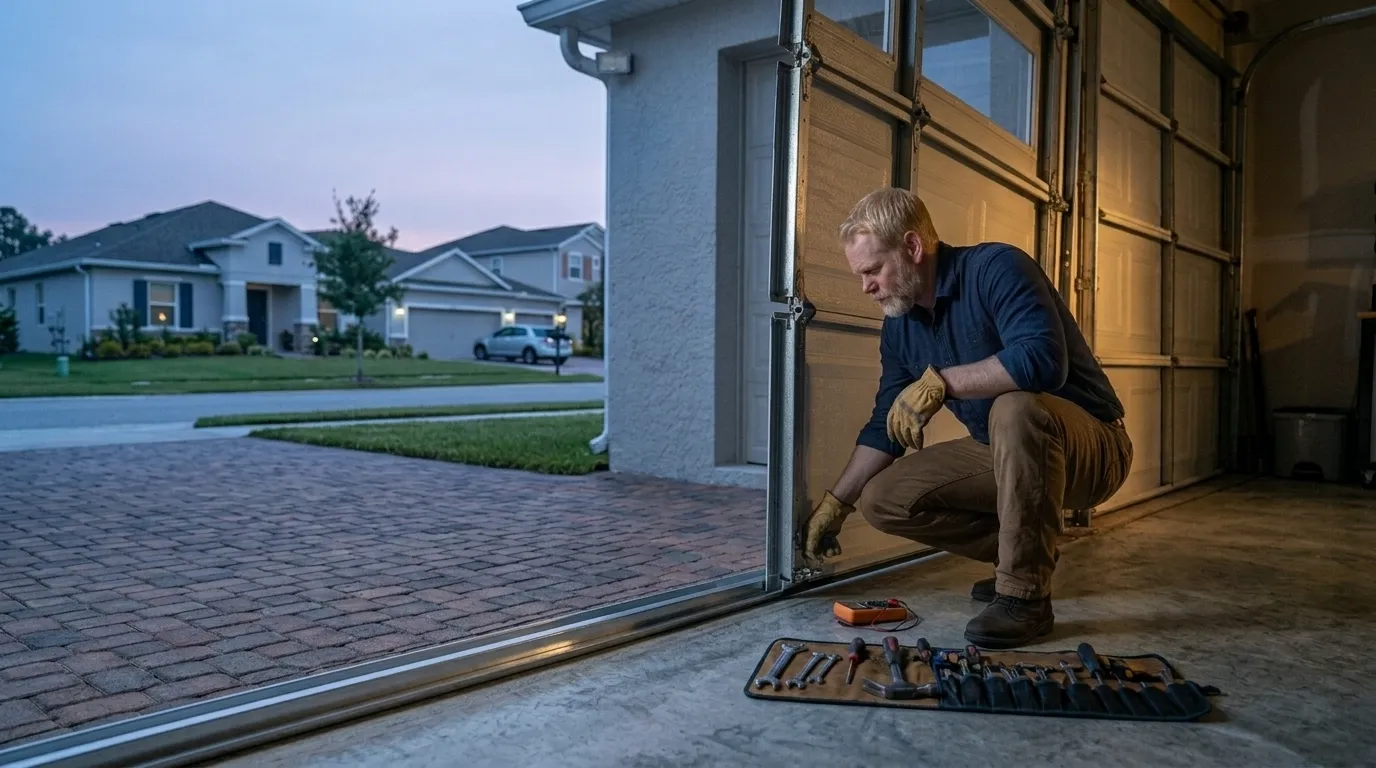
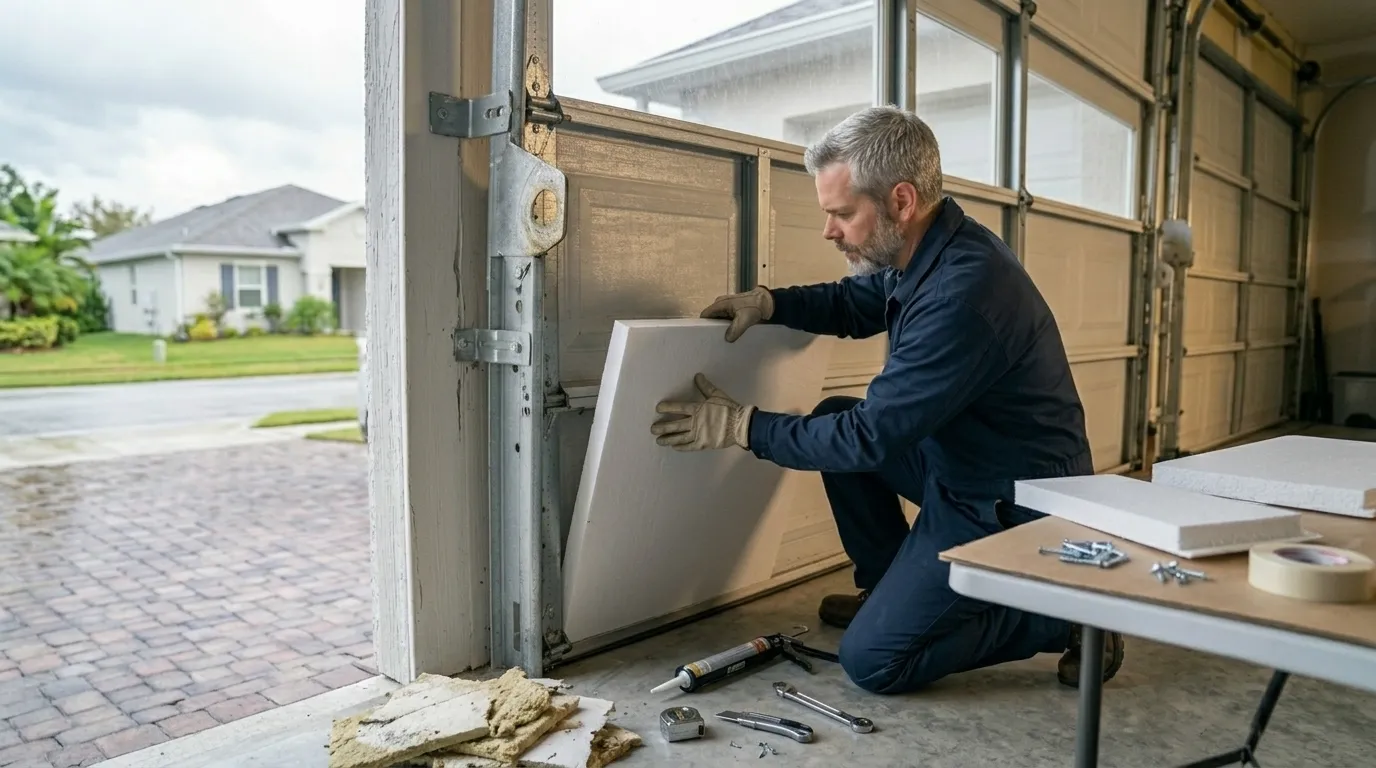
The trouble with newer insulated doors isn't the steel, it's the seal. A dented or cracked panel on a sandwich-style door usually means the foam core between the steel skins took the hit too, even when the outer skin looks like the only damage. Replace just the visible panel without checking the foam bond on the panels next to it, and you can end up with a door that looks fixed but rattles or whistles in a hard wind - which matters more here given the severe cold this area sits in. The other way this goes sideways: a homeowner orders a panel online by color match alone, and it arrives the wrong section height because door models from the same builder-grade supplier changed dimensions year to year even within the same decade. We check the actual door before we order anything.
Can You Do This Yourself
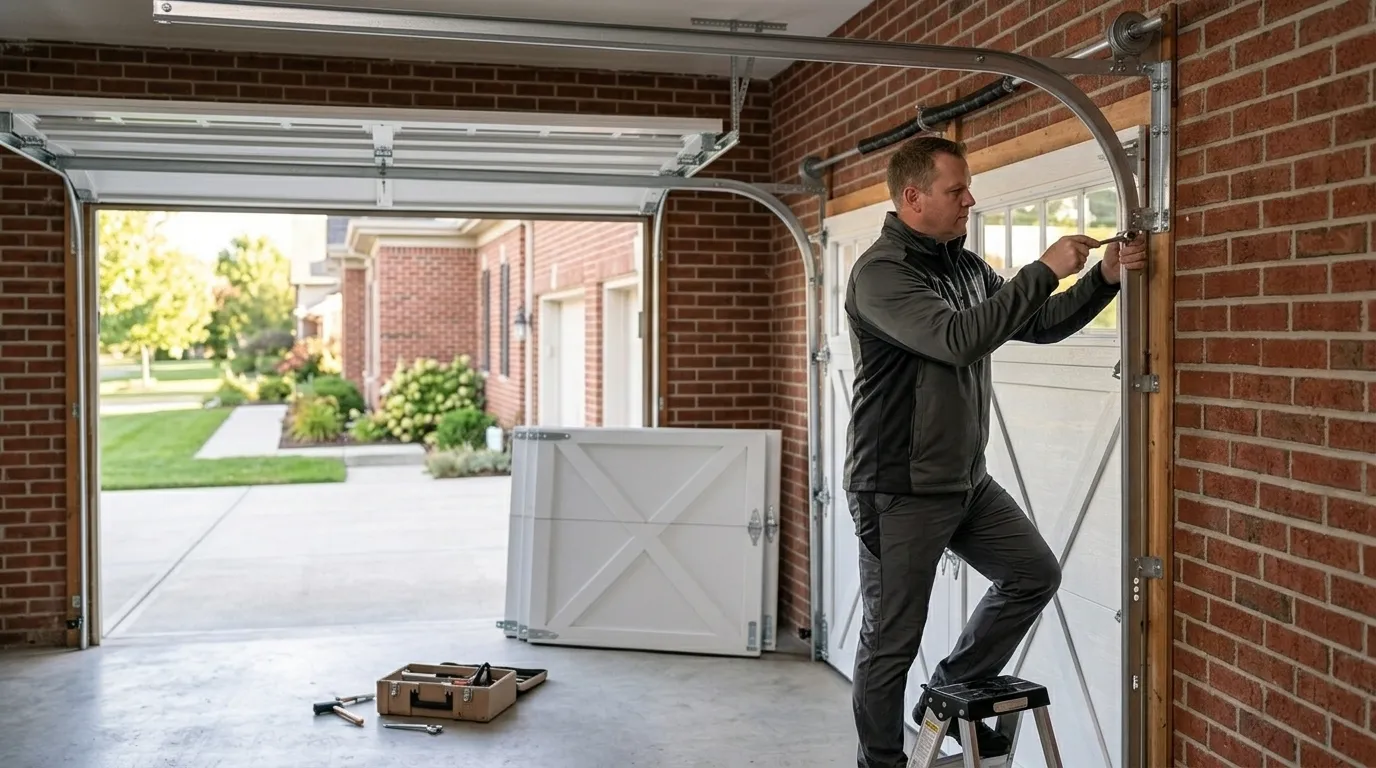
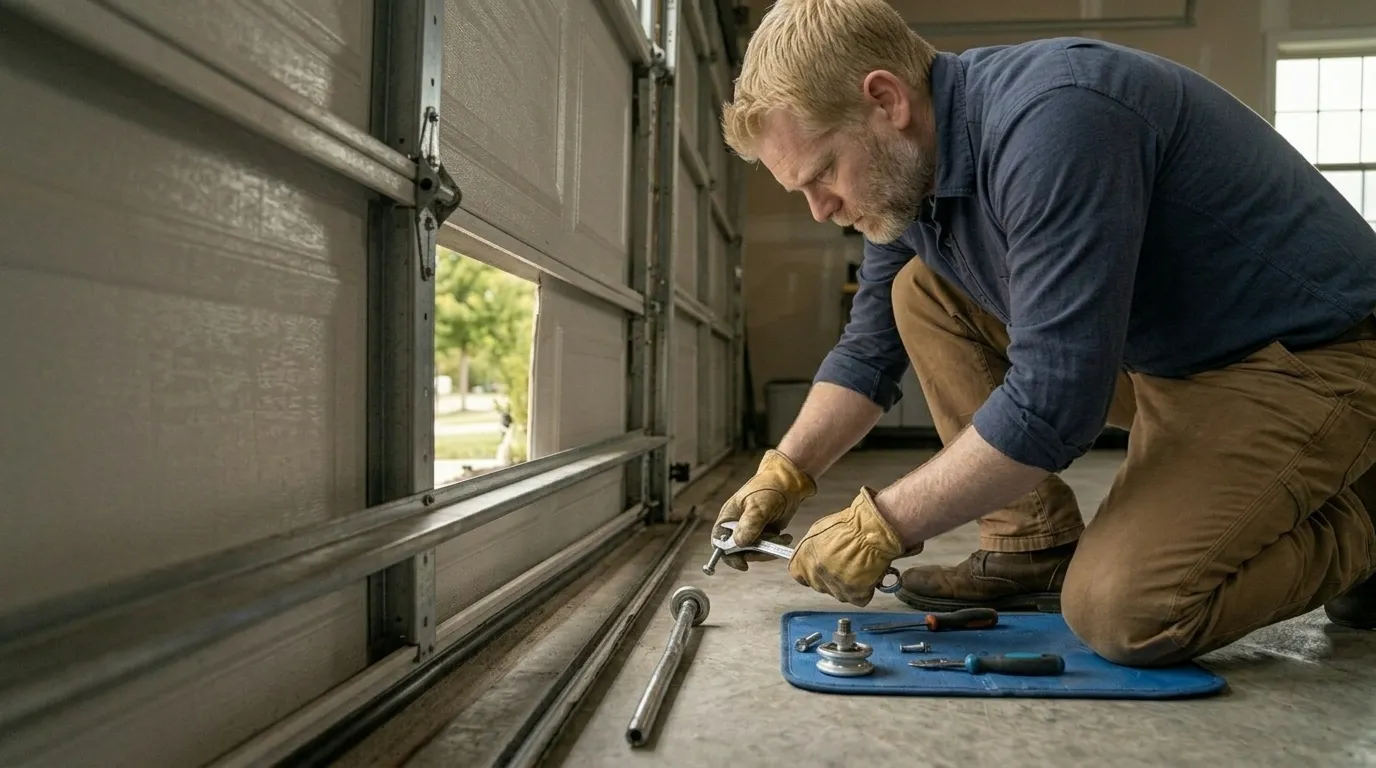
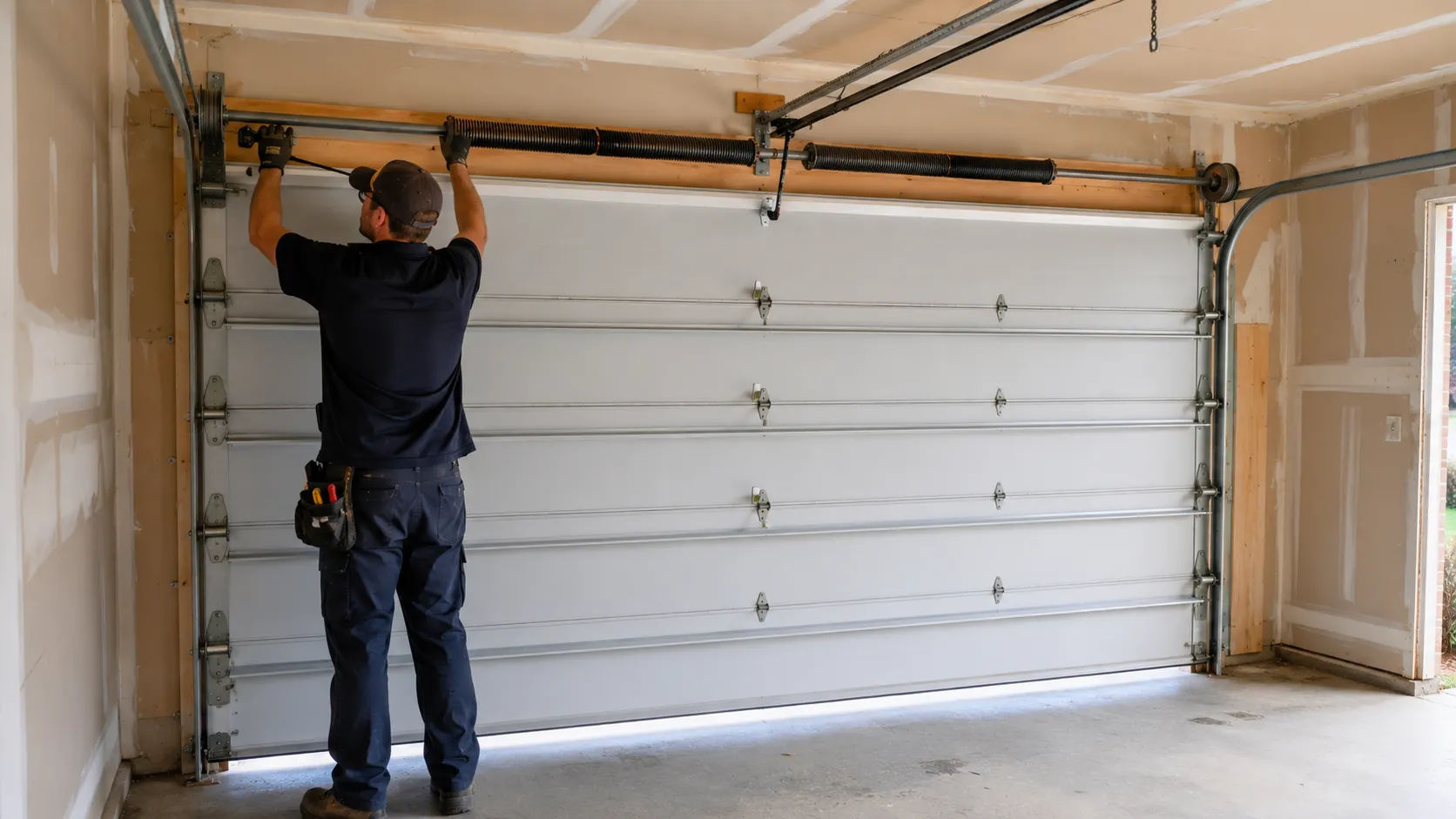
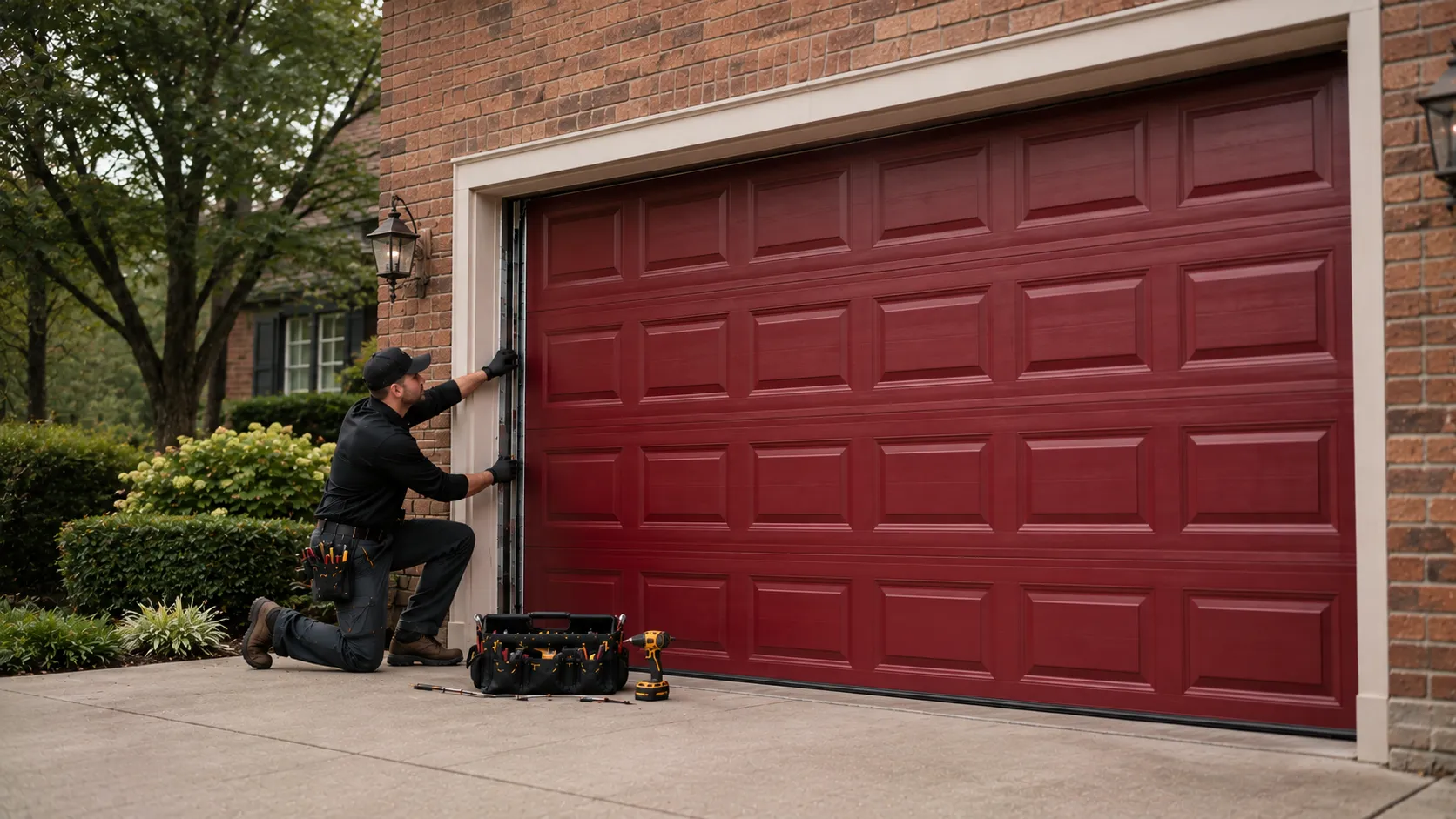
A single flat panel on the bottom section, with no track damage and no spring involvement, is within reach for someone comfortable with a drill and a ladder - it's mostly unbolting old hinges and stiles, swapping the panel, and re-hanging. Where we'd tell you to stop and call: any panel above the bottom row, because getting it out means disconnecting cables or the spring system safely, and any hinge panel on a door with an insulated core, because the fastener pattern and clearance are tighter than they look. If your door is a 2000s insulated model, mismatched hardware from an older parts bin won't seat right and can strip the mounting holes. When in doubt, send us a photo before you order parts - that's a five-minute call, not a truck roll.