How to Book
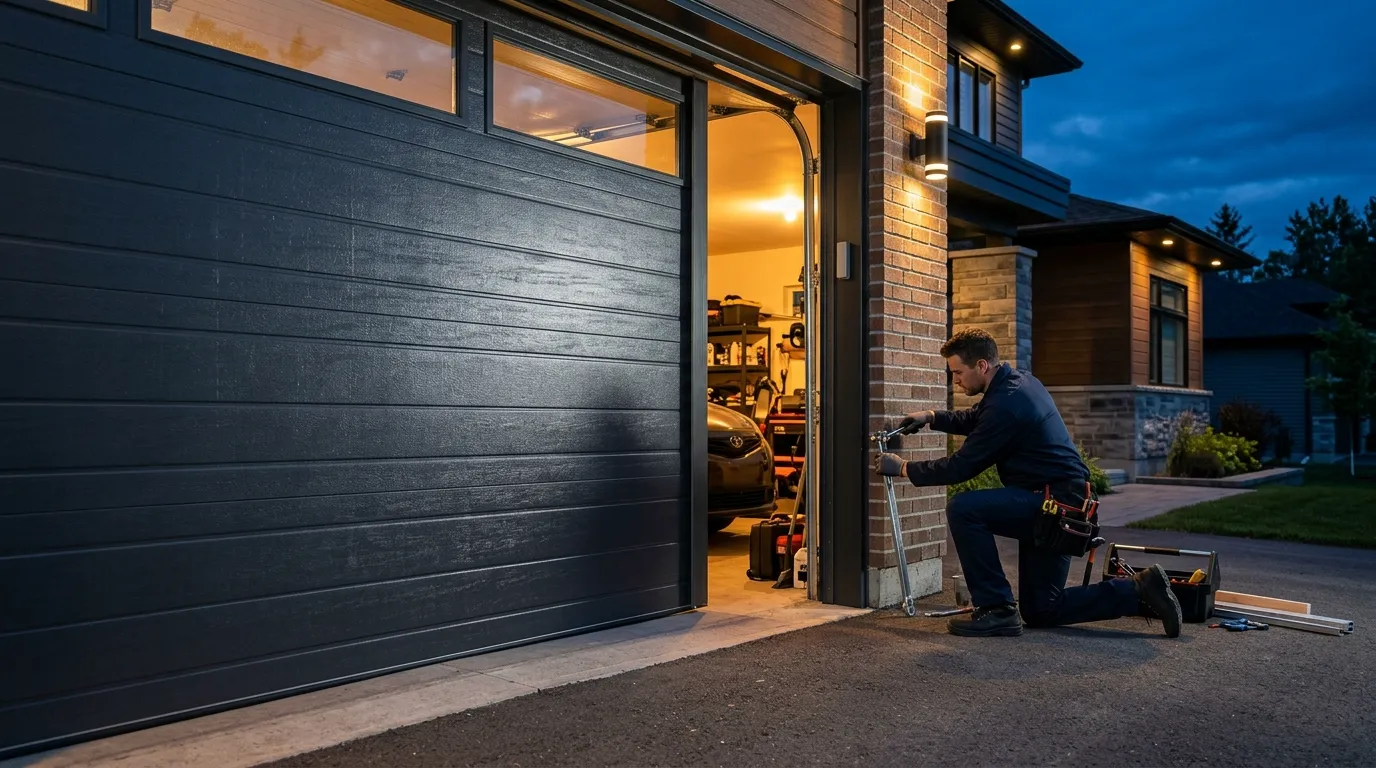
New Albany sits nine miles out from our Reynoldsburg shop, which puts it on the far edge of a single round trip. That distance doesn't change what we can fix, but it changes how we schedule it - we build the truck for the job before we leave, because a second trip back for a part costs a business owner half a day of a dock or bay sitting closed. When you call, tell us the door width, whether it's a sectional steel commercial door or a rolling steel curtain, and whether the opener is chain-driven or a jackshaft unit. That's usually enough for us to load the right springs and cables the first time. We cover New Albany as part of the wider territory out of Reynoldsburg - see /near/new-albany/ for the rest of that coverage, and /commercial-garage-door-reynoldsburg-oh for what the shop handles across the whole service area. We don't keep a branch or a staged truck sitting in New Albany itself; every call starts from Reynoldsburg and runs the nine miles out.
Parts We Carry
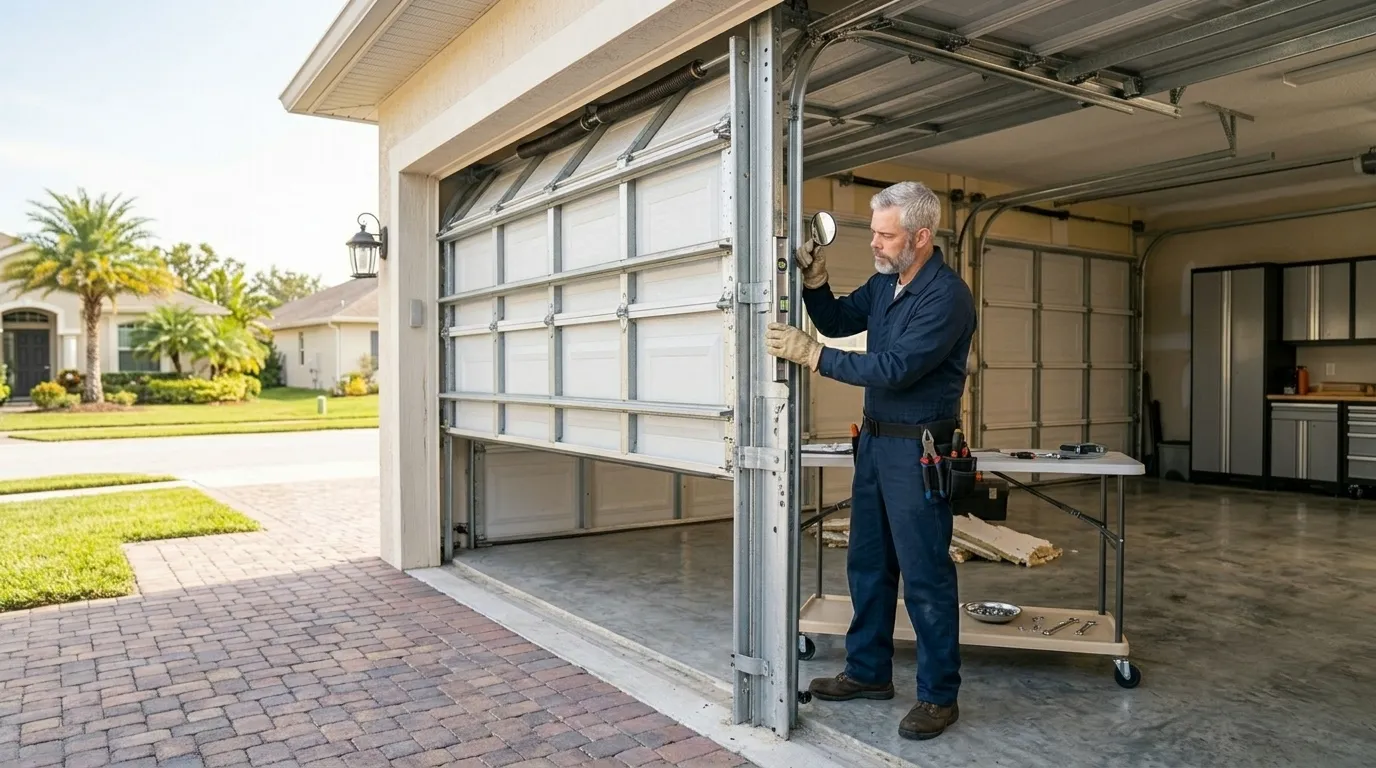
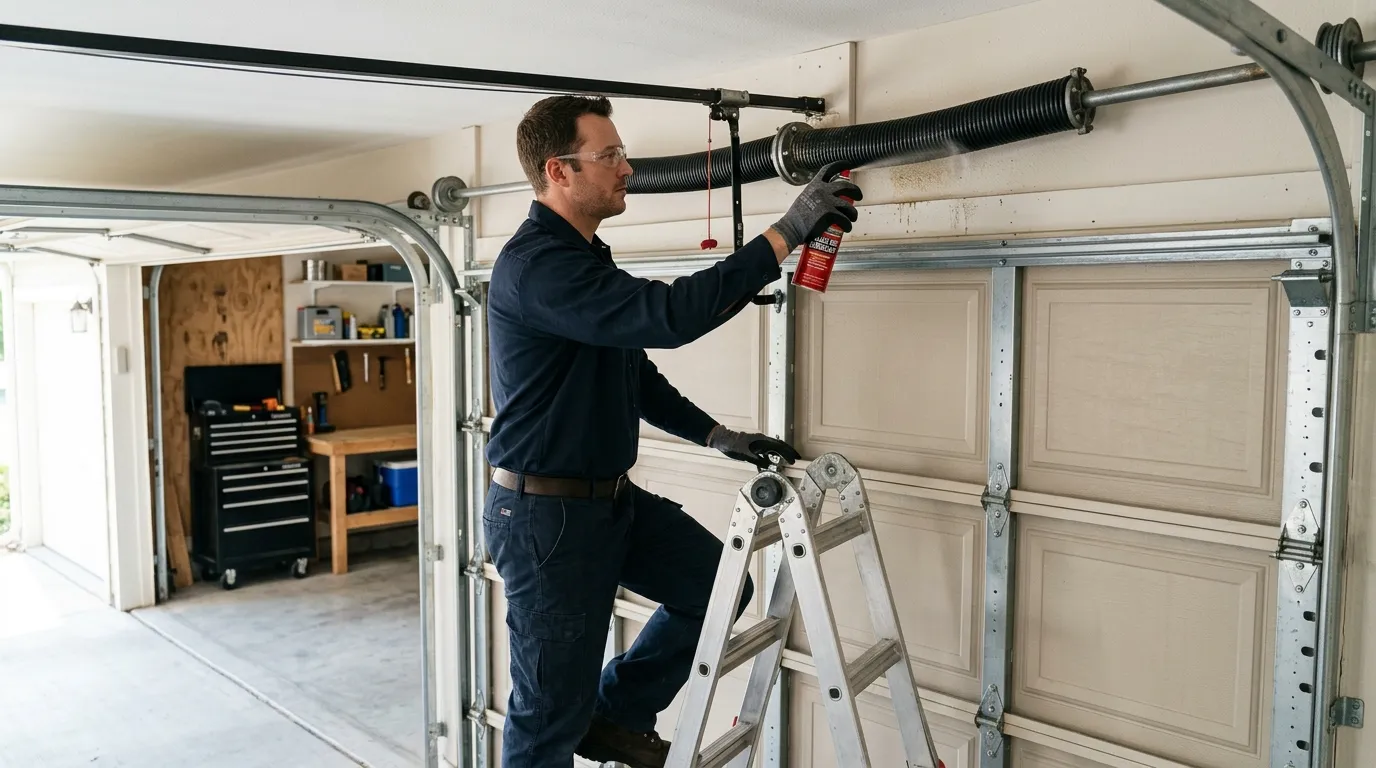
Most of the commercial buildings here went up around 2005, two generations newer than the 1977 median across the rest of our service area. That matters for parts. Newer commercial doors out here are almost all insulated steel sectional panels on galvanized torsion springs, paired with commercial-duty openers rated for higher daily cycle counts than a residential unit ever sees. We stock torsion springs sized for wider commercial door widths, steel roller assemblies rated for high-cycle use, and photo-eye sensor kits, since those are the parts that fail fastest on doors that open and close dozens of times a day. What we're less likely to carry on the truck is anything for an older wood-panel commercial door - that hardware belongs to the older stock closer to Reynoldsburg's core, not to New Albany's newer buildings, so if a building here still runs an older door we may need to order the part rather than pull it off the shelf.
Where This Job Goes Sideways
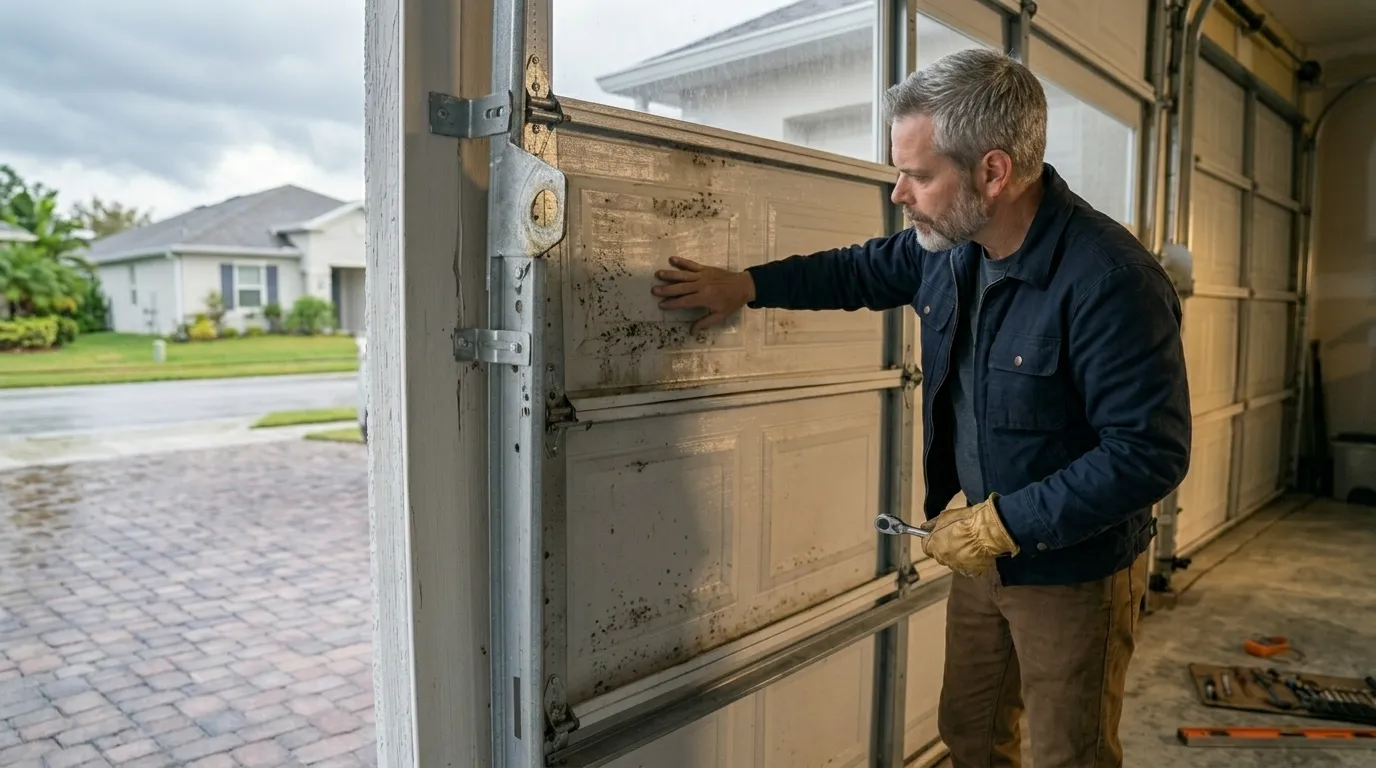
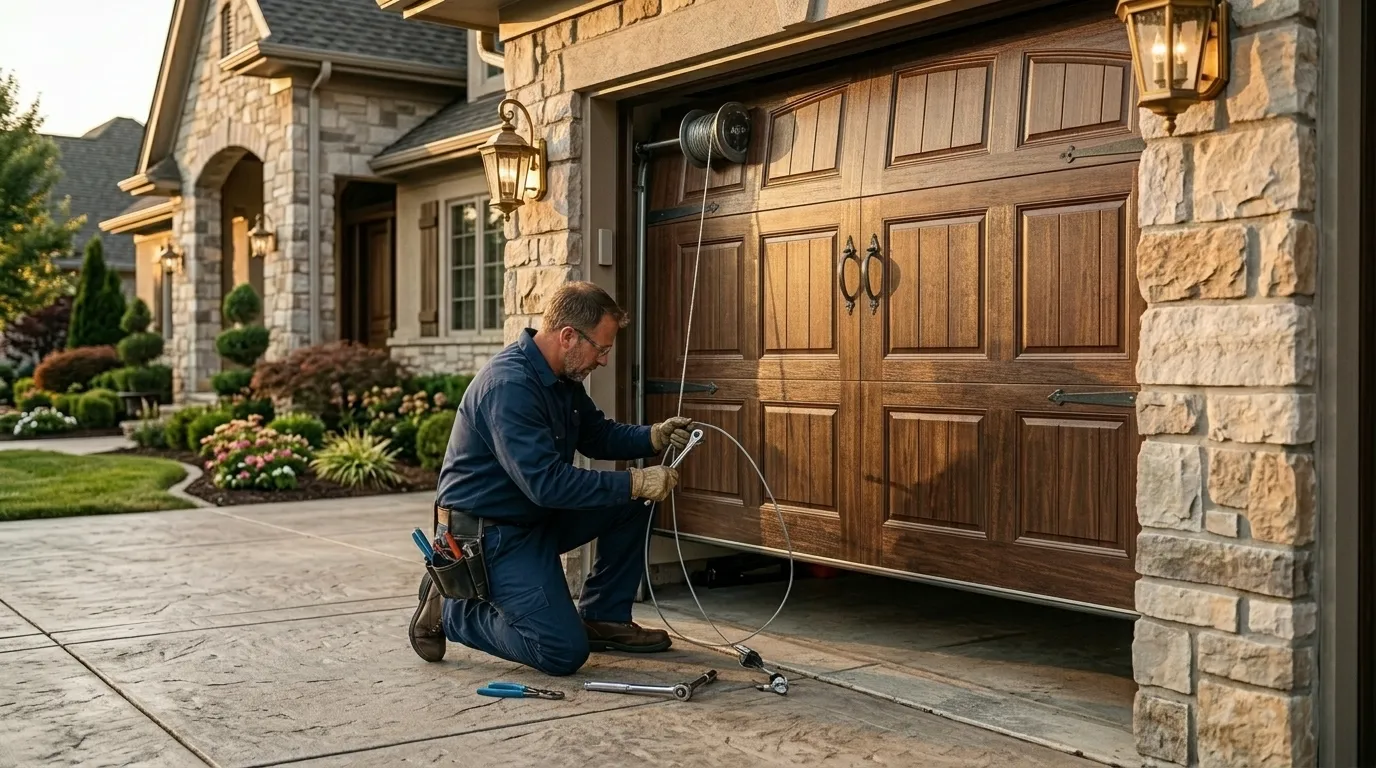
The cold-climate demands here hit differently on newer steel panels than they do on the older wood and light-gauge doors closer to 1977. A 2005-era insulated steel door seals tighter than an older door, which is good for the building's heat bill but means a warped bottom panel or a failed weather seal shows up faster as an actual operating problem - the door binds, the opener strains, and the sensor reads it as an obstruction. On commercial curtain doors, the failure we see most is a broken cable or a jammed guide track from ice buildup during a hard freeze, not the slow rust-through you'd expect on an older building. The other place it goes sideways: high-cycle openers on doors that run dozens of times a day wear out limit switches and sensors long before the springs give out, so a call that sounds like