How to Book
We run this job out of Reynoldsburg, about 9 miles from New Albany, so there's no local branch or drop-in counter here - we come to you. Call and tell us what the door is doing: won't open, opener clicks but nothing moves, remote works but the wall button doesn't, whatever it is. Because New Albany's housing stock is newer than a lot of what we cover, we ask a few more questions up front about the opener brand and model, since newer builds tend to have specific circuit boards and safety sensor setups rather than the older relay-and-chain systems. That lets us bring the right part on the truck instead of a guess. We don't quote a fixed response window here in FACTS, so we won't invent one - we'll give you a real estimate when you call, based on the day's schedule.
Parts We Carry
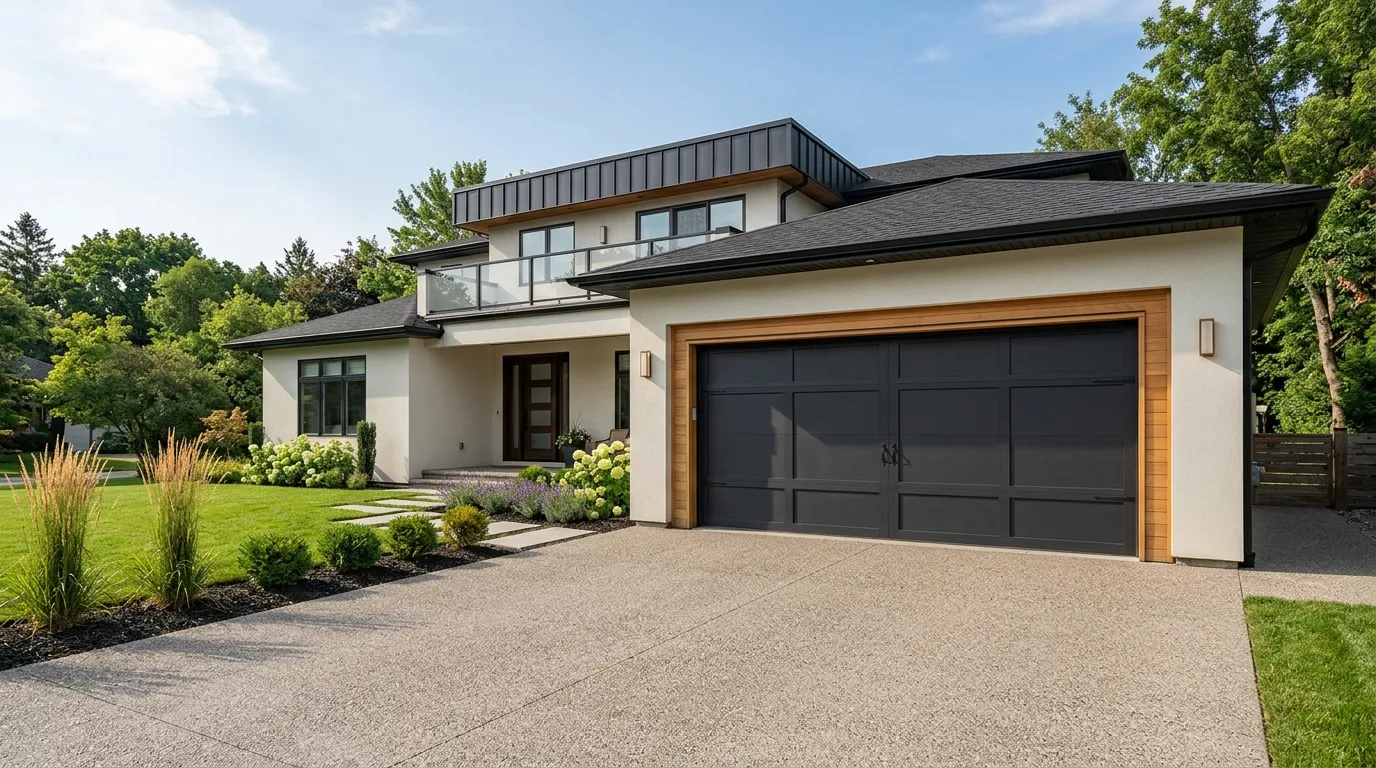
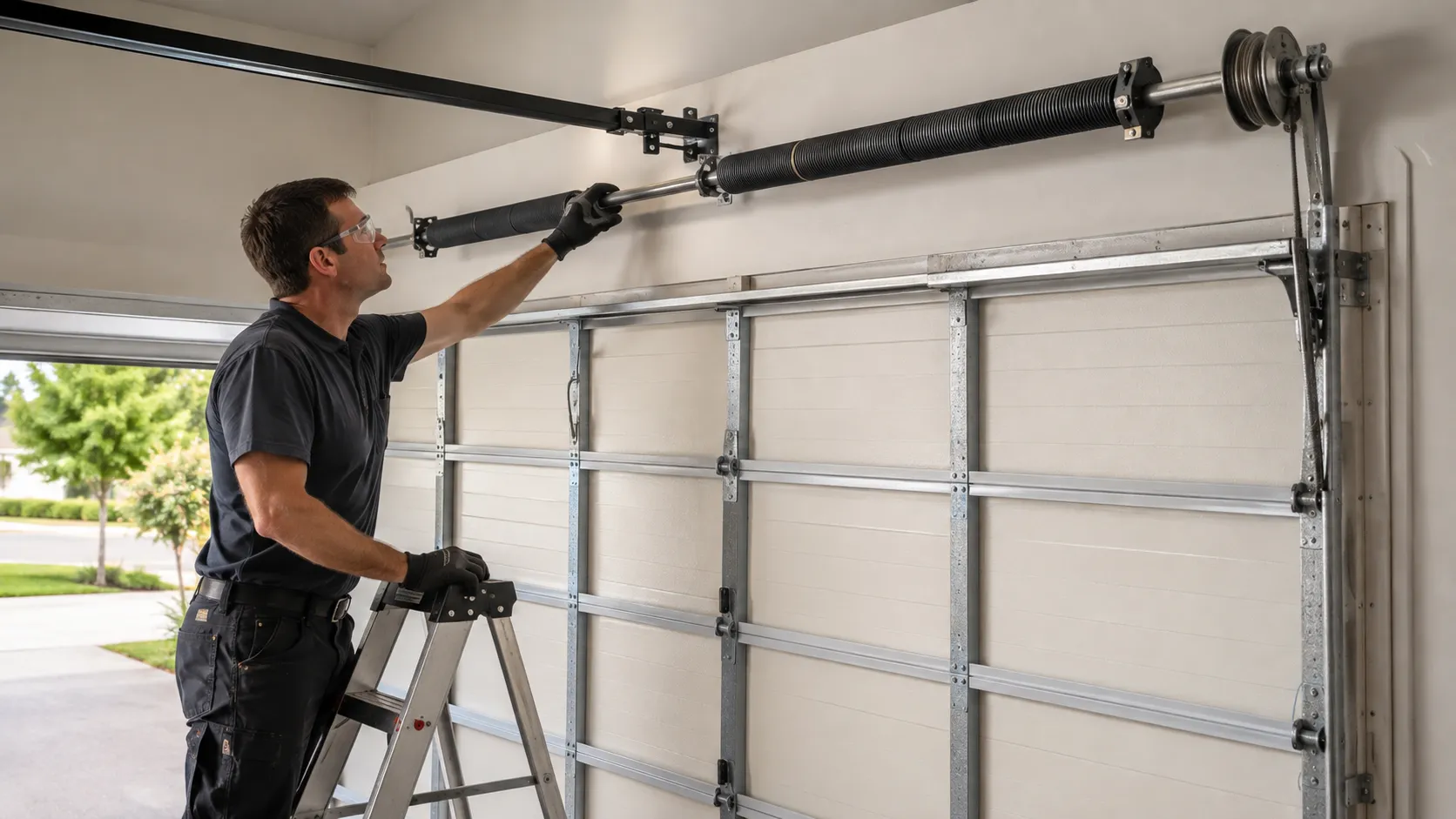
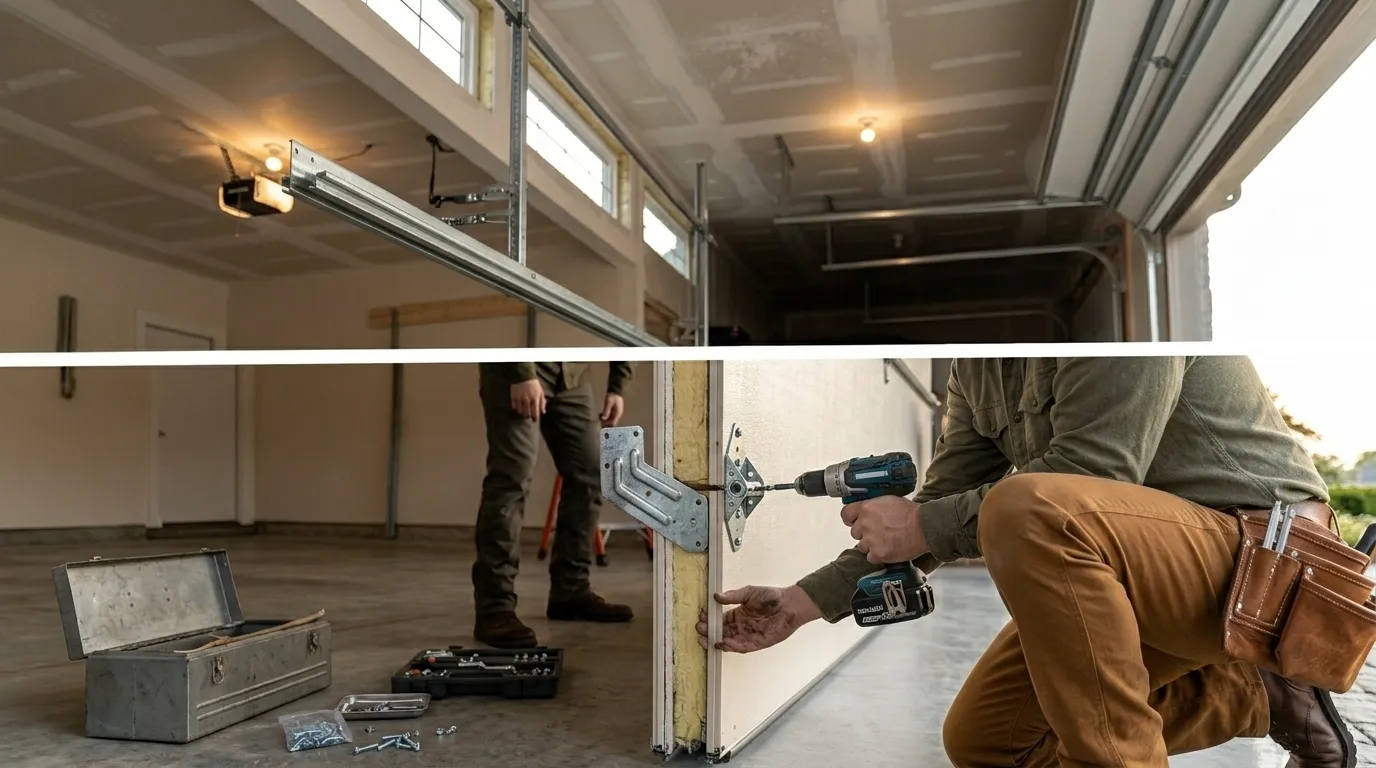
For a neighborhood built mostly around 2005, the doors and openers are still within the working life of steel panels, standard torsion springs, and belt or chain-drive openers with circuit-board logic - not the older screw-drive or heavy chain units you'd find in 1970s stock elsewhere in the service area. We stock standard torsion springs, nylon and steel rollers, extension cables, and common opener parts like logic boards, safety sensor pairs, and wall consoles. What we don't keep on the truck is anything proprietary to a smart-home integrated opener system - those sometimes need a part ordered from the manufacturer, and if that's your situation, we'll tell you straight instead of pretending we have it in the van.
Where This Job Goes Sideways
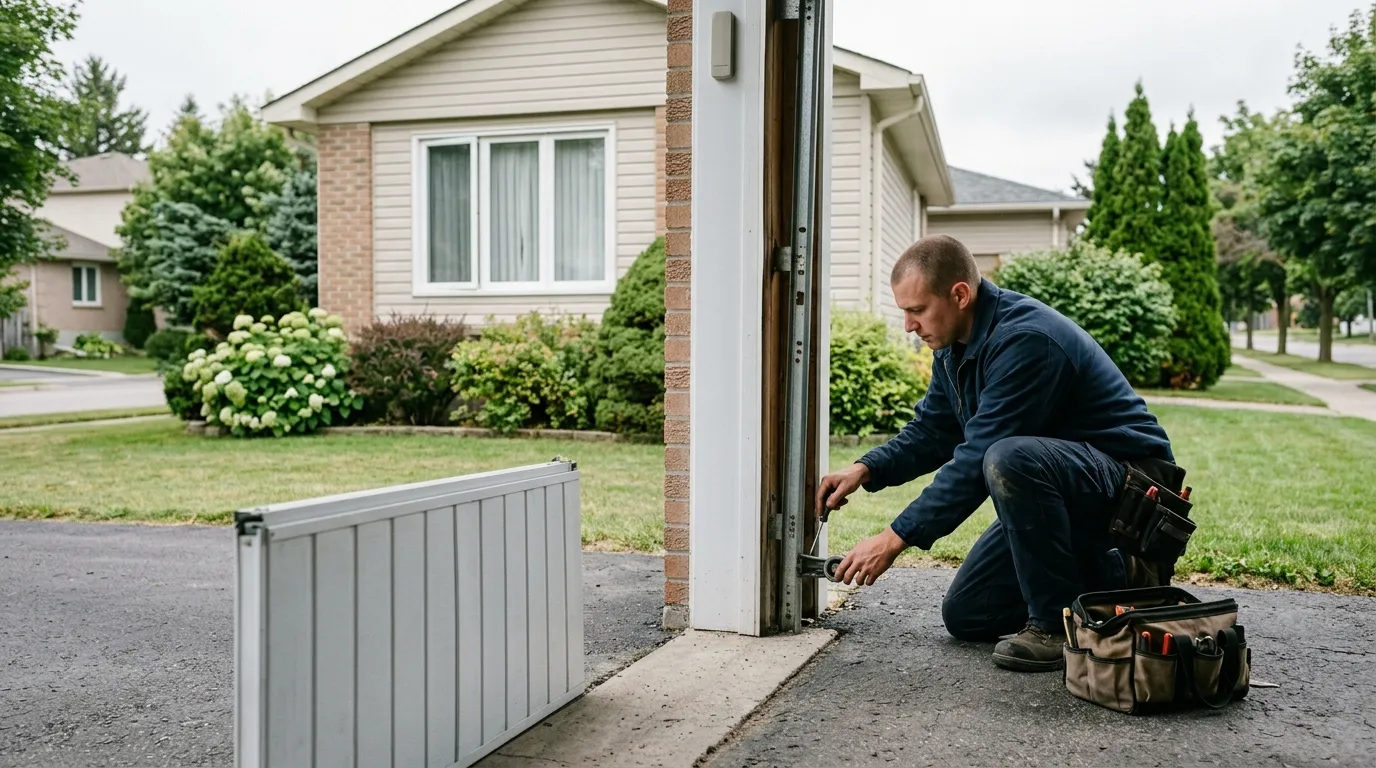
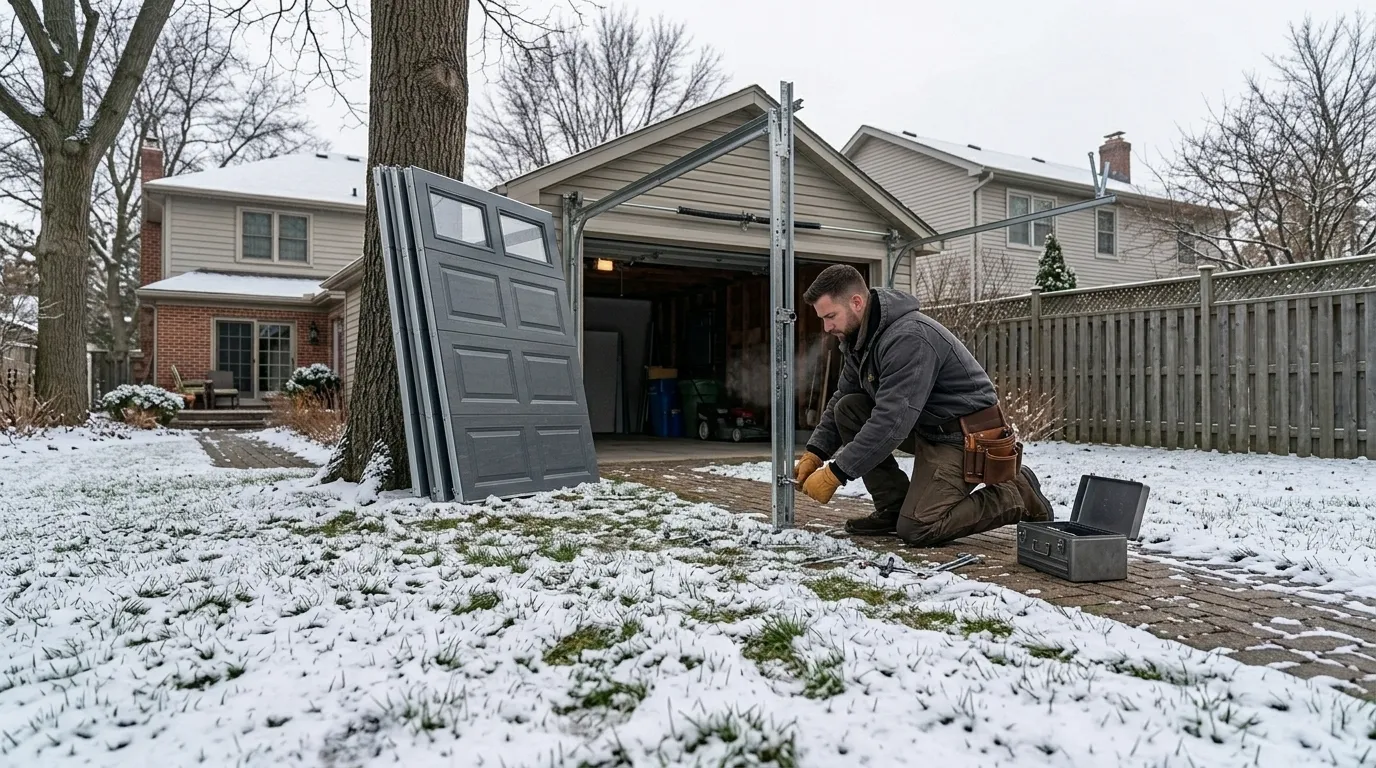
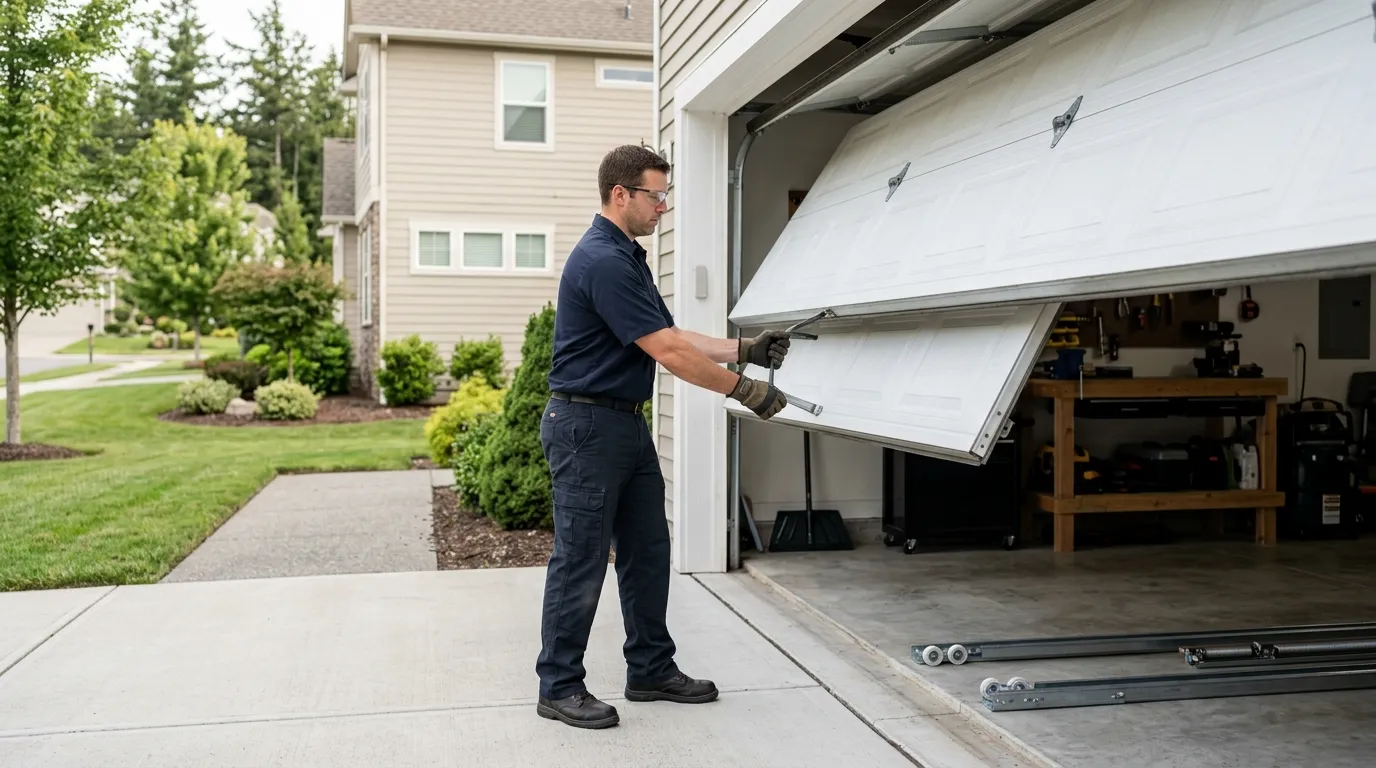
Because most of New Albany went up around 2005, we don't see much of the old side-mounted torsion hardware or single one-piece doors that turn a simple repair into a parts hunt. What does go sideways here: newer openers with circuit boards that fail from a power surge rather than wear, and safety sensor alignment that gets knocked off during a move-in or a landscaping job and nobody notices until the door won't close. The other trap is a homeowner replacing a logic board themselves and finding the door still won't cycle because the real fault was a misaligned sensor eye the whole time. Cold-weather binding is real here too - this is a severe cold climate zone, and stiff steel track and hardened grease slow a door down on the first hard freeze of the season, which gets mistaken for a motor problem.
Can You Do This Yourself
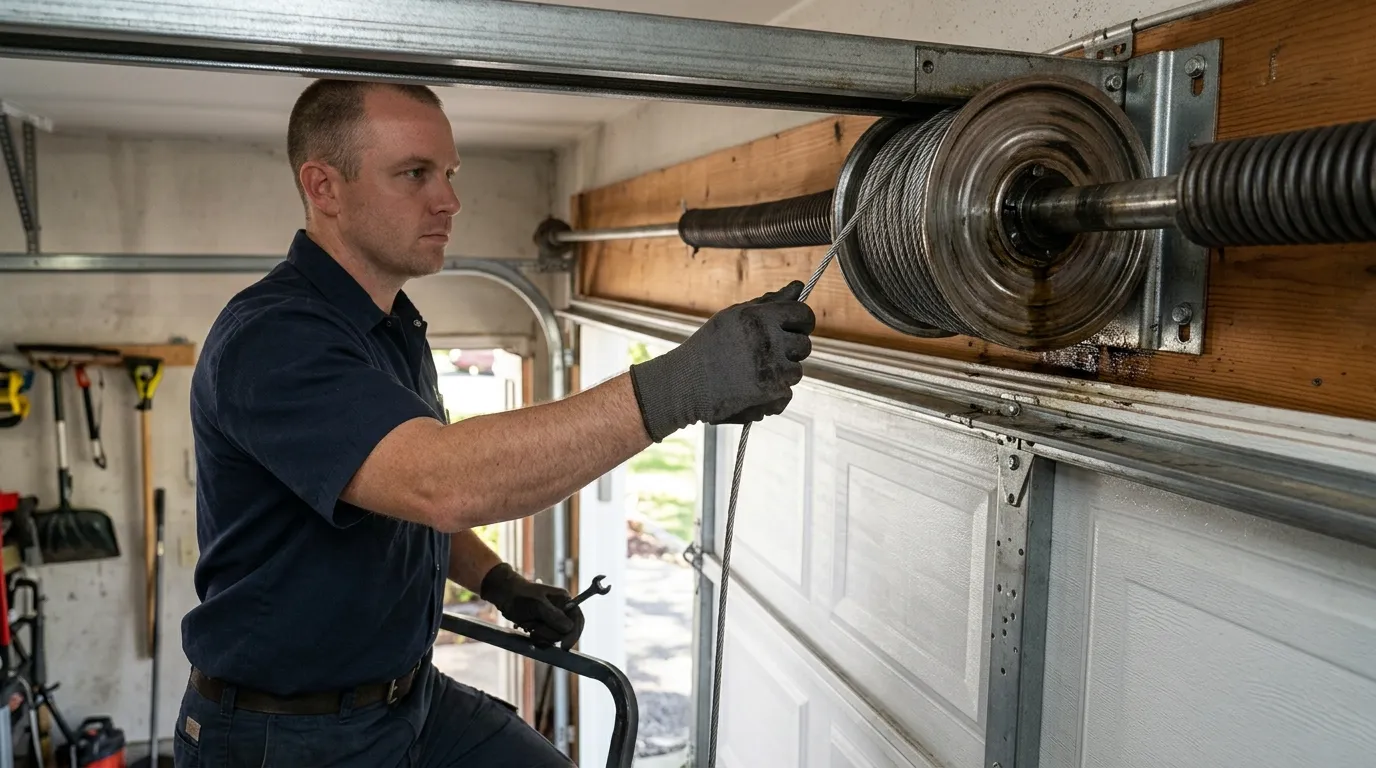
Swapping a wall console or realigning a sensor eye is within reach for most homeowners - it's a screwdriver and patience, not a specialty tool. A torsion spring is not a DIY job regardless of the house's age; the spring is under enough tension to break a hand or worse, and that's true whether it's a 2005 build or a 1938 one. If your opener clicks and the door doesn't move, that's almost always the spring, not the motor, and it's a call, not a project.