How to Book
There's no branch in Pataskala. The crew works out of Reynoldsburg and drives the five miles out for every job here, same as it does for the other communities on this side of the county. You book the same way regardless of which town you're in, but the truck that shows up is coming from Reynoldsburg, not from a shop down the street.
For Pataskala specifically, that means scheduling around a drive, not a walk-in counter. If you want to see which other nearby towns get covered the same way, the service area page lays that out. For the full rundown of installation, repair, and everything else the company does out of its home base, that's covered on the Reynoldsburg installation page rather than here - this page sticks to what's different about a Pataskala job.
One honest limit: because every visit involves that drive, same-day emergency swaps aren't something we promise here. If your door is stuck open overnight, plan for it to stay that way until the next available slot, not the next hour.
Can You Do This Yourself
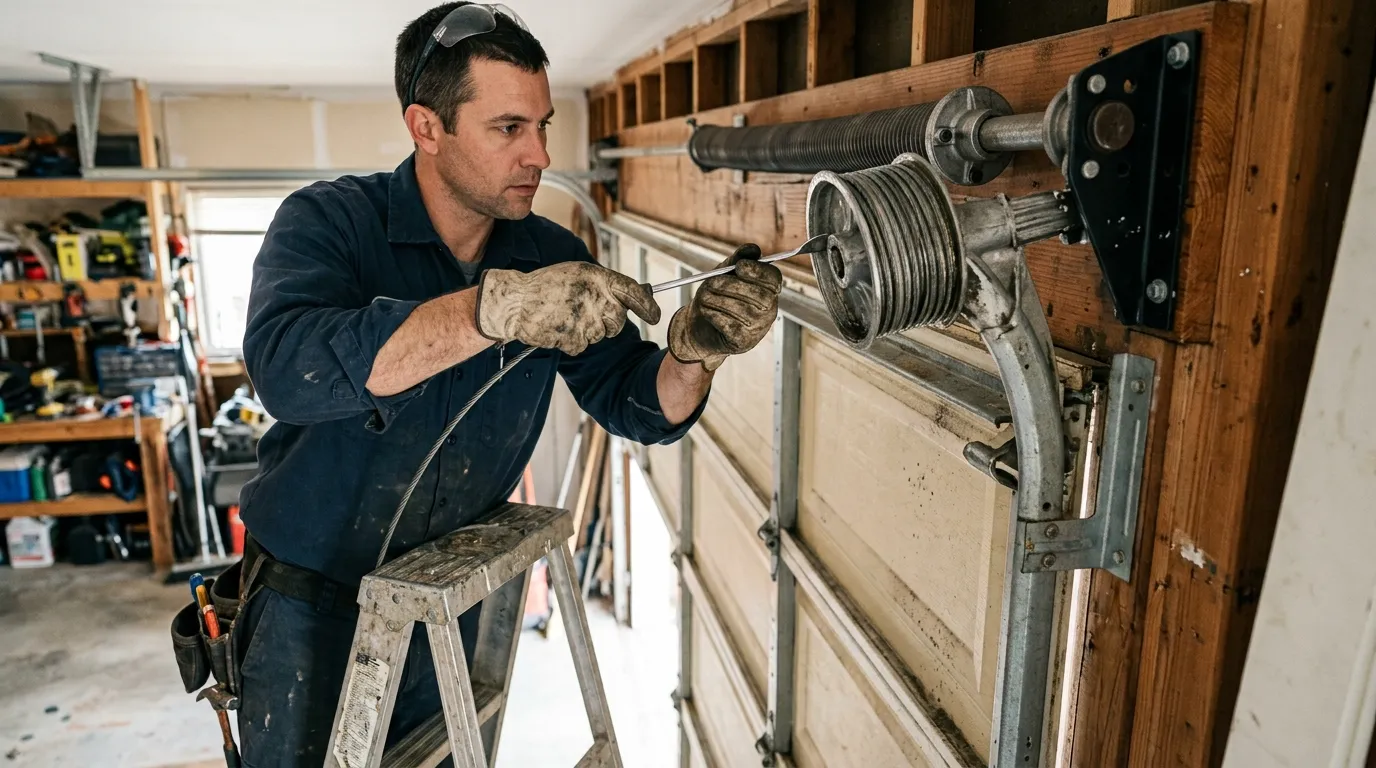
A full door replacement is not a weekend project, and the reason isn't the panel - it's the spring. Torsion springs on a double door are wound under enough tension to break bones if the winding bar slips, and that risk is the same whether the door is five years old or twenty-five. If you've done this before and own the right bars and clamps, that's a different conversation. Most homeowners haven't.
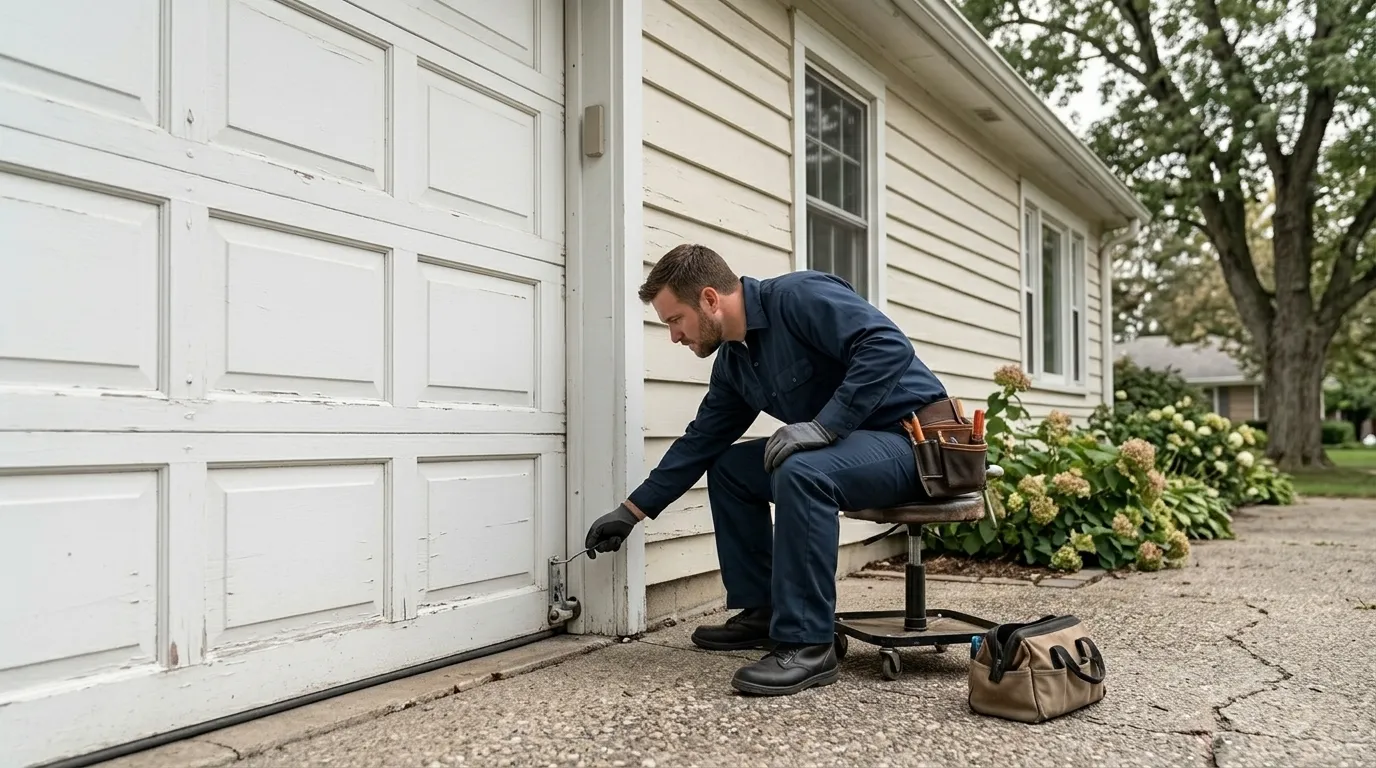
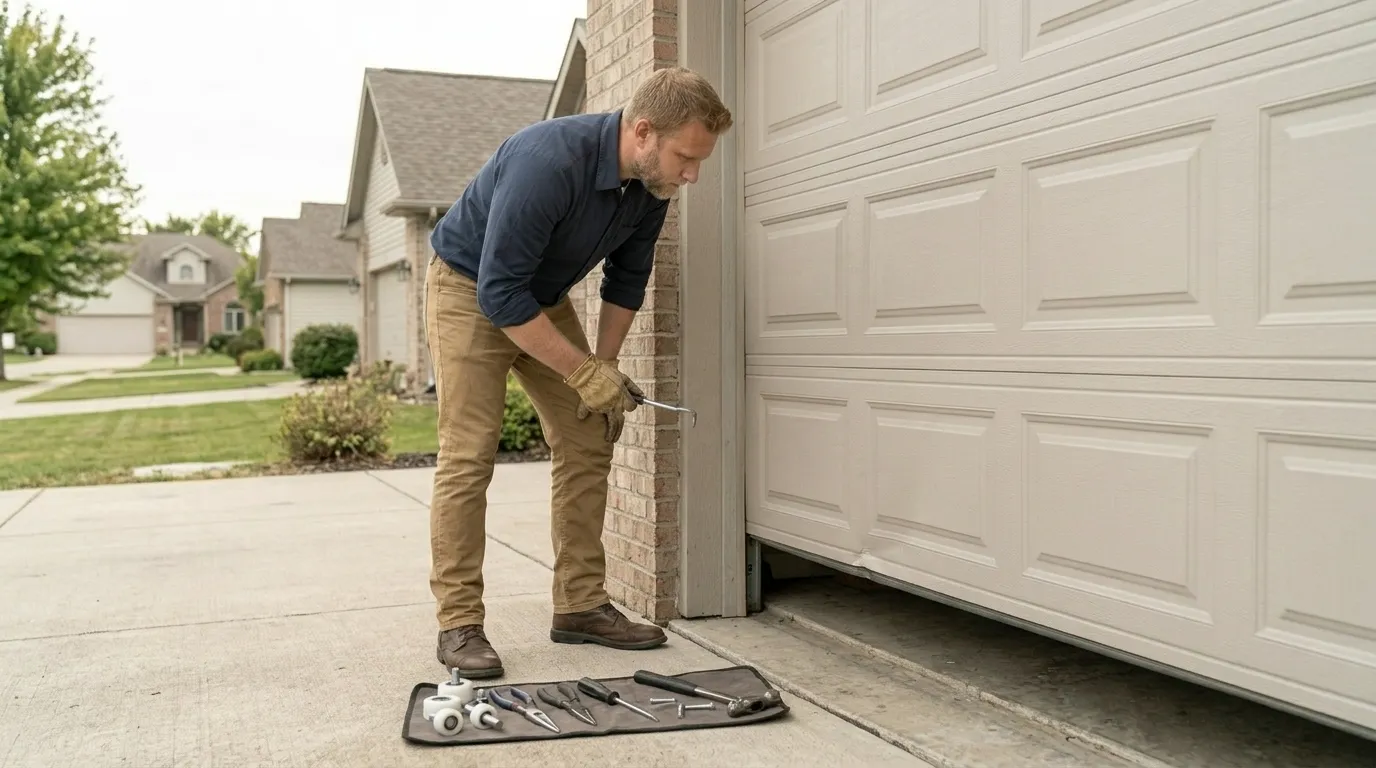
What you can reasonably do yourself: swap weatherstripping, lubricate rollers and hinges, tighten loose hardware, and clear the track of debris. None of that touches the spring system or the header where the new door has to be squared and shimmed correctly, and a door hung even slightly out of square will bind on the rollers within a season.
The honest limitation here is time, not skill level for some of the smaller tasks - if you're comfortable on a ladder and know which bolts not to touch, minor maintenance is fine. Removing an old torsion-spring door and hanging a new one is where we'd tell you to call rather than watch a video and go.
Parts We Carry
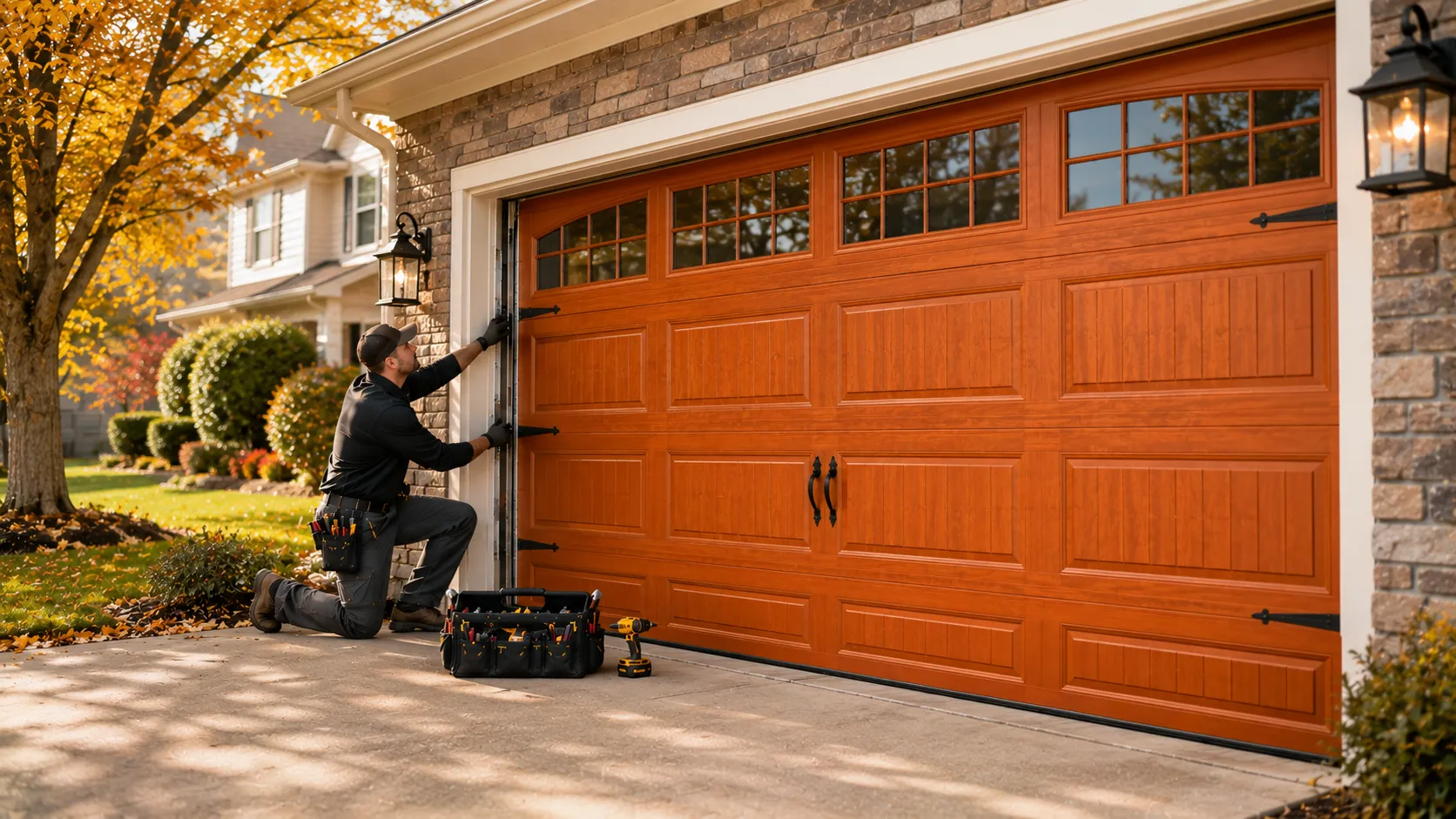
Pataskala's housing stock centers on 1998, which puts most of the doors we're pulling out well past their builder-grade lifespan but still built to a 1990s standard: single-layer steel, minimal or no foam core, and hardware sized for a lighter panel than what typically gets installed today. Given this area's cold-band winters, the replacements we carry lean toward insulated steel - a heavier panel with a foam or polystyrene core, which changes the spring sizing too.
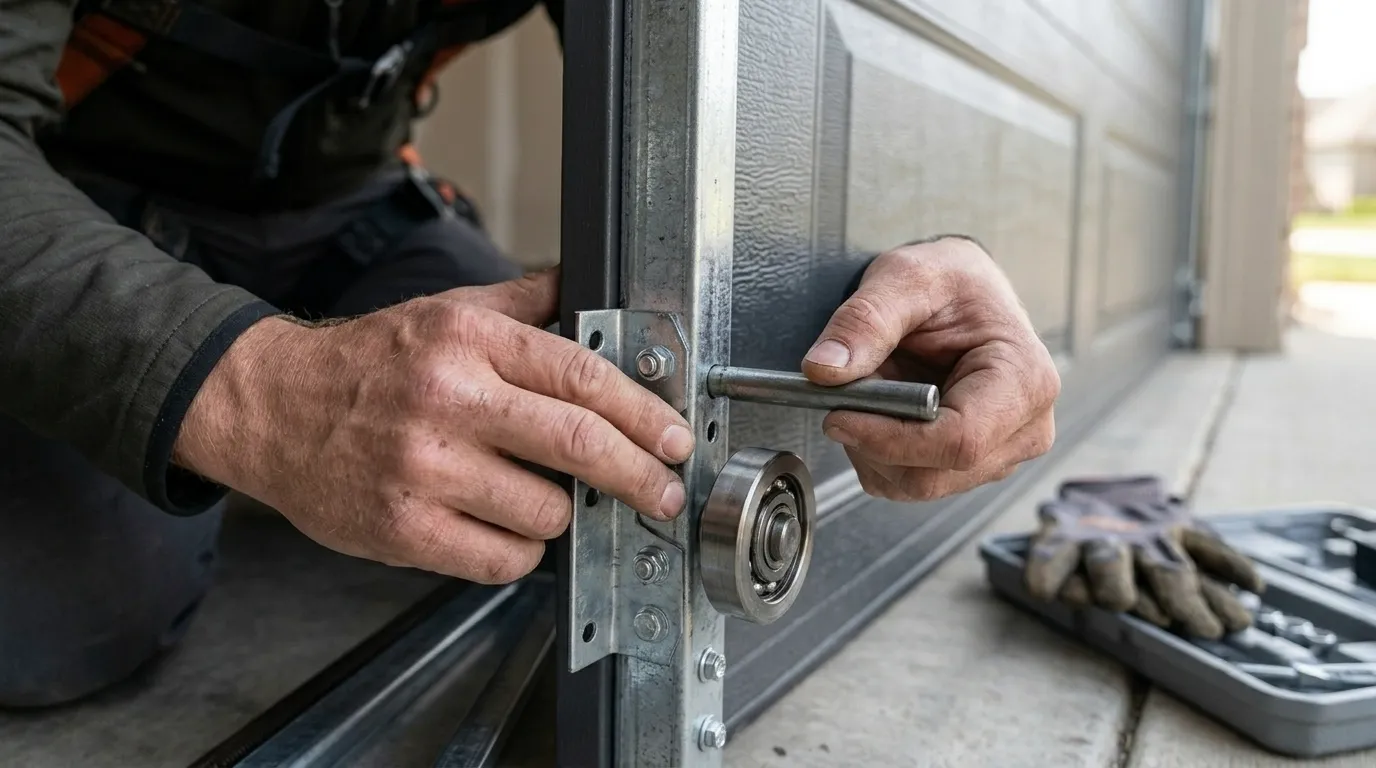
We stock torsion springs rated for the added weight of an insulated door, along with standard track and roller hardware sized to fit openings from that late-90s building era. What we don't stock is anything custom-milled or wood - if a homeowner wants a real wood door, that's a special order with its own lead time, and we'll say so upfront rather than promise a stock turnaround that doesn't exist.
Opener compatibility is checked before the door goes in, since not every older opener is rated for the added weight of an insulated panel.
What the Fix Involves
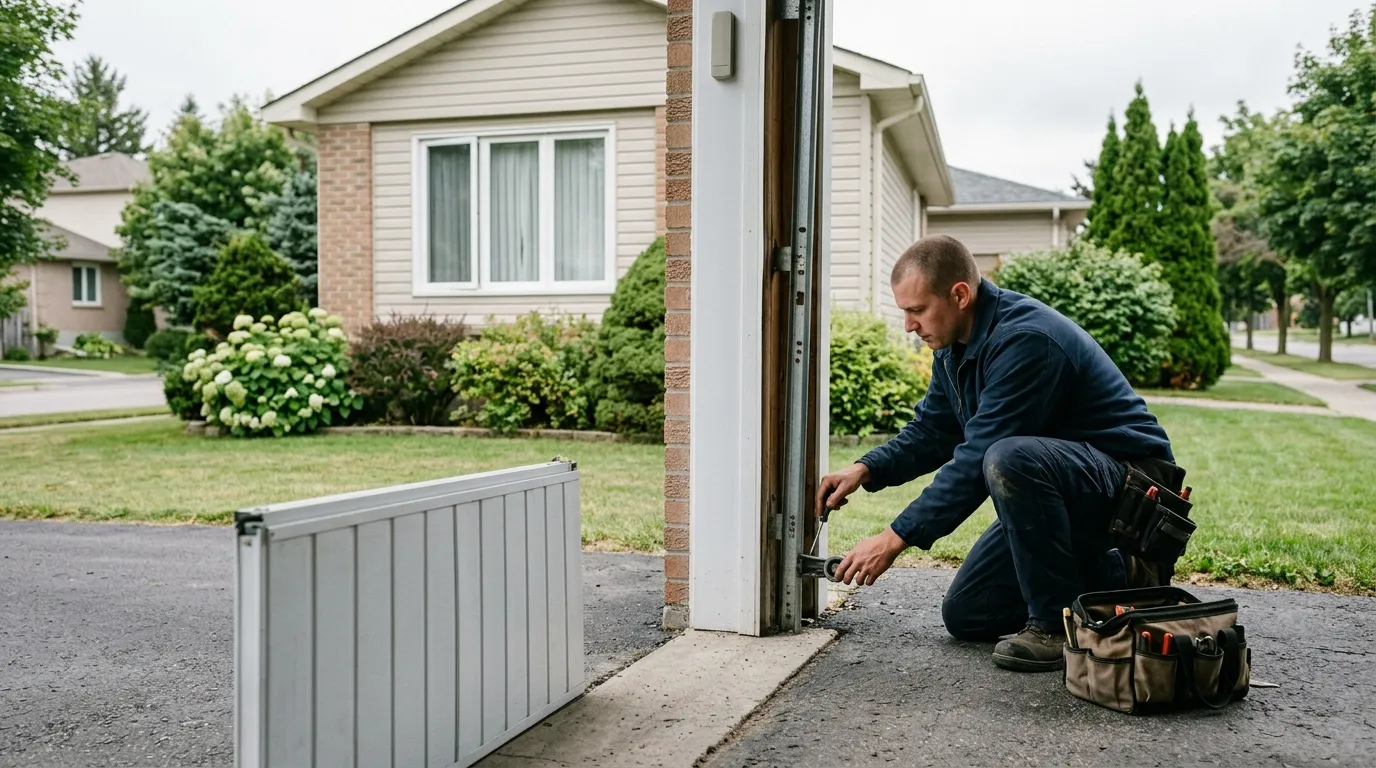
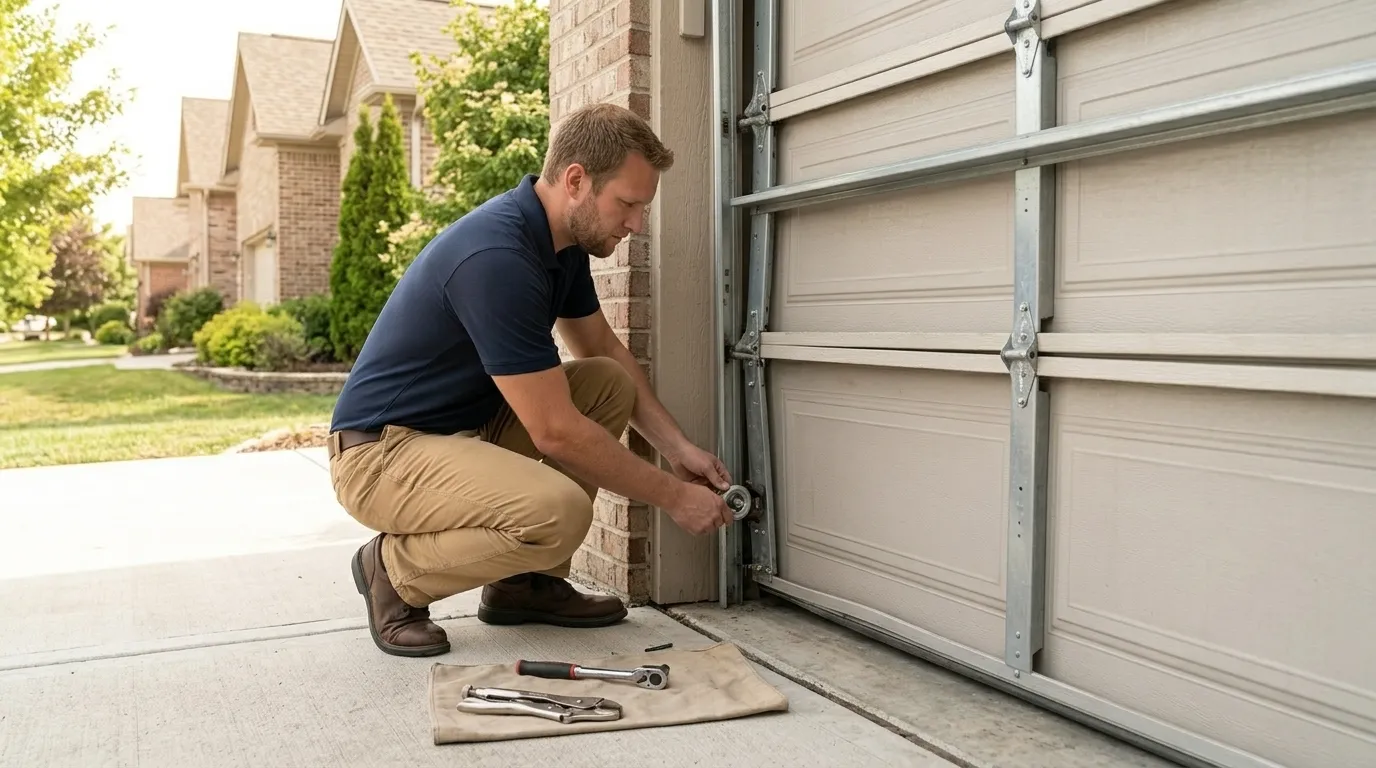
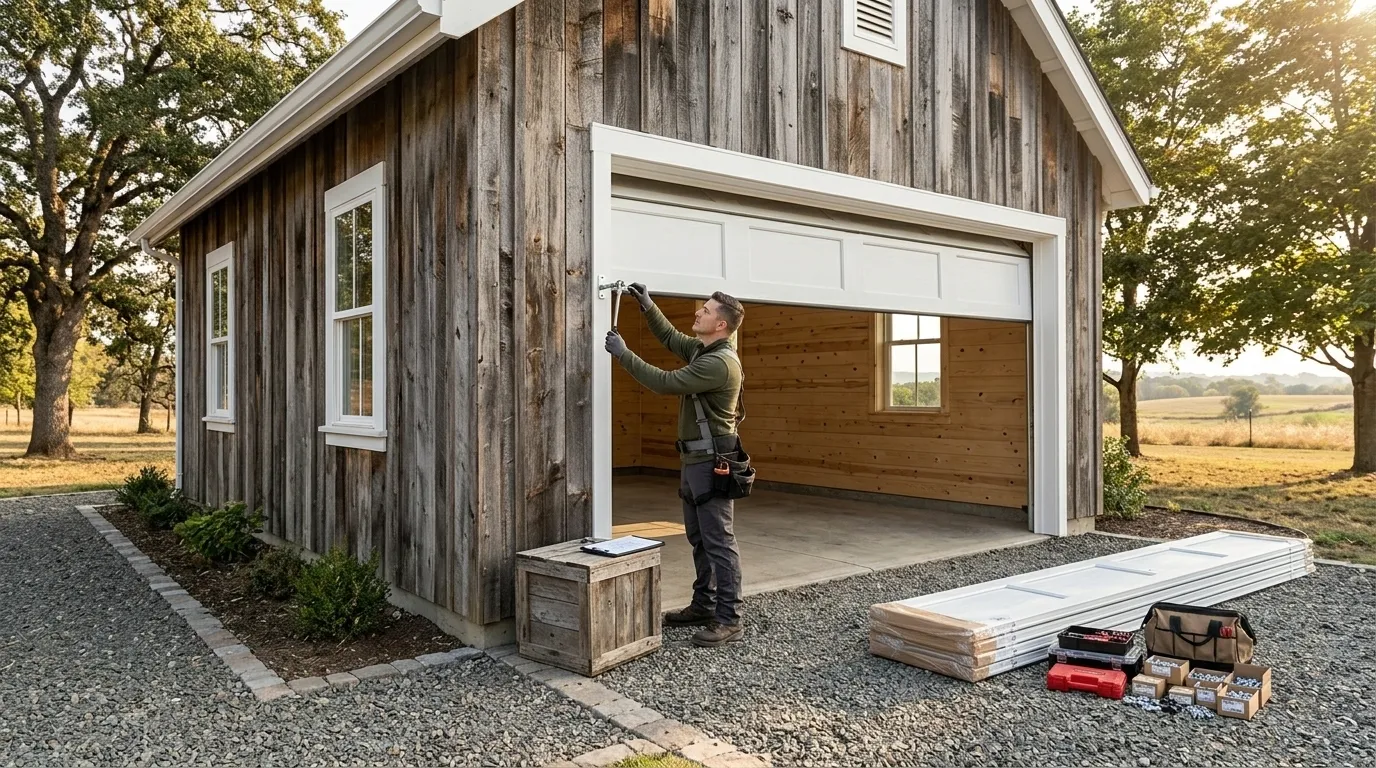
The old panel, track, and spring assembly come out first, then the header and jambs get checked for square before anything new goes up - on a house from this build era, that check usually goes fine, but we don't skip it. New track gets set to match the new door's weight and width, and torsion springs get wound to the correct cycle count for an insulated panel rather than reused from the lighter original door.
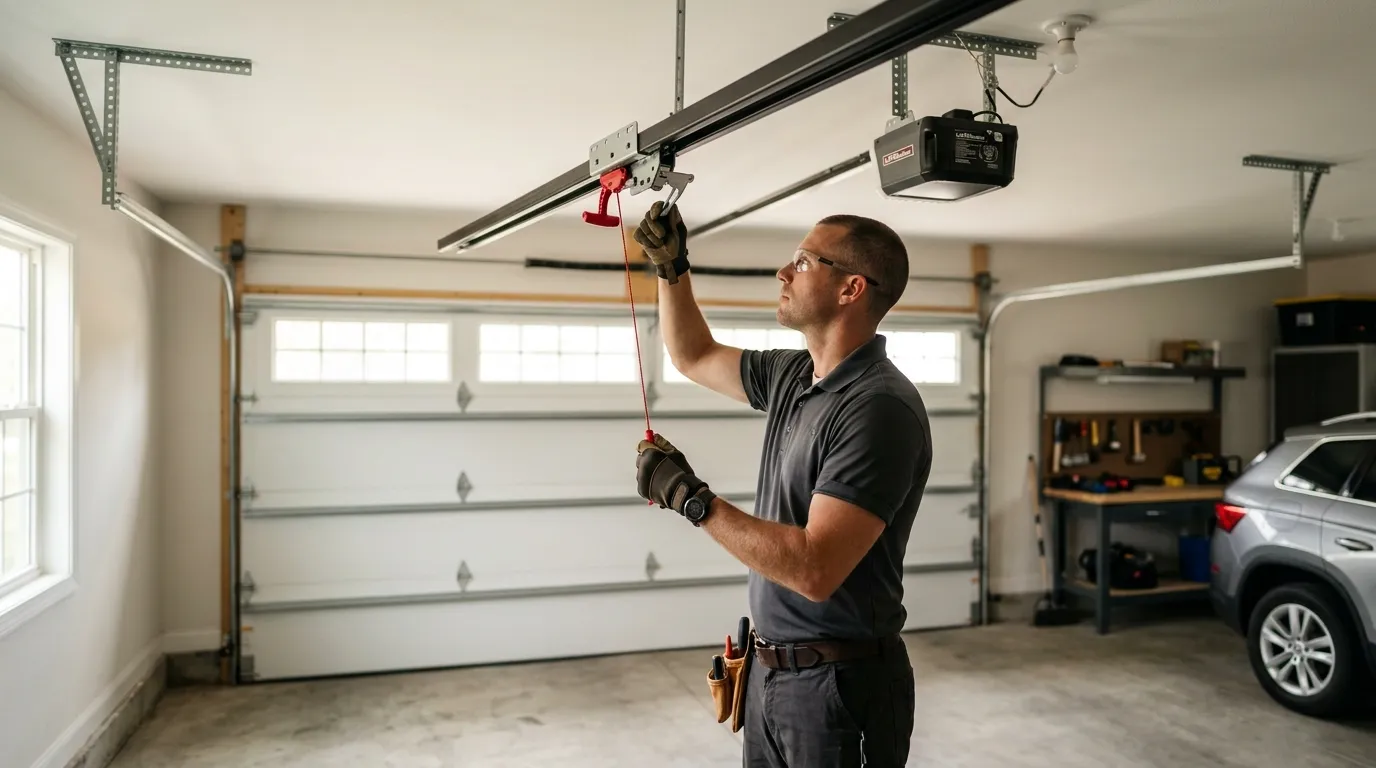
If the existing opener is being kept, it gets tested against the new door's weight before we call the job done - an opener sized for a 1998-era lightweight steel door can strain against a heavier insulated replacement, and that's a callback we'd rather avoid by checking it once, on site.
Final balance and travel limits get set by hand, not just by the opener's force setting, so the door doesn't slam or reverse on its own once we're gone.