How to Book
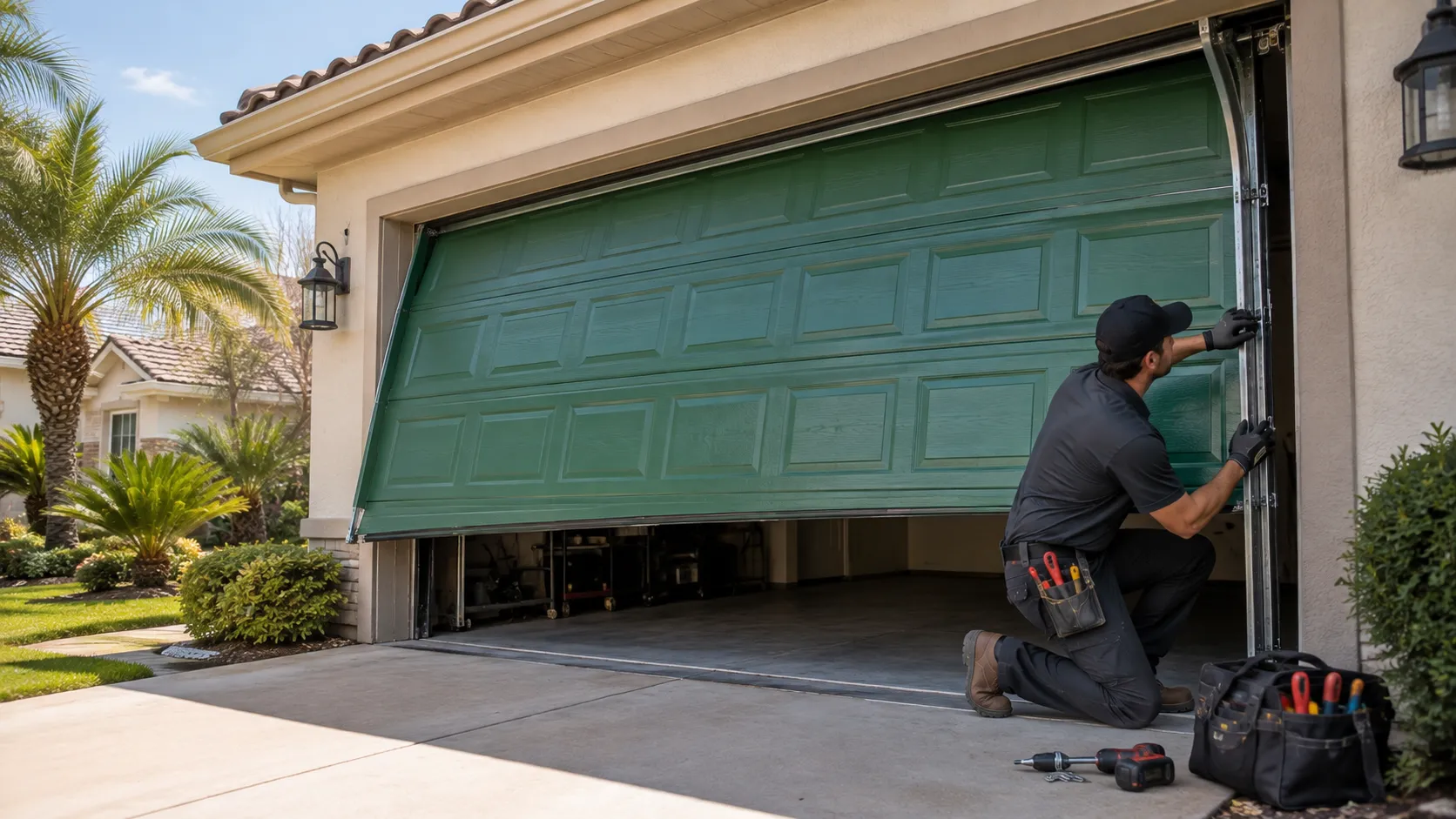
We work out of Reynoldsburg and drive the five miles into Pataskala for calls here, same as we do for the other communities on our route. When you call, tell us what the door is doing - won't open, stuck halfway, making noise on the way down - and whether it's a single or double door. That tells us what to load on the truck before we leave.
Pataskala is a smaller piece of our coverage area, about 6,723 households compared to the roughly 95,004 across the whole territory we run. That doesn't change how we handle the job, but it does mean we're not guessing at a generic street grid - this is a stop we make regularly, not a detour.
Have your address and a general sense of the door's age ready. If you know it was replaced at some point, mention that too - it changes what we bring.
See other communities we cover or check the full Reynoldsburg service page for what we handle across the area.
Can You Do This Yourself
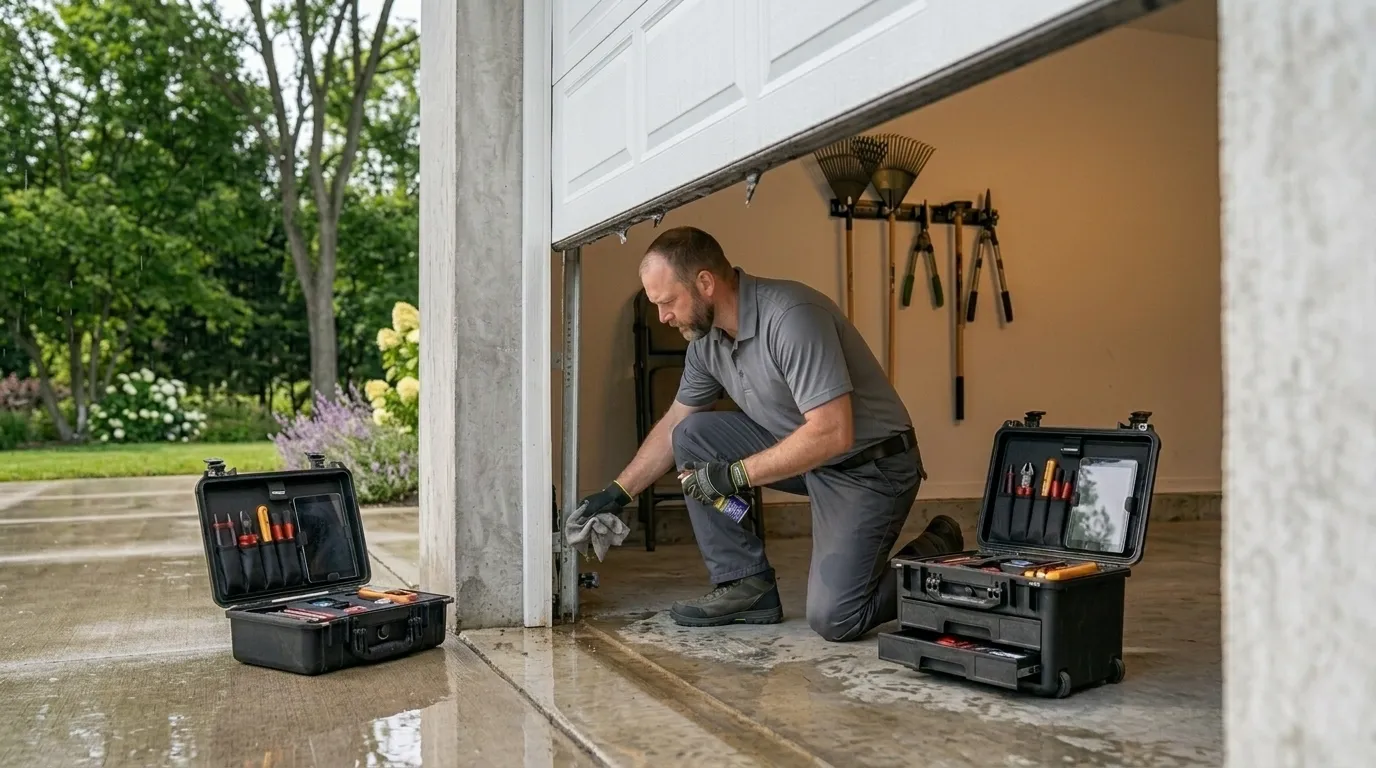
Some of it, yes. Lubricating rollers and hinges, tightening loose bolts on the track brackets, clearing debris from the sensor eyes near the floor - those are homeowner jobs and we'd rather you do them than pay us to.
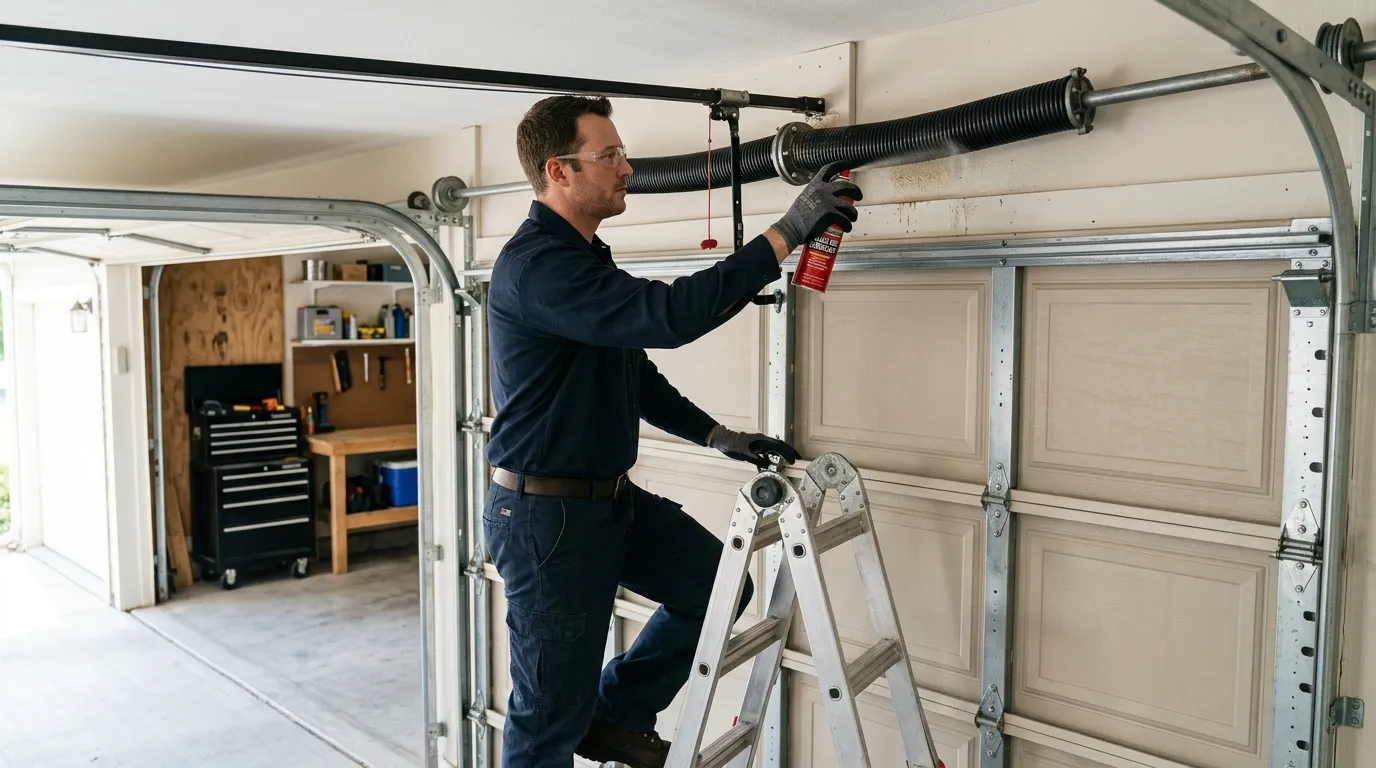
What you shouldn't touch is the torsion spring. On a sectional steel door, which is what most Pataskala garages carry given the newer housing stock here, that spring is wound under real tension. Letting it go wrong doesn't just break the door, it can break you. We don't recommend the YouTube approach on springs, cables, or anything holding the door up against gravity.
One honest limit: if your opener logic board is fried and the model's obsolete, we may tell you replacing the opener outright is cheaper than chasing parts for a board nobody stocks anymore. We'd rather say that up front than have you pay for a repair that doesn't hold.
Parts We Carry
Because the median home in Pataskala was built around 1998 - newer than the 1977 median across the wider service area - most of what we're replacing here is torsion spring hardware and sectional steel panels rather than the older extension-spring, single-panel doors still common on Reynoldsburg's 1960s and 70s streets.
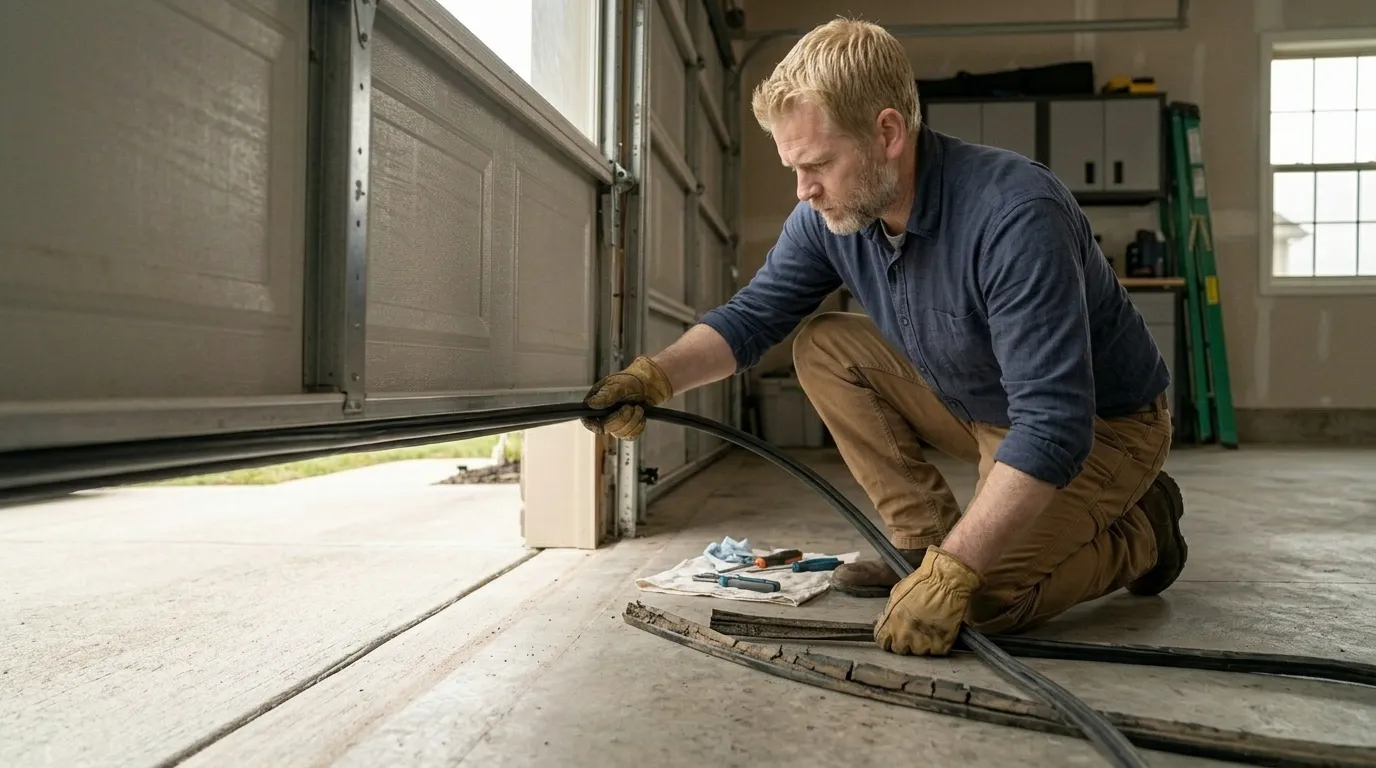
On the truck: torsion springs in common residential sizes, nylon and steel rollers, galvanized lift cables, standard track sections, and openers with the safety sensors and rolling-code boards that became standard once homes stopped being built with the older hardware. We also carry weatherstripping and bottom seals, which matter more here given the region's cold winters - a gapped seal on an insulated door still lets the cold in.
What we don't stock on the truck: custom panel colors, oversized commercial-width doors, or opener models discontinued more than a few years back. Those get special-ordered once we've confirmed the exact spec at your house.
What the Fix Involves
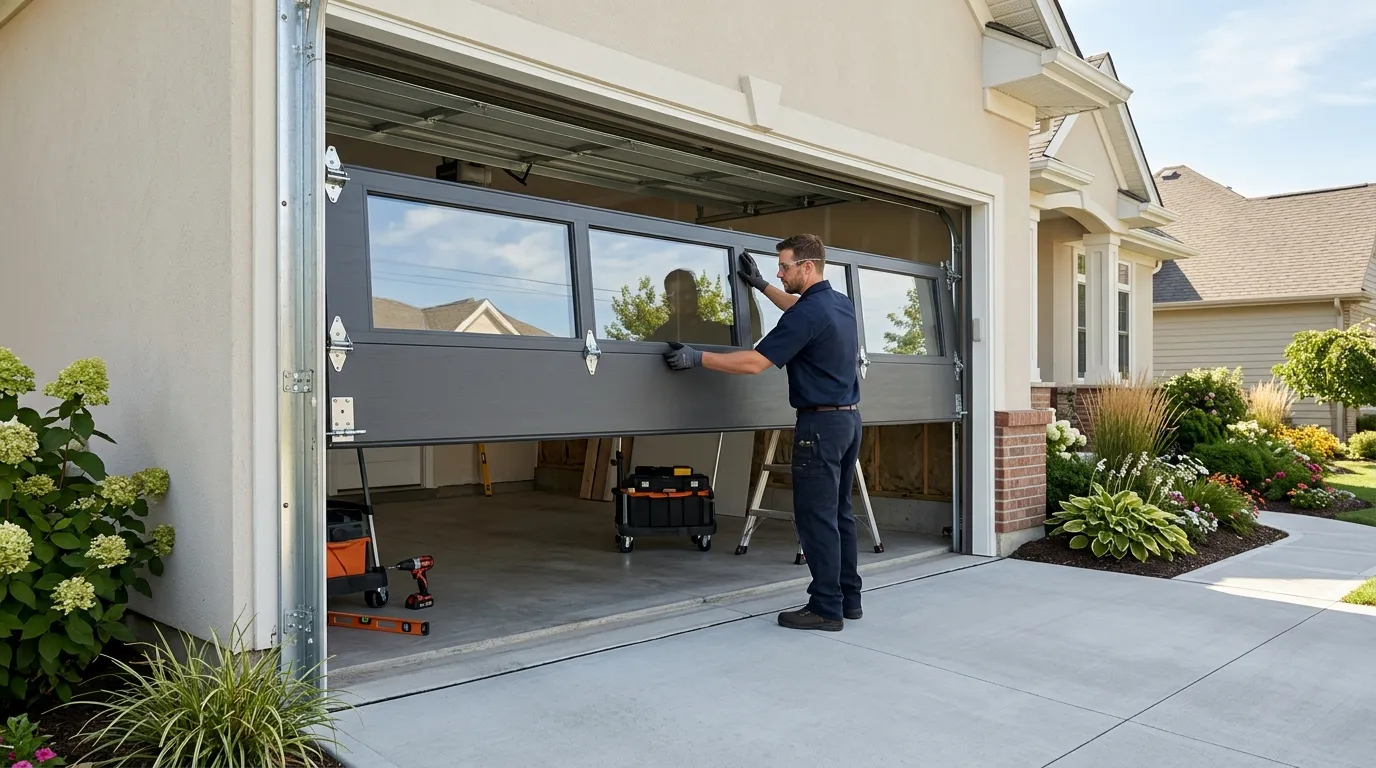
Most calls start the same way regardless of what's wrong: we disconnect the opener, check the door manually for balance, and look at the springs, cables, and track before touching anything electrical. A door that's out of balance will wear out an opener fast even if the opener itself is fine.
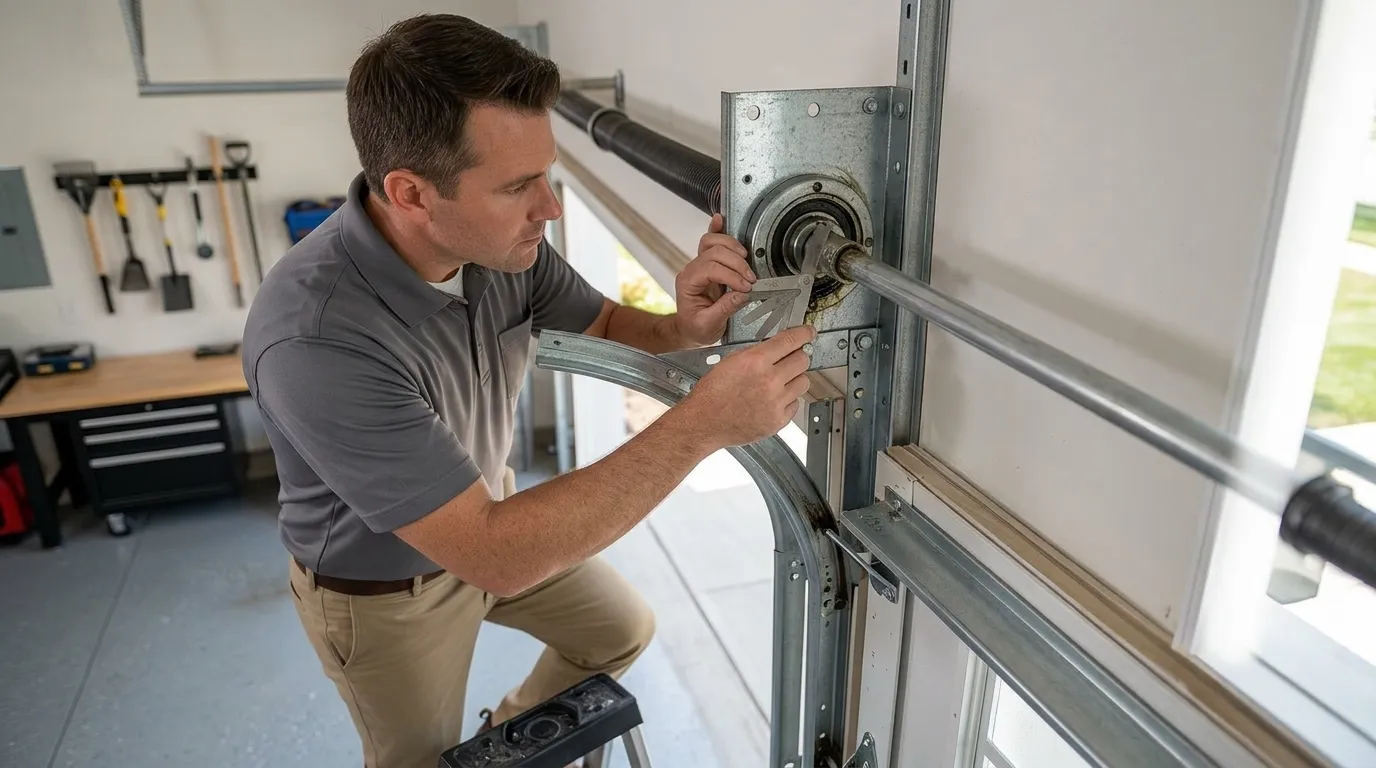
For a spring replacement, we unwind the old spring under control, measure the door's wire size and wind, and set the new spring to match the door's weight - not just swap in whatever's closest. Get that measurement wrong and the door either won't stay open or slams down.
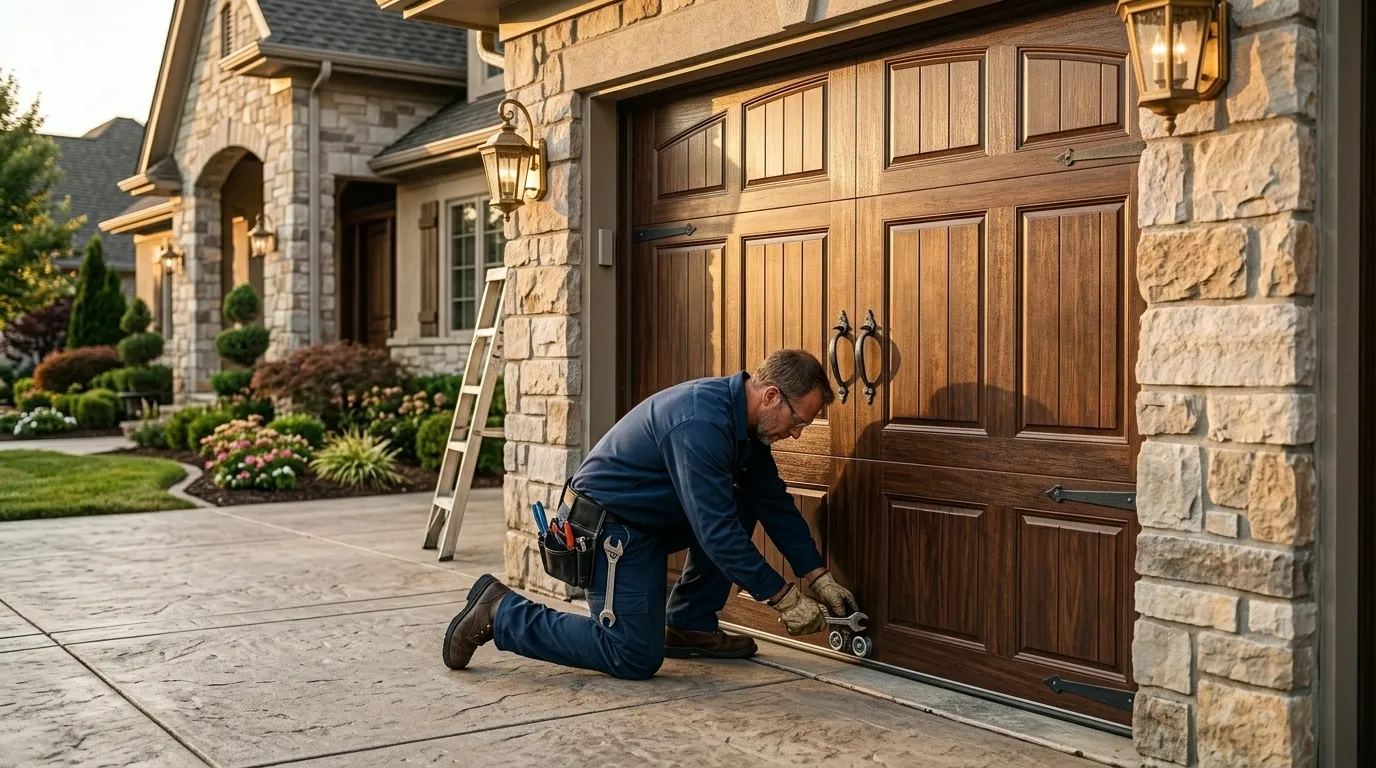
For track or roller issues, we check the brackets are still square to the frame before replacing rollers, since a bent bracket will chew through new rollers just as fast as the old ones.
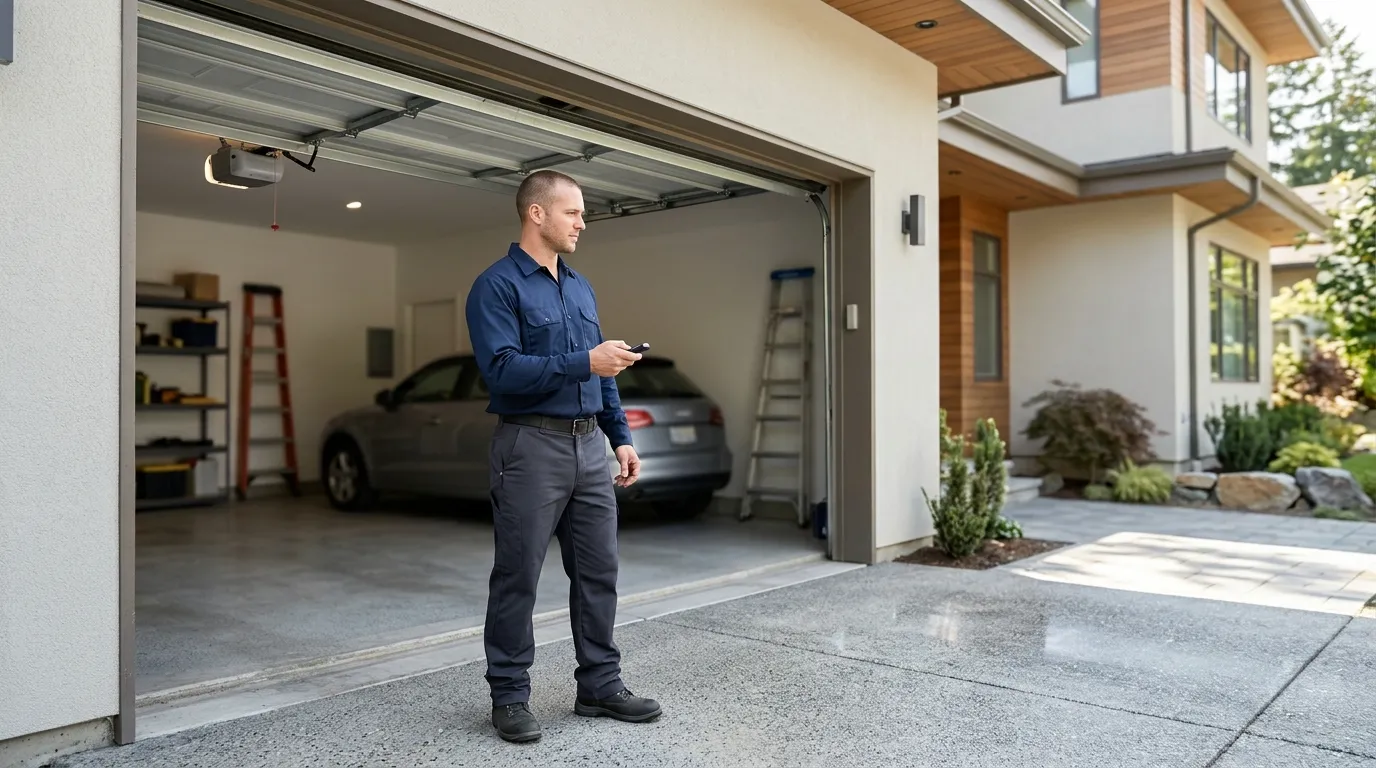
On opener work, we test the safety reversal - the door has to stop and reverse if something's under it - before we call the job done. That's not optional, even on a straightforward battery or sensor swap.