How Long You Are Without the Door
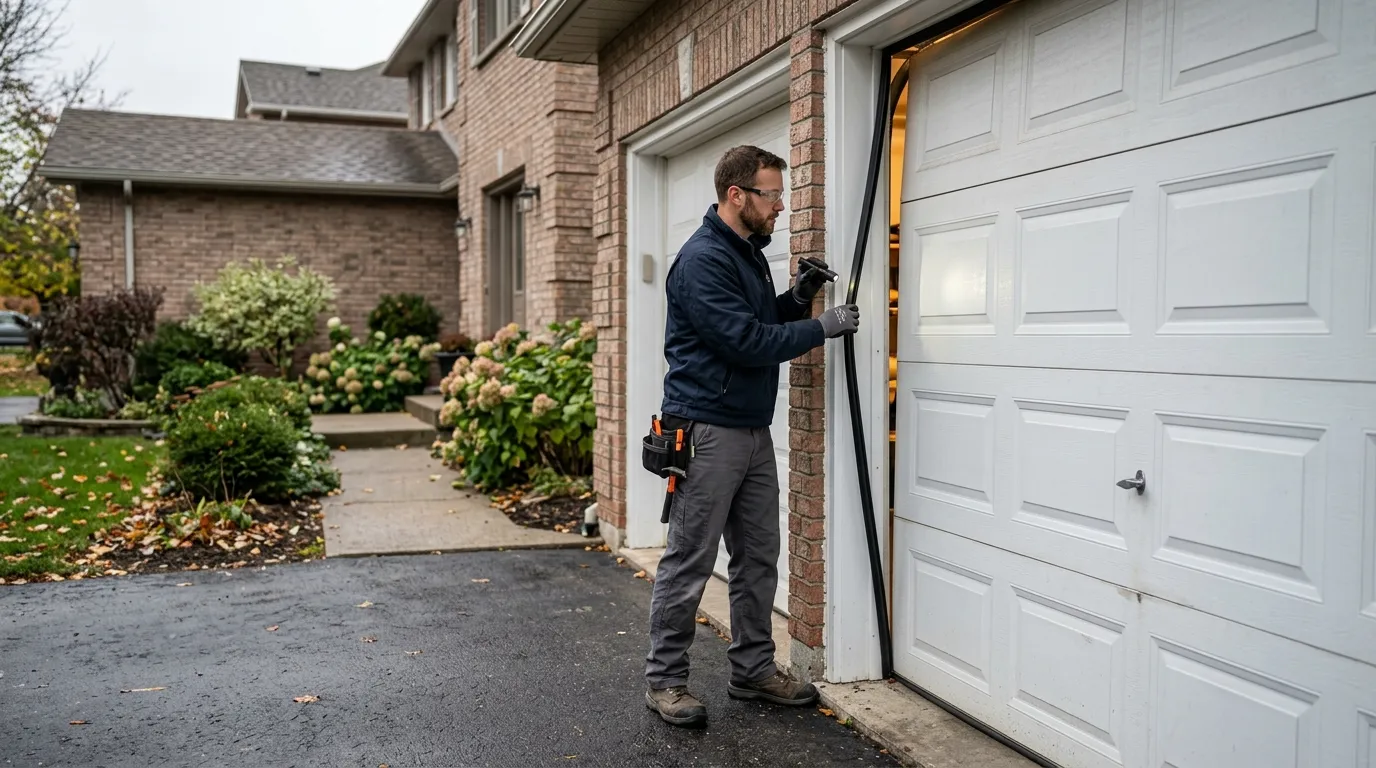
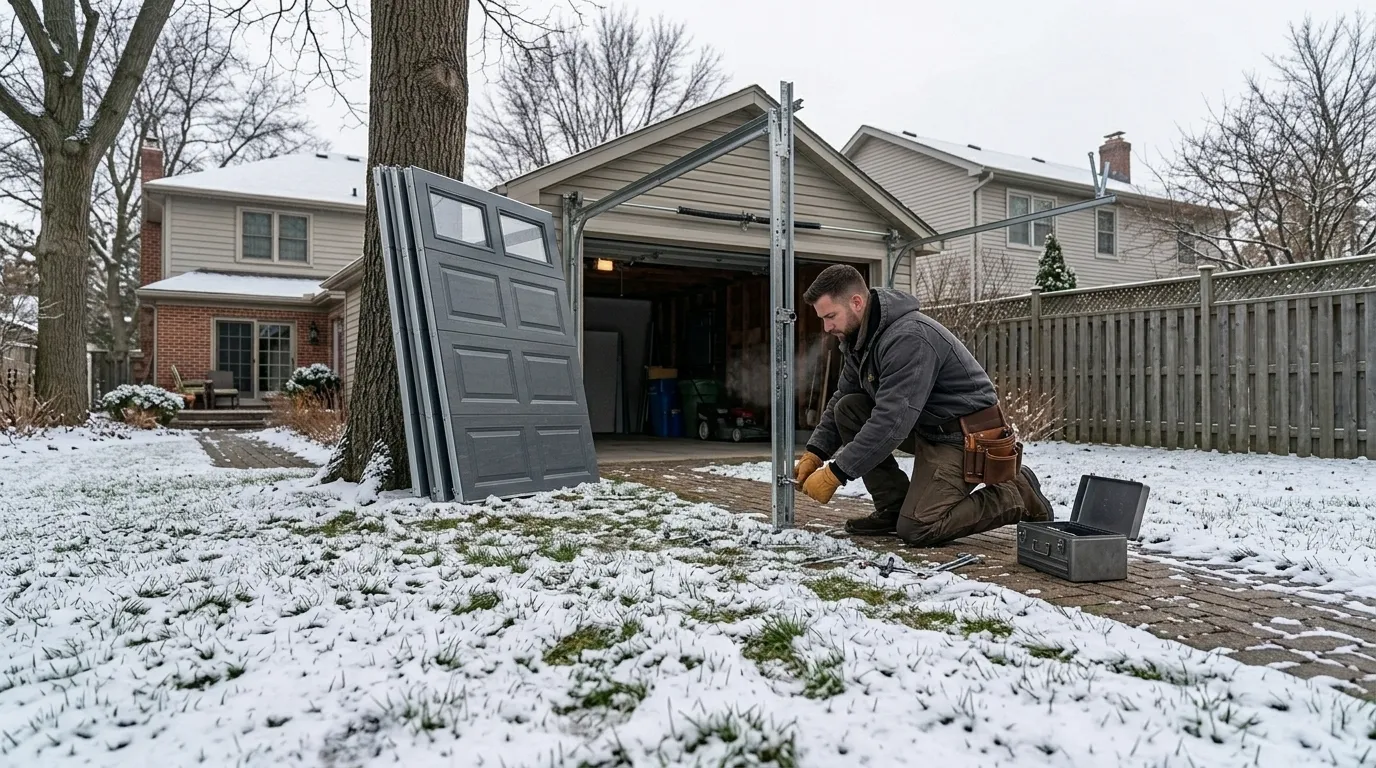
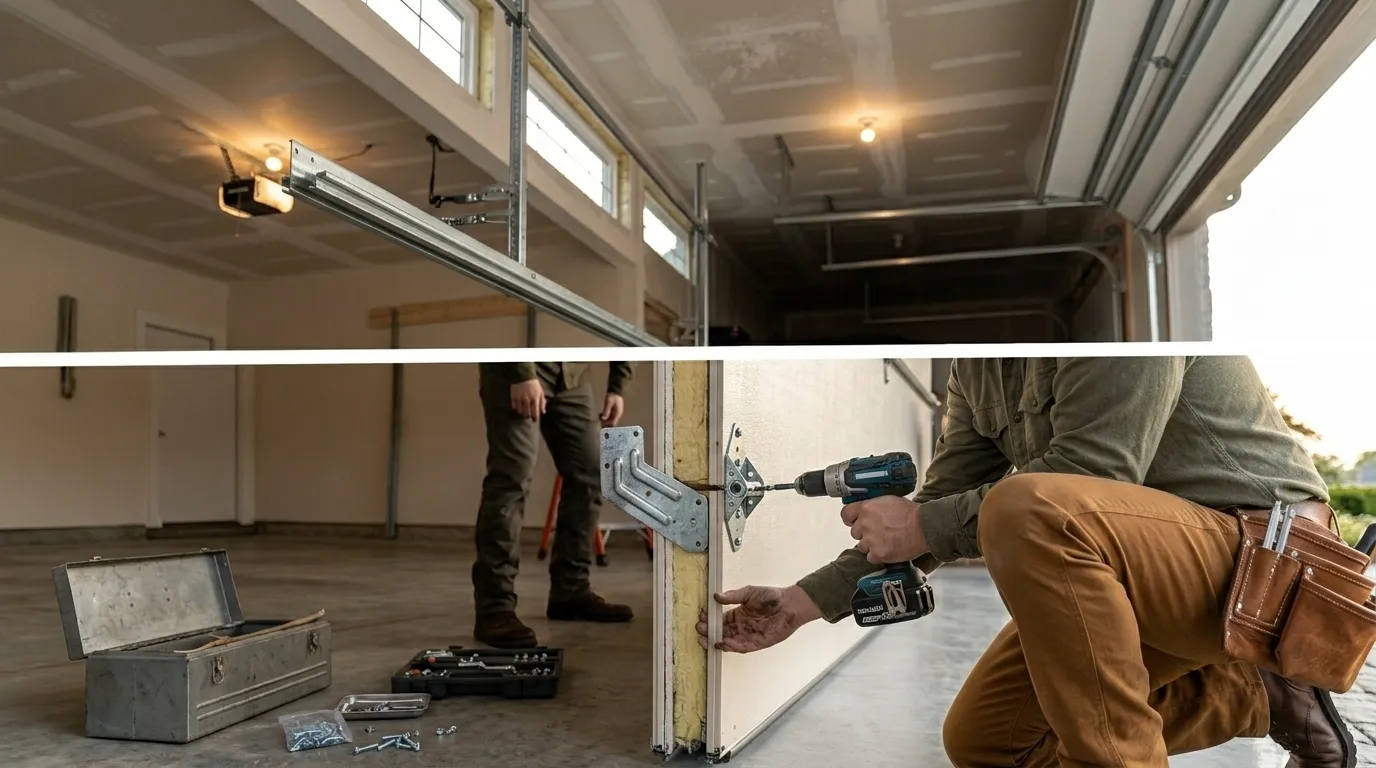
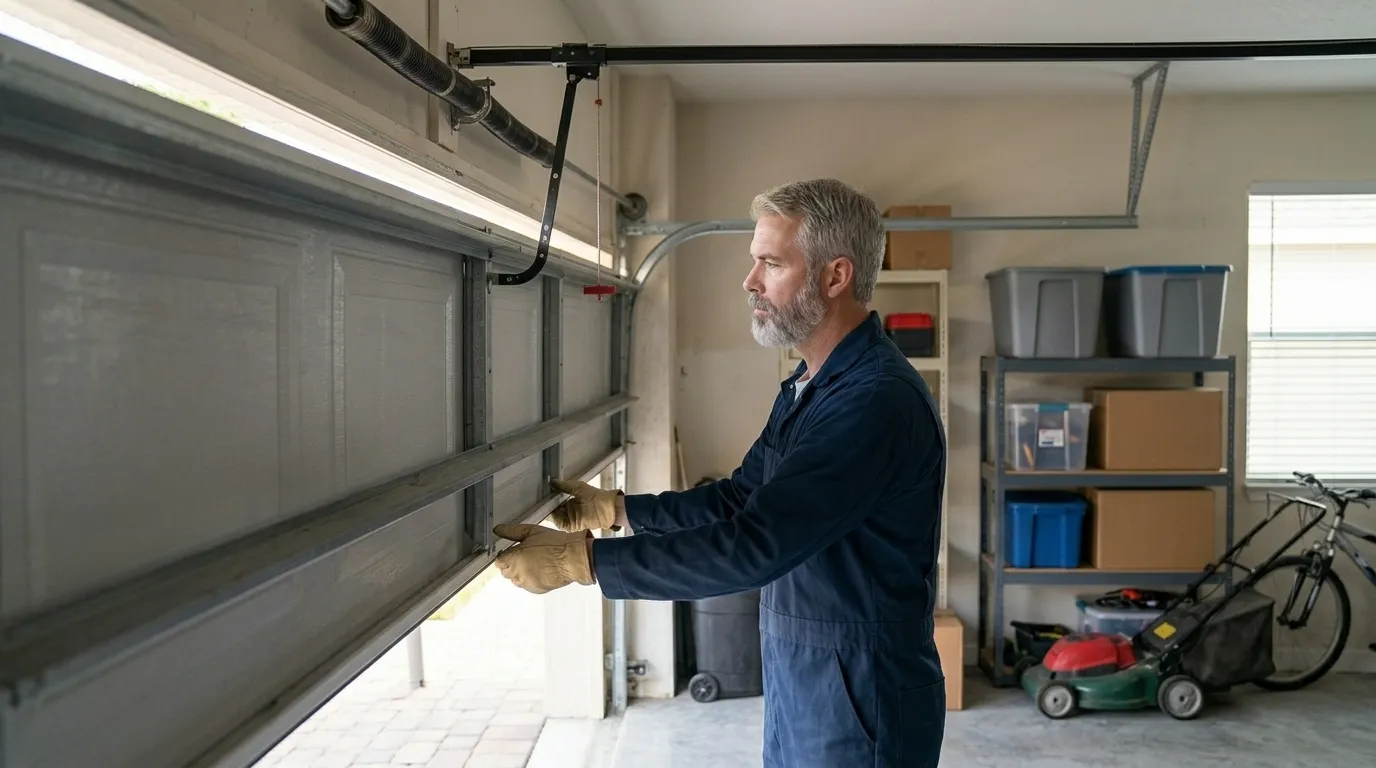
Most of Blacklick Estates went up around 1966, which puts it squarely in the 1960s-70s wave that makes up most of the housing stock on this side of the county. Doors from that era are steel sectional units, usually a plain single-layer skin with no foam core, hung on narrower track profiles than what's sold today. That's the door you're looking at before you ever get to what's wrong with it - a dented or bowed panel, usually the bottom one, sometimes cracked at a hinge seam after years of Ohio winters.
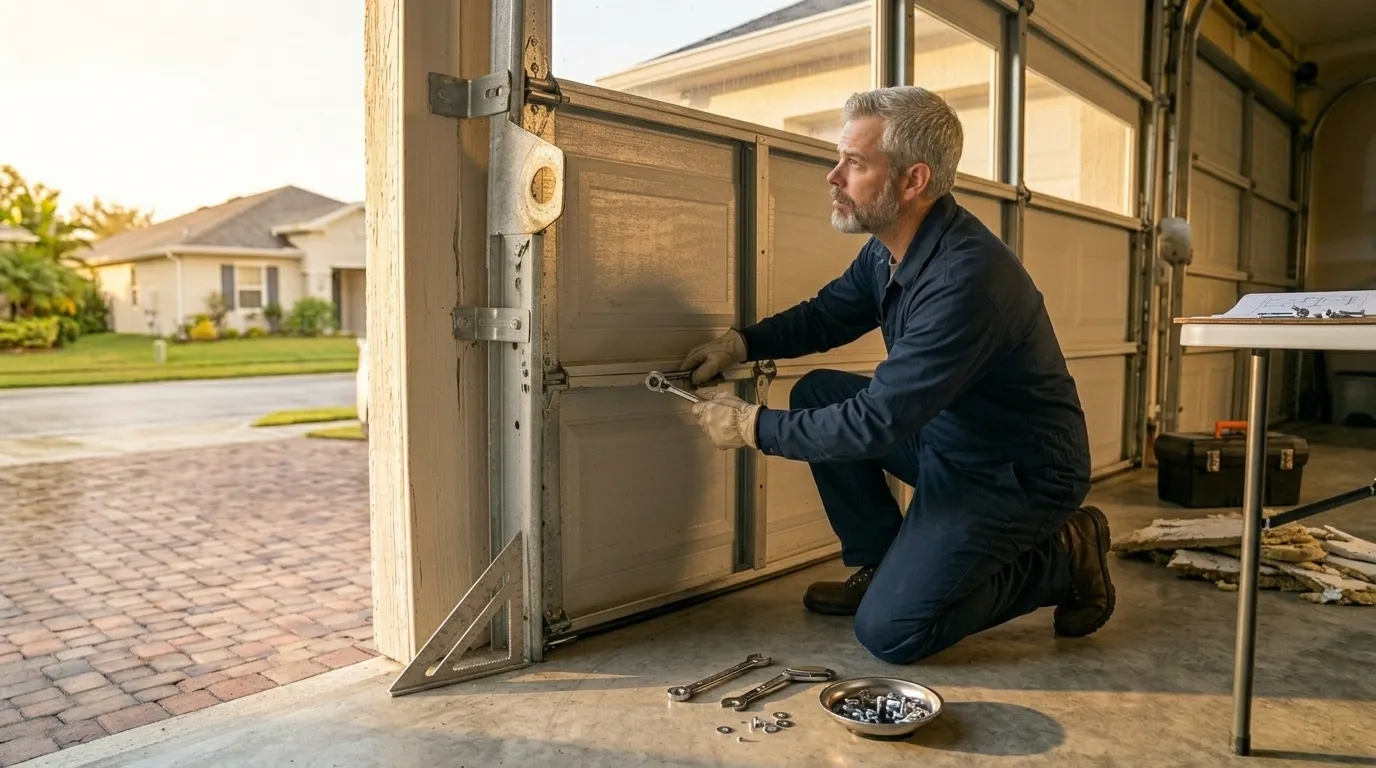
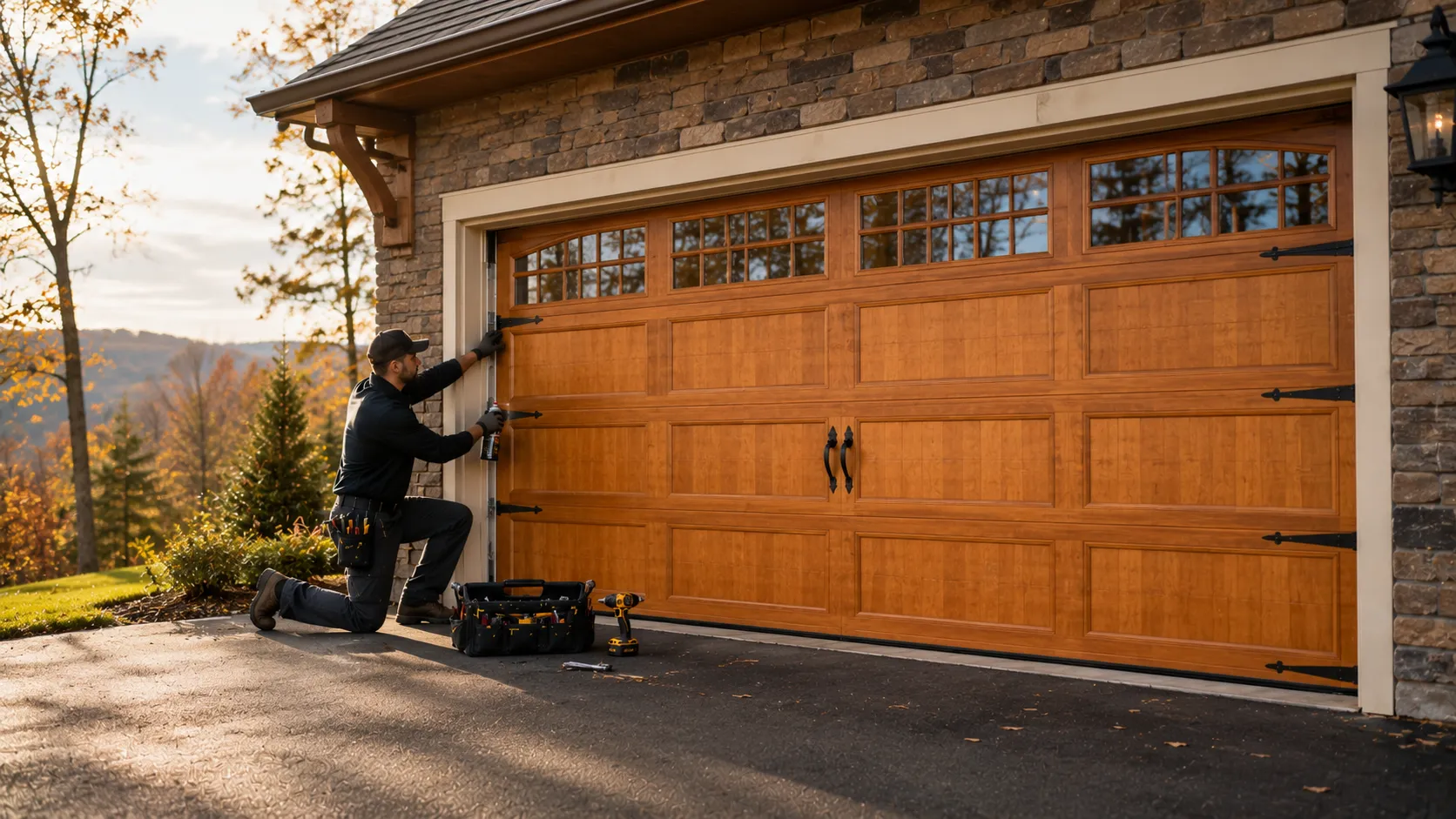
How long you're without the door depends on whether the exact panel is still made. If it's a common width and the finish is close enough, we can often pull a matching panel and get the door closed the same trip. If the style's been discontinued - which happens with doors this old - we order the panel and the door sits closed-but-dented in the meantime, not open and unsecured. We don't leave a bay open overnight waiting on parts; we brace or seal it so the house stays secure until the piece arrives.
How to Book
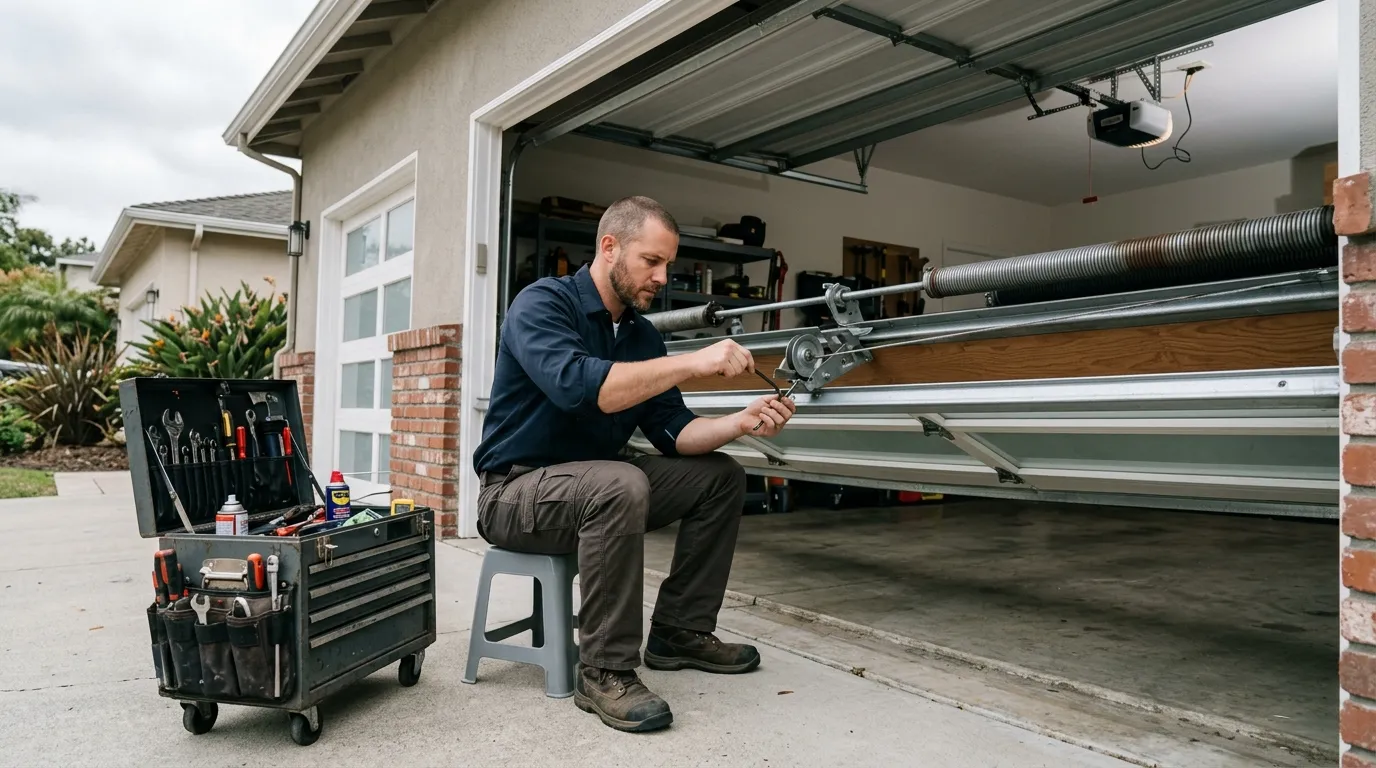
We run this job out of Reynoldsburg, about six miles from Blacklick Estates. That distance doesn't change what we can fix, but it does mean the visit gets scheduled once we've confirmed the panel - color, profile, and whether it's insulated or the older single-layer steel most doors here still carry - rather than us guessing on the truck.
The simplest way to start is to tell us the door's approximate age (1966-era stock is common here), the width, and which panel is damaged - top, middle, or bottom. A photo helps more than a description. From there we quote the swap, order the part if it's not something we carry, and set the visit once it's in hand. See our service coverage for Blacklick Estates for what else we handle in the area, or check the main panel replacement page for Reynoldsburg if your door is a newer build with different hardware.
Why It Happens Here
Two things push panel damage on doors this age. First, the build year - a median of 1966 in Blacklick Estates means most of these doors are original or a first replacement, steel without insulation, and that bare steel doesn't handle decades of freeze-thaw the way a foam-core panel does. Seams flex, rust starts at the bottom edge where snowmelt and road salt sit, and eventually a panel bows or cracks.
Second, the climate itself is a cold-severe band, which means repeated hard freezes each winter on doors that were never built with that kind of insulation in mind. The bottom panel takes the worst of it - closest to the slab, closest to the salt spray off the driveway - so it's usually the first one we're asked to replace.
With a median household income of $70,869 here, noticeably below the wider service area's $94,040, most owners we talk to in Blacklick Estates want the cheaper single-panel fix over a full door swap, and on a door this age that's often the right call - as long as the rest of the panels and hardware are still sound.